K Assessment Prep: Bay Area Private Schools 2026
You've submitted applications to Bay Area private schools for your 4- or 5-year-old. Now comes the assessment — and with it, a wave of anxiety. Should you hire a tutor? Will your child "pass"? What if they freeze up?
Here's what Bay Area admission directors won't always tell you upfront: kindergarten assessments aren't tests your child can fail. They're observations of developmental readiness. And the best preparation doesn't come from a $5,000 tutor — it comes from daily, play-based activities you can do at home.
Quick Answer: Bay Area private school kindergarten assessments observe 5 readiness areas: following instructions, emotional regulation, pre-literacy skills, fine motor skills, and social engagement. Schools like Nueva, Harker, and Alpine Hills use 45-60 minute play-based sessions where trained teachers note how children handle transitions, interact with peers, and respond to simple prompts. Parents can prepare effectively at home using a 90-day timeline focused on these areas — tutoring is rarely necessary unless a child has specific developmental delays.
What Bay Area Private Schools Actually Assess (And Why)
Bay Area parents plan ahead with KidPlanr
Free, week-by-week summer plans for your kids
Plan summer between school years — match camps to each kid's age, interests, and your work calendar. Free to use.
Plan my summer →Private kindergarten assessments in the Bay Area evaluate school readiness, not academic performance. Admission offices want to know: Can this child thrive in our classroom environment?
The 5 Core Readiness Areas
Based on assessment rubrics from Nueva School, Harker School, and Alpine Hills School, here's what gets observed:
| Readiness Area | What Schools Look For | Why It Matters |
|---|---|---|
| Following Instructions | Can the child listen to a 2-3 step direction and complete it? | Indicates readiness for classroom routines and group learning |
| Emotional Regulation | How does the child handle transitions, frustration, or not getting their way? | Predicts classroom behavior and resilience when facing challenges |
| Pre-Literacy Skills | Can they recognize some letters, understand that print carries meaning, hold a book correctly? | Shows exposure to books and foundational reading readiness |
| Fine Motor Skills | Can they hold a crayon, cut with scissors, build with blocks? | Necessary for writing, art projects, and hands-on learning |
| Social Engagement | Do they make eye contact, attempt communication, show interest in other children? | Indicates readiness to participate in a social classroom environment |
What schools do NOT assess in kindergarten:
- Reading fluency (most kids aren't reading yet at 4-5)
- Math computation beyond basic counting
- Academic subject knowledge
- Memorization or "smartness"
This does NOT mean: Your child needs to excel in all 5 areas. Assessments look for age-appropriate development, not perfection. A child who struggles with scissors but shows strong emotional regulation can still be a great fit.
The Kindergarten Assessment Process: What to Expect
Most Bay Area private schools use one of two formats:
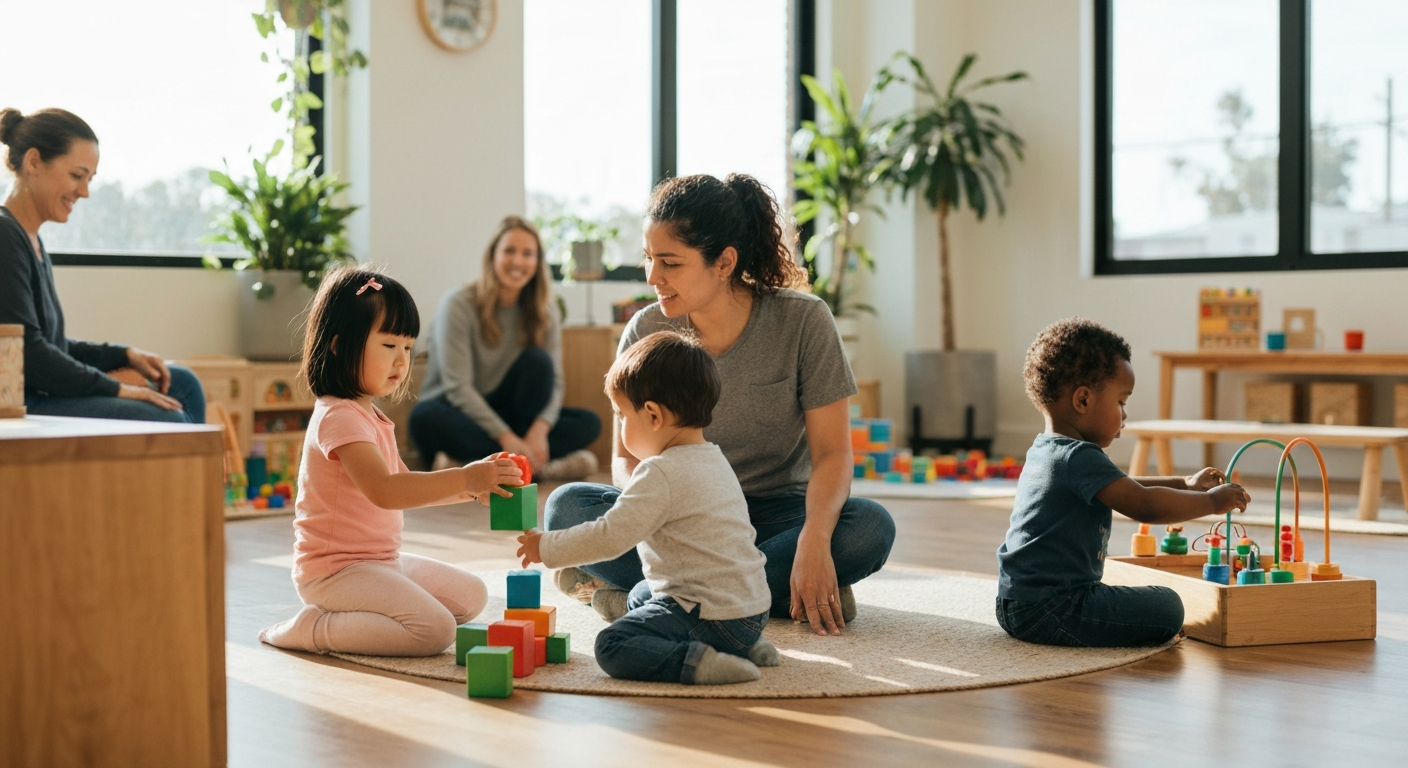
Format 1: Small Group Play-Based Session (45-60 minutes)
Used by: Nueva, Harker, Alpine Hills, Stratford, Marin Horizon
What happens:
- 4-8 children are brought into a classroom with trained teachers
- Activities include: puzzles, blocks, coloring, story time, simple songs, snack time
- Teachers observe how children handle transitions, follow directions, interact with peers
- One-on-one interactions: teacher may ask the child to identify colors, count objects, or complete a simple task
- No "wrong answers" — teachers are noting behaviors, not scoring performance
Parent role: You drop off your child. Most schools do NOT allow parents to observe (it changes children's behavior).
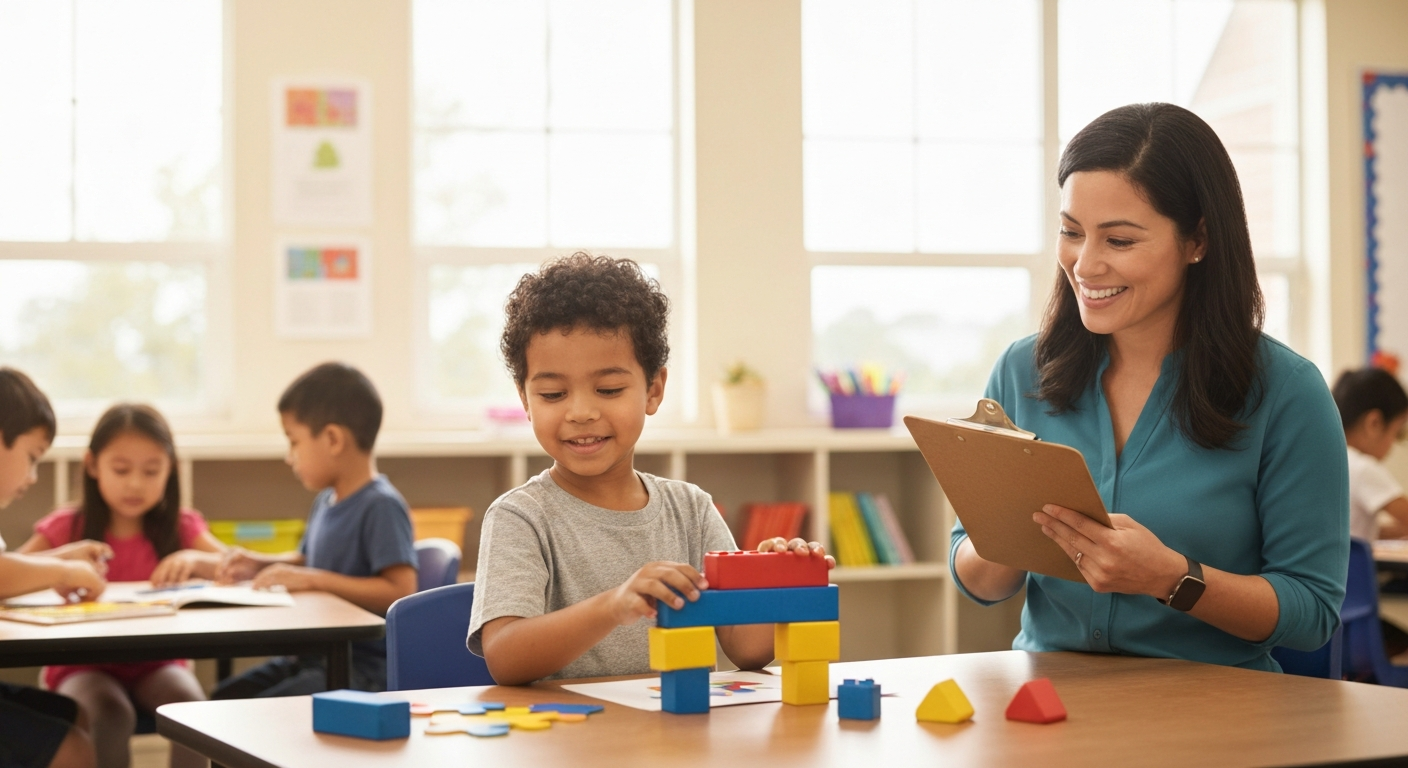
Format 2: One-on-One Teacher Interview (30-45 minutes)
Used by: Some smaller independent schools, Montessori programs
What happens:
- A teacher sits with your child individually
- Activities: drawing, looking at picture books, building with manipulatives, answering simple questions ("What's your favorite color? Can you count these bears?")
- The teacher is assessing comfort level, communication, and task engagement
- More structured than group play but still developmentally appropriate
Parent role: You wait in a separate room. Some schools may briefly interview you while your child is assessed.
Acceptance Rates & Timeline Context
Bay Area private school kindergarten acceptance rates for 2026:
- Nueva School: ~20% accepted (highly competitive)
- Harker School: ~35% accepted
- Alpine Hills School: ~40-50% accepted (less competitive but still selective)
- Stratford School: ~60%+ accepted (more accessible, multiple campuses)
What this means: Even strong candidates face rejection. Selectivity is driven by limited spots (most K classes are 12-20 students), not by your child's worth or potential. Many families apply to 3-5 schools to increase odds.
Typical timeline for 2026-27 school year:
- September-October 2026: School tours & open houses
- November-December 2026: Applications due (deadlines vary by school, typically Dec 15-Jan 15)
- January-February 2027: Kindergarten assessments scheduled
- March 2027: Admission decisions released
- April 2027: Enrollment contracts due
How to Prepare Your Child (Without a Tutor): The 90-Day Plan
The good news: Most kindergarten prep can happen through everyday activities. You don't need flashcards, workbooks, or $5,000 tutors. You need consistency, play, and focus on the 5 readiness areas.
Month 1 (90-60 days before assessment): Build Foundations
Focus areas: Following instructions, emotional regulation
Daily activities (15-20 minutes):
1. Practice 2-3 step directions. Instead of "Get your shoes," say "Go to your room, get your shoes, and bring them to me." Celebrate when they remember all the steps.
2. Teach transition cues. Use a timer for activities: "When the timer beeps, we clean up." This prepares them for classroom transitions.
3. Name emotions. When your child is frustrated, say "I see you're feeling frustrated because the blocks fell down. What can we do?" Model regulation, don't just fix the problem.
4. Daily read-aloud. 10-15 minutes. Let your child hold the book, turn pages, and ask questions. Point to words as you read.
What NOT to do: Don't drill alphabet flashcards. Don't pressure your child to sit still for 30 minutes. Don't introduce "school" as scary or high-stakes.
Month 2 (60-30 days before assessment): Build Skills
Focus areas: Pre-literacy, fine motor skills
Daily activities (20-30 minutes):
1. Letter recognition games. Point out letters in the environment: "That sign says STOP. What letter does it start with?" Playful, not quiz-like.
2. Scissor practice. Let your child cut construction paper strips, then shapes. Start with straight lines, progress to curves.
3. Drawing & coloring. Give crayons and paper. Don't correct their drawings — encourage them to "tell you about it."
4. Sorting & counting. Sort toys by color, count snacks, set the table (one plate for each person).
What NOT to do: Don't criticize messy cutting or "wrong" letter identification. Don't push workbook pages. Assessment is about process (how they try), not perfect output.
Month 3 (30-0 days before assessment): Build Confidence
Focus areas: Social engagement, assessment-day readiness
Daily activities (15-20 minutes):
1. Playdates or group activities. Arrange opportunities to play with other children. Observe how your child shares, negotiates, and recovers from conflict.
2. Practice separating from you. Drop your child at a friend's house for 30-60 minutes. Schools want to see children who can function without parents hovering.
3. Role-play the assessment. "Tomorrow we're visiting a new school. A teacher will ask you to play with some toys. I'll wait in another room, and then we'll leave together." Normalize it, don't hype it up.
4. Continue read-alouds and letter games. Keep it fun, not drill-based.
What NOT to do: Don't tell your child the assessment is a "test." Don't bribe them ("If you do well, we'll get ice cream"). Don't create pressure.
Assessment Day: What Helps (and What Doesn't)
What DOES Help Your Child Perform Well
✅ Full night's sleep. Schedule assessments for mornings when possible (schools often offer this).
✅ Familiar routine. Same breakfast, same morning activities as usual.
✅ Calm parent. Children pick up on your anxiety. If you're nervous, they will be too.
✅ Simple explanation. "We're going to visit a school today. A teacher will play with you while I wait. Then we'll leave together."
✅ Comfortable clothes. No itchy tags, tight waistbands, or new shoes that hurt. Dress them in what they'd wear to preschool.
What DOESN'T Help (Common Mistakes)
❌ Telling them it's a test. "You need to do your best!" creates pressure. Instead: "You're going to play with some toys and meet a nice teacher."
❌ Overpreparing the night before. Cramming flashcards the night before assessment causes fatigue and stress.
❌ Bribing or threatening. "If you don't listen to the teacher, we won't go to the park." This backfires.
❌ Hovering or coaching. If the school allows you to observe, don't mouth words or give signals. Let your child engage naturally.
❌ Asking "How did you do?" Your child doesn't know if they "passed." Instead ask "Did you have fun? What did you play with?"
When Tutoring Makes Sense (And When It Doesn't)
Skip the tutor if:
- Your child is developing typically for their age
- They attend preschool or have regular peer interaction
- They can follow 2-step directions and play independently for 10-15 minutes
- They show interest in books and enjoy read-aloud time
Why tutoring usually isn't necessary: Kindergarten assessments evaluate developmental readiness, which unfolds naturally through play, socialization, and daily routines. Tutors can't accelerate development — they can only help you observe where your child is and what to practice. You can do that at home for free.
Consider a tutor (or developmental specialist) if:
- Your child has a diagnosed developmental delay and needs targeted support
- They've never been in a group setting (no preschool, playgroups, or peer interaction) and need practice with social routines
- An admission consultant recommends it after an initial screening (rare — most consultants do NOT push tutoring)
- You've tried at-home prep for 8-12 weeks and your child still struggles with 2-step directions, emotional regulation, or separation anxiety
If you do hire help: Look for a developmental specialist or early childhood educator, not an "academic tutor." You want someone who understands child development, not someone drilling letters. Cost: $100-150/session in the Bay Area. Budget for 4-6 sessions, not 20.
If Your Child Doesn't Get In: What It Actually Means
Bay Area private school kindergarten admission is not meritocratic. Schools reject 60-80% of applicants. Many of those rejected children go on to thrive in other schools — public or private — and grow into capable, happy students.
Rejection does NOT mean:
- Your child isn't smart enough
- You failed as a parent
- Your child can't handle school
Rejection usually means:
- The school had 80 applicants for 16 spots
- Your child's temperament didn't match the school's specific classroom model (not better or worse — just different)
- The school needed to balance age ranges, gender, or sibling connections
- Timing was off (many families apply again for 1st grade and get in)
Your backup plan matters more than your first choice. Research public school options in your district. Visit 2-3 other private schools with different philosophies. Apply to 3-5 schools, not just one. Many Bay Area families end up loving their "backup" school even more than their first choice.
90-Day Kindergarten Readiness Prep Checklist
Use this timeline to organize your at-home preparation. Focus on one area each week, then rotate.
Months 3-2 Before Assessment (Weeks 1-4)
Week 1: Following Instructions
- [ ] Practice 2-step directions daily ("Get your coat and put it by the door")
- [ ] Introduce cleanup transitions with a timer (5-minute warning, then cleanup)
- [ ] Play "Simon Says" or similar direction-following games
Week 2: Emotional Regulation
- [ ] Name emotions when your child is upset ("You're feeling frustrated")
- [ ] Model calm-down strategies (deep breaths, counting to 5)
- [ ] Praise attempts to self-regulate, not just outcomes
Week 3: Pre-Literacy Exposure
- [ ] Read aloud 10-15 minutes daily, let child turn pages
- [ ] Point to words as you read
- [ ] Ask "What do you think happens next?" during stories
Week 4: Social Practice
- [ ] Arrange one playdate with a peer
- [ ] Practice sharing: "You get the red car for 5 minutes, then it's my turn"
- [ ] Praise cooperation and turn-taking when it happens
Months 2-1 Before Assessment (Weeks 5-8)
Week 5: Fine Motor Skills
- [ ] Scissor practice: cut straight lines, then simple shapes
- [ ] Drawing & coloring: encourage holding crayons correctly
- [ ] Building activities: blocks, Lego, puzzles
Week 6: Pre-Literacy Skills
- [ ] Letter scavenger hunt: find letters in the environment
- [ ] Rhyming games: "What rhymes with cat?"
- [ ] Continue daily read-aloud
Week 7: Counting & Sorting
- [ ] Count everyday objects (snacks, toys, stairs)
- [ ] Sort toys by color or size
- [ ] Set the table: one plate per person
Week 8: Separation Practice
- [ ] Drop-off playdate: child stays at friend's house for 30-60 min
- [ ] Reassure: "I'll come back" and follow through
- [ ] Praise calmness when reunited
Month 1 Before Assessment (Weeks 9-12)
Week 9: Social Engagement
- [ ] Another playdate or group activity
- [ ] Observe peer interaction: sharing, conflict resolution
- [ ] Don't intervene unless safety is at risk
Week 10: All Readiness Areas Review
- [ ] Quick daily check-in on all 5 areas (5 min each)
- [ ] Keep it playful, not drill-based
- [ ] Celebrate effort, not perfection
Week 11: Assessment Role-Play
- [ ] "Next week we're visiting a school. You'll play while I wait nearby."
- [ ] Answer questions calmly: "What will I do? You'll play with toys and meet a teacher."
- [ ] Keep tone neutral, not exciting or scary
Week 12 (Assessment Week)
- [ ] Full night's sleep before assessment
- [ ] Same morning routine as usual
- [ ] Comfortable clothes
- [ ] After assessment: "Did you have fun? What did you play with?" (Don't ask "How did you do?")
FAQ: Private School Kindergarten Assessments
Do schools test reading or math skills?
No. Kindergarten assessments for 4-5 year olds do NOT test academic subjects. Schools observe developmental readiness: Can your child follow directions, regulate emotions, and engage socially? Some schools may ask your child to identify letters or count objects, but this is to gauge exposure, not mastery.
This does NOT mean: Your child must be reading. Most 4-5 year olds are not yet reading. Schools are looking for pre-literacy behaviors (interest in books, understanding that print has meaning), not reading fluency.
How much does assessment prep tutoring cost in the Bay Area?
Private tutors or admission consultants charge $100-150/hour. Some families spend $3,000-$5,000 on prep tutoring. This is rarely necessary. Most kindergarten readiness skills develop through play, read-alouds, and daily routines at home. Reserve tutoring for children with diagnosed developmental delays or those who need targeted support in a specific area (e.g., speech therapy if language is delayed).
Can my child be "too young" for kindergarten?
Yes. Many Bay Area private schools recommend that children with late birthdays (August-November) wait an extra year before starting kindergarten. This is called "redshirting." Schools assess emotional maturity and self-regulation more than academic skills. A child who is 4 years 9 months at assessment may not be ready for the social demands of kindergarten, even if they know their letters.
What to consider: If your child's birthday is after August 1, talk to your preschool teacher. They can give you honest feedback about readiness. Starting kindergarten at 5.5-6 years old is increasingly common in the Bay Area.
What if my child has an off day during the assessment?
Schools understand that 4-5 year olds have bad days. If your child is sick, overtired, or unusually upset on assessment day, call the admission office. Many schools will reschedule or note the context. However, don't make excuses for developmentally appropriate behavior (shyness, taking time to warm up, needing prompting). Those behaviors are part of what schools observe.
This does NOT mean: One bad moment ruins your child's chances. Assessments are 45-60 minutes. A child who cries at drop-off but then engages in play is showing resilience. A child who struggles with one activity but tries again is showing persistence. Schools look at the full picture, not isolated moments.
Do sibling preferences affect kindergarten admission?
Yes, in some schools. Schools like Harker and Nueva give preference to siblings of current students, but sibling preference does NOT guarantee admission. Assessments still happen. If a sibling candidate is significantly not ready developmentally, they may be waitlisted or denied.
This does NOT mean: Having a sibling at the school is a free pass. Your child still needs to demonstrate age-appropriate readiness. But if your child is on the borderline, sibling preference can tip the decision in your favor.
What Actually Matters More Than Assessment Performance
Your child's assessment performance is one data point. Admission offices also weigh:
1. Parent interview. Are you aligned with the school's philosophy? Do you have realistic expectations?
2. Preschool recommendation. What does your child's current teacher say about their readiness?
3. Application essays. Did you convey genuine interest in the school's specific program?
4. Demographic balance. Schools aim for gender balance, age range diversity, and (in some cases) socioeconomic diversity.
5. Timing and luck. Some years have 120 applicants for 16 spots. Other years, 60 applicants. You can't control this.
The best preparation isn't about your child — it's about you. Research schools thoroughly. Visit multiple options. Apply to 3-5 schools. Have a backup plan (public school or other privates). Be honest about your child's temperament and needs. A school that rejects your child might be doing you a favor if the fit wasn't right.
Final Thought: Kindergarten Admission Doesn't Define Your Child's Future
Bay Area parents feel immense pressure around kindergarten admission. The narrative is: "Get into the right school at age 5, or your child's future is compromised."
This is false.
Children who attend top private schools and children who attend strong public schools both go on to excel in high school and college. What matters more than the school name on the kindergarten acceptance letter:
- A learning environment where your child feels safe and engaged
- Teachers who see and nurture your child's strengths
- A community where your family feels welcomed
- Your involvement in your child's education, regardless of where they attend
The best kindergarten for your child is the one where they thrive — not the one with the lowest acceptance rate.
Prepare your child with play, read-alouds, and daily routines. Walk into assessment day calm and confident. And whatever the outcome, know that your child's potential is not determined by one 45-minute observation in a classroom they've never been in before.
Related Reading:
- Best Private Schools in the Bay Area 2026 — Complete Guide
- How to Choose an Elementary School in the Bay Area
- Public vs. Private School in the Bay Area — Cost and Value Analysis
- Best Afterschool Activities for Kids in Bay Area — Complete Guide
Track your child's school application process and upcoming deadlines. Join the waitlist for KidPlanr's School Planning Tracker — launching Fall 2026.
Bay Area parents plan ahead with KidPlanr
Free, week-by-week summer plans for your kids
Plan summer between school years — match camps to each kid's age, interests, and your work calendar. Free to use.
Plan my summer