
Martial Arts for Kids Bay Area 2026 — Karate, Taekwondo & Judo
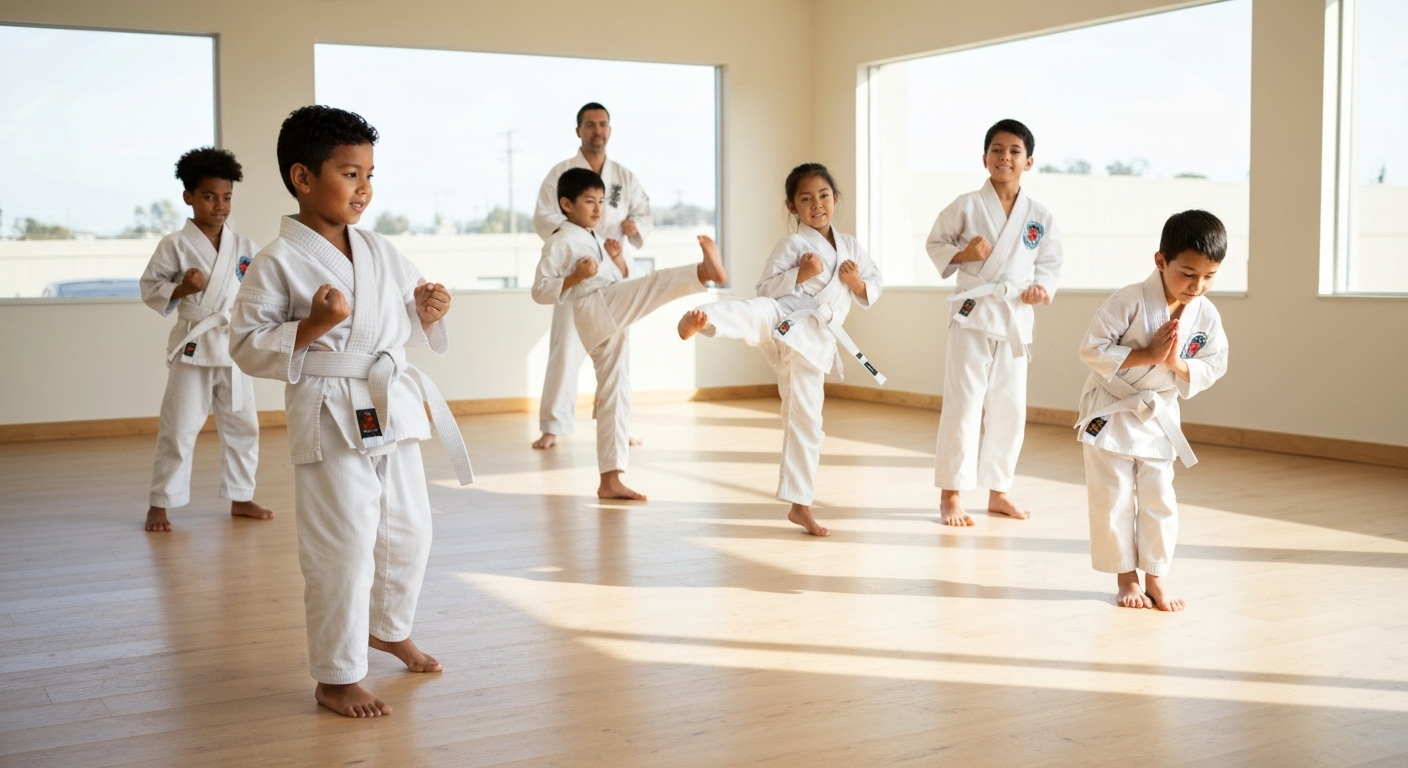
Which martial art is right for my kid — karate, taekwondo, or judo?
You've heard martial arts builds discipline, confidence, and self-defense skills. But when you start looking, the options are overwhelming. Every dojo claims to be the best. Every style promises different benefits. And you're not sure if your 6-year-old will love it or quit after two weeks.
Quick Answer: Karate emphasizes striking and blocking (good for kids who like structure), taekwondo focuses on high kicks and agility (great for energetic kids), and judo teaches grappling and throws (ideal for smaller kids facing larger opponents). Most Bay Area programs cost $100-$250/month depending on class frequency. Start with 2-3 trial classes at different styles before committing — your kid's interest matters more than the "best" style.
Here's what you need to know to choose the right martial arts program for your Bay Area kid in 2026.
Why Martial Arts for Kids?
Build your summer plan
Map every week of summer in 3 minutes
KidPlanr lays out every week with camps that match each kid's age and interests — and tracks which weeks still have spots.
Build my calendar →Before diving into which style, let's address what martial arts actually does for kids — beyond the kicks and punches you see in movies.
Real benefits (backed by research):
- Discipline and focus: Martial arts classes follow structured routines. Kids learn to follow instructions, respect instructors, and stay focused during drills.
- Confidence without aggression: Learning self-defense gives kids confidence in handling conflicts. Most programs teach de-escalation first — physical techniques are the last resort.
- Physical fitness: Martial arts combines strength, flexibility, coordination, and cardiovascular fitness. Kids who struggle with team sports often thrive in martial arts because progress is individual, not competitive against peers.
- Goal-setting: Belt systems provide tangible milestones. Kids see progress from white belt to yellow to green — concrete achievement that builds self-esteem.
What this does NOT mean: Your shy 5-year-old won't transform into a martial arts master in 3 months. Progress is gradual. Some kids take 6-12 months to earn their first belt. That's normal.
Karate vs Taekwondo vs Judo — Which Style Fits Your Kid?
Here's the honest comparison parents need. Each style has different strengths. Your kid's age, personality, and interests determine the best fit — not which style is "superior."
Karate: Striking, Blocking, and Discipline
What it is: Japanese martial art emphasizing punches, blocks, and kicks. Students learn kata (choreographed forms) and kumite (sparring).
Best for:
- Kids who thrive on structure and routine
- Ages 5+ (younger kids struggle with precision required)
- Kids who like practicing alone (kata is individual, not partner-based)
Training focus: 60% forms/kata, 30% striking drills, 10% sparring (varies by dojo)
Pros: Strong emphasis on discipline, respect, and mental focus. Kata practice builds muscle memory and patience.
Cons: Less dynamic than taekwondo (fewer flashy kicks). Some kids find kata repetitive.
Typical Bay Area program: 2 classes/week, $100-$150/month, belt testing every 3-4 months.
Taekwondo: High Kicks and Agility
What it is: Korean martial art famous for spinning kicks, jumping kicks, and acrobatic techniques. Emphasizes speed and flexibility.
Best for:
- Energetic kids who need an outlet for high energy
- Ages 4+ (many programs offer "Tiny Tigers" for 4-7 year olds)
- Kids who like visible progress (belt promotions are frequent)
Training focus: 50% kicking drills, 30% forms, 20% sparring/board breaking
Pros: Builds excellent flexibility and cardiovascular fitness. Kids love the flashy kicks. Belt tests are motivating.
Cons: Higher risk of minor injuries (sprains, bumps) due to dynamic movements. Requires more physical coordination than karate.
Typical Bay Area program: 2-3 classes/week, $120-$200/month, belt testing every 2-3 months.
Judo: Throws, Grappling, and Leverage
What it is: Japanese martial art focused on throws, pins, and joint locks. Emphasizes using opponent's momentum against them.
Best for:
- Smaller kids dealing with larger opponents (technique over strength)
- Ages 6+ (younger kids struggle with body mechanics)
- Kids who like close-range problem-solving (judo is like physical chess)
Training focus: 60% throwing/takedown drills, 30% ground grappling (pins/escapes), 10% competition practice
Pros: Excellent for self-defense at close range. Teaches kids how to fall safely (ukemi). Less emphasis on striking means fewer concerns about kids "practicing punches at home."
Cons: Physical contact is constant — not ideal for kids who dislike being grabbed or touched. Requires partner practice (can't solo train like kata).
Typical Bay Area program: 2 classes/week, $100-$180/month, belt testing every 4-6 months.
Quick Comparison Table
| Factor | Karate | Taekwondo | Judo |
|---|---|---|---|
| Primary techniques | Punches, blocks, some kicks | High kicks, spinning kicks | Throws, grappling, pins |
| Age recommendation | 5+ | 4+ (Tiny Tigers programs) | 6+ |
| Physical intensity | Medium | High (cardio-focused) | High (strength-focused) |
| Injury risk | Low | Medium (dynamic kicks) | Medium (throws, falls) |
| Solo practice at home | Yes (kata) | Yes (kicking drills) | No (requires partner) |
| Typical monthly cost | $100-$150 | $120-$200 | $100-$180 |
| Belt testing frequency | 3-4 months | 2-3 months | 4-6 months |
The truth about choosing: Your kid's interest beats "optimal style." A child who loves taekwondo will learn more in 6 months than a child forced into judo for 2 years. Try 2-3 trial classes at different styles. Let your kid decide.
What to Look For in a Good Dojo or Martial Arts Studio
Not all dojos are created equal. Here's what separates quality programs from mediocre ones — regardless of style.
Instructor Credentials (Critical)
Minimum requirements:
- Black belt (2nd degree or higher) in the style they teach — 1st-degree black belts are still learning to teach. 2nd-degree+ instructors have teaching experience.
- Background check on file — reputable programs display proof or confirm verbally when asked.
- CPR/First Aid certification — accidents happen. Instructors must be trained to respond.
Red flag: Instructor claims expertise in "5 different martial arts." Mastery takes years. Multi-style claims often indicate shallow knowledge.
What this does NOT mean: A 3rd-degree black belt isn't automatically better than a 2nd-degree. Teaching skill matters more than belt rank beyond 2nd-degree.
Class Size and Student-to-Instructor Ratio
Quality benchmarks:
- Beginner classes (ages 4-7): Maximum 12 students per instructor
- Intermediate classes (ages 8-12): Maximum 15 students per instructor
- Advanced classes (teens): Maximum 20 students per instructor
Why this matters: Martial arts requires individual correction. In a class of 25 kids with one instructor, most students get zero personal feedback. Form errors become habits.
What to observe during trial class: Does the instructor correct at least 50% of students by name during drills? If not, class is too large.
Belt Testing and Promotion Philosophy
Two approaches (both are valid):
1. Slow progression (traditional):
- Belt tests every 4-6 months
- High standards for advancement
- Most kids take 3-5 years to reach black belt (ages 8-13)
- Pros: Kids earn belts through real skill improvement
- Cons: Some kids get discouraged by slow progress
2. Faster progression (commercial):
- Belt tests every 2-3 months
- More intermediate belt levels (colored stripes, half-belts)
- Most kids reach "junior black belt" in 2-3 years (ages 6-9)
- Pros: Frequent milestones keep kids motivated
- Cons: Belt inflation — black belt at age 8 doesn't equal adult black belt skill
Neither is wrong. Choose based on your kid's personality. Highly motivated kids thrive in traditional programs. Kids who need frequent wins do better with faster progression.
Red flag: Programs that guarantee "black belt in 18 months" — this is a money grab. Real martial arts mastery takes years.
Competitive vs Recreational Tracks
Most Bay Area programs offer both. Here's what they mean:
Recreational track:
- Focus: Fitness, fun, basic self-defense
- No mandatory competitions or belt tests
- Typical commitment: 2 classes/week
- Good for: Kids who want martial arts as a hobby, not a sport
Competitive track:
- Focus: Tournament preparation, advanced techniques, winning medals
- Mandatory competitions 2-4 times/year
- Typical commitment: 3-4 classes/week
- Good for: Kids who love competition and want to push their limits
Scary content warning: Competitive martial arts can be intense. Belt-testing pressure, tournament anxiety, and injury risk increase significantly on the competitive track.
Anti-anxiety balance: Many programs offer recreational tracks with zero competition — focus is on fun, discipline, and confidence-building without belt pressure. Your kid doesn't need to compete to benefit from martial arts. Most Bay Area kids stay recreational and thrive.
What to ask during trial: "Do you offer a recreational track? Can kids skip competitions?" If the answer is "all our students compete," that's fine — but know what you're signing up for.
20+ Verified Bay Area Martial Arts Programs for Kids (2026)
Here are quality programs across the Bay Area, verified to be operating in 2026. Pricing ranges are approximate; call for current rates.
San Francisco & Peninsula
One Martial Arts (San Francisco & Millbrae)
- Style: Kenpo Karate
- Ages: 3+
- Cost: $150-$200/month (2-3 classes/week)
- What parents like: Professional instructors, strong fundamentals, family-friendly vibe
- onemartialarts.com
Quantum Martial Arts (San Francisco, Mission District)
- Style: Mixed martial arts (karate, taekwondo, kickboxing)
- Ages: Pre-K (4-5), Kids (6-9), Teens (10-14)
- Cost: Nonprofit pricing, $100-$150/month
- What parents like: Community-focused, sliding scale for low-income families
- quantumsf.org
United Studios of Self Defense (Palo Alto)
- Style: Mixed martial arts (karate, jujitsu, kickboxing)
- Ages: 5+
- Cost: $120-$180/month
- Location: 2675-B Middlefield Rd, Palo Alto
- What parents like: Builds confidence and discipline, family-friendly
- paloaltoussd.com
Kung Fu Kids (Palo Alto, Mountain View, Pleasanton, San Jose)
- Style: Kung Fu, Tai Chi
- Ages: 4+
- Cost: $130-$190/month
- What parents like: Multiple Bay Area locations, strong character development focus
- kungfu.kids
South Bay (San Jose, Santa Clara, Sunnyvale)
King's Martial Arts Academy (San Jose)
- Style: Taekwondo
- Ages: 4+ (Tiny Tigers program for 4-7 year olds)
- Cost: $100-$150/month
- What parents like: Serving San Jose since 1989, affordable, family-oriented
- karate4u.com
Vision Martial Arts (San Jose)
- Style: Mixed martial arts & fitness
- Ages: All ages
- Cost: $120-$200/month
- What parents like: Modern facility, fitness-focused approach
- visionmaca.com
Exceed Martial Arts (San Jose)
- Style: Karate, self-defense
- Ages: 5+
- Cost: $110-$170/month
- What parents like: Family-run, personalized attention
- exceedmartialarts.com
Infinity Martial Arts (San Jose)
- Style: Sport Karate
- Ages: 4+
- Cost: $120-$180/month (group classes)
- What parents like: Sport karate focus, team-oriented culture
- teaminfinityma.com
Guerrilla Jiu-Jitsu (San Jose)
- Style: Brazilian Jiu-Jitsu
- Ages: Kids classes available
- Cost: $140-$220/month
- What parents like: Self-defense emphasis, anti-bullying focus, competition training
- guerrillajiujitsu.com
Shaolin Warrior Martial Arts (San Jose)
- Style: Kung Fu
- Ages: 5+
- Cost: $110-$160/month
- What parents like: Traditional Chinese martial arts, cultural education
- shaolinwarriormartialarts.com
East Bay (Oakland, Berkeley, Alameda)
Bay Area Martial Arts (Oakland)
- Style: Mixed martial arts & fitness
- Ages: 4-15 (Core Skillz, Extreme Skillz programs)
- Cost: $120-$200/month
- What parents like: Modern fitness approach, structured skill progression
- bamaoakland.com
Bay Area Jiu Jitsu (Berkeley)
- Style: Brazilian Jiu-Jitsu
- Ages: 4+ (great for shy kids)
- Cost: $130-$190/month
- Location: 2529 Telegraph Avenue, Berkeley
- What parents like: Introduces techniques in fun, no-pressure way for young/shy kids
- berkeleyparentsnetwork.org
West Wind Kung Fu (Berkeley, Piedmont, Alameda)
- Style: Kung Fu
- Ages: 5+
- Cost: $120-$180/month
- What parents like: Three East Bay locations, personable instructors, excellent self-defense skills
- Verified via: Berkeley Parents Network recommendations
Other Bay Area Cities
Taekwon Kids (Mountain View)
- Style: Taekwondo, Judo
- Ages: All ages
- Cost: $120-$180/month
- What parents like: Multi-style options, established program
Do Martial Arts (Castro Valley)
- Style: Mixed martial arts
- Ages: 5+
- Cost: $110-$170/month
Hayward BJJ (Hayward)
- Style: Brazilian Jiu-Jitsu
- Ages: Kids classes available
- Cost: $130-$200/month
Mires Martial Arts (Concord)
- Style: Karate, kickboxing
- Ages: 4+
- Cost: $120-$180/month
Pricing note: Most programs charge monthly tuition based on class frequency:
- 1-2 classes/week: $100-$150/month
- 3-4 classes/week: $150-$250/month
- Unlimited classes: $250-$300/month
Hidden costs to budget for:
- Registration fee: $50-$150 (one-time)
- Uniform (gi): $40-$80
- Belt testing fees: $30-$75 per test (every 2-6 months)
- Equipment (optional): Sparring gear $50-$150 if your kid competes
This does NOT mean you need to spend $500 upfront. Many dojos include the first uniform in registration. Belt testing is optional in recreational tracks. Start with trial classes (usually free or $10-20) before committing.
How to Evaluate Trial Classes (Use This Checklist)
Don't just watch your kid's first class and decide on vibes. Use this structured checklist to compare 2-3 programs before committing.
Trial Class Evaluation Checklist
Print this or save on your phone. Fill it out during or immediately after each trial class.
Program Name: __
Date: __
Style: Karate / Taekwondo / Judo / Other: ______
Instructor Quality
- [ ] Instructor introduced themselves and credentials: Yes / No
- [ ] Instructor called students by name: Most / Some / Few / None
- [ ] Instructor corrected form/technique for at least 50% of students: Yes / No
- [ ] Tone was encouraging (not harsh or dismissive): Yes / No
- Notes:
Class Structure
- [ ] Warm-up included stretching and cardio: Yes / No
- [ ] Drills were age-appropriate (not too hard, not too easy): Yes / No
- [ ] Class ended with cool-down or meditation: Yes / No
- [ ] Total class length matched advertised time: Yes / No
- Notes:
Safety & Environment
- [ ] Mats were clean and in good condition: Yes / No
- [ ] First aid kit visible in room: Yes / No
- [ ] Students followed safety rules (no horsing around): Yes / No
- [ ] Parents allowed to watch (or viewing area provided): Yes / No
- Notes:
Your Kid's Reaction
- [ ] Did your kid smile or laugh during class? Yes / No / Sometimes
- [ ] Did your kid ask when the next class is? Yes / No
- [ ] Did your kid mention the class again later that day? Yes / No
- Notes:
Logistics
- Class times offered: ____
- Monthly cost (for 2 classes/week): $______
- Registration fee: $______
- Uniform included? Yes / No — Cost if not: $______
- Contract required? Yes / No — Length: ______
- Cancellation policy: ____
- Location convenience (drive time from home): __ minutes
Final Decision
Would I enroll my kid here? Yes / Maybe / No
Why or why not:
Conversation Starters with Instructors
Ask these questions during or after the trial class. Reputable programs answer all of them transparently.
-
"Do you offer a recreational track, or is competition required?"
Why this matters: Clarifies whether your kid will be pressured to compete. -
"What's your student-to-instructor ratio for beginner classes?"
Why this matters: Over 15:1 means your kid gets minimal personal attention. -
"How often are belt tests, and what do they cost?"
Why this matters: Budget planning. Some programs charge $75 per test every 2 months (adds up fast). -
"What happens if my kid wants to quit after a month?"
Why this matters: Some programs lock you into 6-12 month contracts. Others are month-to-month. -
"Can parents watch classes, or is it drop-off only?"
Why this matters: For younger kids (4-6), you may want to observe to ensure they're safe and happy. -
"What's your policy on makeups if my kid misses a class?"
Why this matters: Life happens. Flexible programs allow makeups; rigid ones don't. -
"Do you have a trial period or money-back guarantee?"
Why this matters: Gives you an escape route if it's not the right fit.
Red flag answers:
- "We don't allow parents to watch" (for kids under 8) — safety concern
- "You must sign a 12-month contract on day one" — aggressive sales tactic
- "All our students compete" when you asked about recreational track — not listening to your needs
Green flag answers:
- "Try 3 classes for $30 total before committing"
- "We're month-to-month after the first 3 months"
- "Parents can watch every class from the viewing area"
Age-Specific Guidance: What to Expect by Age
Martial arts is different for a 4-year-old than a 12-year-old. Here's what's realistic at each stage.
Ages 4-6 (Tiny Tigers / Little Dragons Programs)
What they'll learn:
- Basic kicks, punches (without force)
- Balance drills (standing on one leg, walking a line)
- Listening to instructions, waiting their turn
- Simple routines (bow to instructor, follow commands)
What they WON'T master:
- Precise technique (motor skills are still developing)
- Extended focus (classes are 30-45 minutes, not 60)
- Self-defense applications (too young to understand context)
Parent expectation: This age is about building comfort with structure and movement. If your 5-year-old can follow a 3-step instruction and stay engaged for 30 minutes, they're succeeding.
Typical progress: Most kids take 6-12 months to earn their first belt (usually yellow or orange). That's normal.
Ages 7-9 (Beginner to Intermediate)
What they'll learn:
- More complex combinations (punch-block-kick sequences)
- Forms/kata (10-15 move patterns)
- Sparring basics (light contact, controlled)
- Self-control and discipline
What they'll struggle with:
- Remembering sequences (forms require memorization)
- Peer comparison ("Why is she a green belt and I'm still yellow?")
- Frustration when progress slows (early belts are fast, later belts take longer)
Parent expectation: This is where martial arts gets real. Kids who stick with it past the first 6 months often continue for years. Kids who quit usually do so around month 8-10 (novelty wears off, progress slows).
How to support: Praise effort, not belt color. "I saw you remember that whole form today" beats "When will you get your next belt?"
Ages 10-12 (Intermediate to Advanced)
What they'll learn:
- Advanced techniques (spinning kicks, joint locks, advanced throws)
- Sparring with intent (controlled but competitive)
- Leadership (many programs make older kids "assistant instructors")
- Goal-setting and persistence
What they'll face:
- Plateau periods (skill improvement slows between belts)
- Peer pressure (some kids compete, some don't — social dynamics shift)
- Time commitment (if competitive, 3-4 classes/week + tournaments)
Parent expectation: By this age, kids either love martial arts or they don't. Don't force it. A 12-year-old who wants to quit after 3 years has learned discipline, fitness, and self-defense — that's success, even if they don't reach black belt.
What this does NOT mean: Quitting at age 12 isn't "giving up." Many kids switch to other sports or activities. The skills transfer.
Making the Decision: Your 3-Step Action Plan
You've read the comparisons. You've seen the programs. Now what?
Step 1: Narrow to 3 Dojos (This Week)
Filter criteria:
1. Location: Within 15-minute drive (you'll be doing this 2-3 times/week)
2. Style: Karate, taekwondo, or judo based on your kid's personality (see comparison table above)
3. Cost: Within your budget ($100-$250/month range)
Where to find them: Search "martial arts near me" on Google Maps, or use the verified program list above. Call or check websites to confirm they have classes for your kid's age.
Don't overthink this: You're narrowing to 3 for trials, not committing for life.
Step 2: Book 3 Trial Classes (Next 2 Weeks)
Most programs offer free or low-cost ($10-20) trial classes. Book one trial per week for 3 consecutive weeks.
Why 3 trials? One trial isn't enough — your kid might be having an off day, or the instructor might be a substitute. Three trials reveal patterns.
Bring the checklist (see above). Fill it out during each class. Compare notes after all three.
Step 3: Let Your Kid Decide (With Guidance)
After 3 trials, ask your kid:
- "Which class was the most fun?"
- "Which instructor did you like the most?"
- "Which one do you want to go back to?"
If they say "none": That's valid feedback. Martial arts isn't for every kid. Don't force it.
If they can't decide between two: Pick the one with better logistics (closer, cheaper, or better class times). The marginal quality difference won't matter if the commute is exhausting.
If they pick the most expensive one: Have an honest budget conversation. "We can afford Option B (cheaper) twice a week, or Option A (expensive) once a week. Which do you prefer?"
This does NOT mean letting a 6-year-old make financial decisions. You're giving them agency within your constraints.
Common Mistakes Parents Make (And How to Avoid Them)
Mistake #1: Signing a 12-month contract after one trial class
Fix: Always start with a trial period or month-to-month option. Most quality programs offer this. If they don't, that's a red flag.
Mistake #2: Choosing the dojo with the fanciest facility
Fix: Shiny floors and wall-mounted TVs don't make better instructors. Visit during a kids' class and watch the teaching quality, not the décor.
Mistake #3: Expecting your kid to "transform" in 3 months
Fix: Martial arts builds discipline slowly. If your kid is slightly more focused and confident after 6 months, that's success. Don't expect dramatic personality changes.
Mistake #4: Pushing your kid to compete when they hate it
Fix: Recreational martial arts is valid. Not every kid needs to win medals. If your kid loves classes but hates tournaments, let them stay recreational.
Mistake #5: Comparing your kid to other kids in class
Fix: Martial arts is individual progress. Your 7-year-old's green belt is their achievement, not a race against the 8-year-old's blue belt.
Frequently Asked Questions
Q: How long does it take to get a black belt?
A: Depends on the program. Traditional programs: 5-7 years (ages 8-15). Faster progression programs: 2-3 years to "junior black belt" (ages 6-9). Adult-level black belt typically takes 8-10 years from starting as a child.
Q: Is martial arts safe for kids?
A: Yes, when taught properly. Injury rates are lower than soccer, basketball, or football. Most injuries are minor (bruises, sprains). Serious injuries are rare in kids' classes (strict supervision and protective gear required).
Q: What if my kid is shy or not athletic?
A: Martial arts is excellent for shy kids — builds confidence without team pressure. Non-athletic kids often thrive because progress is self-paced, not competitive against peers.
Q: Can my kid do martial arts if they already play another sport?
A: Yes. Many kids do martial arts 2x/week alongside soccer, swim team, or music lessons. Just watch for over-scheduling — if your kid is exhausted every night, scale back.
Q: Do we need to buy expensive gear right away?
A: No. Most programs include or loan a basic uniform for the first month. Buy your own after you're sure your kid will continue. Sparring gear is only needed if your kid joins the competitive track (months or years later).
Q: What if the dojo tries to pressure us into signing a long contract?
A: Walk away. Quality programs don't need high-pressure sales. Month-to-month or 3-month trial options are standard at reputable dojos.
Q: My kid wants to quit after 2 months. Should I make them stick with it?
A: Depends. If they're bored but not miserable, encourage finishing the session (usually 8-12 weeks). If they're crying before every class, let them quit — forcing martial arts defeats the purpose (building confidence and discipline). Sometimes the style or dojo isn't the right fit. Try a different style before giving up entirely.
What to Do Next
You now know which martial arts style fits your kid, what to look for in a dojo, and how to evaluate trial classes. Here's your action plan:
This week:
1. Review the 20+ verified Bay Area programs above
2. Shortlist 3 dojos within 15 minutes of home
3. Call or email to book trial classes (mention you're a new parent exploring options)
Next 2 weeks:
4. Attend all 3 trial classes with your kid
5. Fill out the trial class checklist for each program
6. Let your kid tell you which one they liked most
After trials:
7. Enroll for a 1-3 month trial period (NOT a 12-month contract yet)
8. Reassess after 8-12 weeks — is your kid still excited? Then commit longer term.
The right martial arts program builds confidence, discipline, and fitness without stress or pressure. Trust your kid's instincts, ask the hard questions, and don't sign anything you haven't fully understood.
Track your kid's activities — including martial arts — with KidPlanr. We help Bay Area families organize afterschool schedules, compare options, and never miss a class. Join the waitlist for early access.
Sources:
- Bay Area Parent Magazine: Best Bay Area Martial Arts Schools
- 510 Families: Martial Arts Classes for East Bay Kids
- US Kuoshu: Karate vs Taekwondo vs Judo Comparison
- Martial Arts WA: Choosing the Best Martial Art for Kids
- Program websites verified individually, April 17, 2026
Build your summer plan
Map every week of summer in 3 minutes
KidPlanr lays out every week with camps that match each kid's age and interests — and tracks which weeks still have spots.
Build my calendar