Volleyball Classes for Kids Bay Area 2026 | Parent Guide
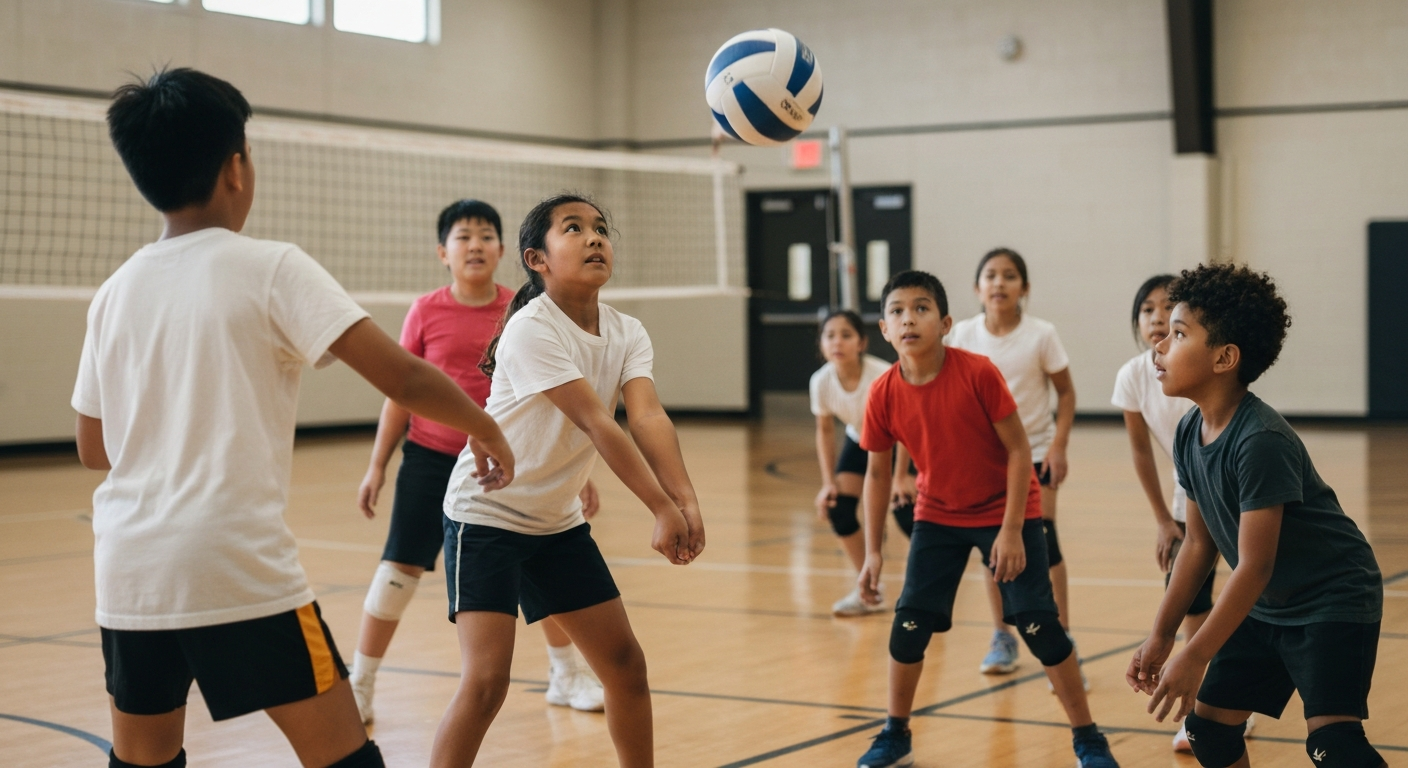
"My 8-year-old wants to try volleyball after watching college games. But I see club teams that practice 4 days a week and cost thousands. Can't she just... play volleyball somewhere normal?"
You're not imagining it — Bay Area youth volleyball has an unusual structure. Unlike soccer or basketball where recreational leagues are the default, volleyball often skips straight to competitive club teams. Many parents assume volleyball = expensive club commitment. It doesn't have to be.
Quick Answer: Bay Area kids can start volleyball in three ways. Beginner rec leagues (city programs, YMCA) cost $150-250/season with 1-2 sessions/week — best for ages 8-12 trying the sport. Skill-building classes ($30-45/session) teach fundamentals without team commitment. Club volleyball ($2,000-5,000/year, 3-4 practices/week) is for ages 10+ who love volleyball and want competitive play. Most kids ages 8-12 thrive in rec leagues or classes; club is optional and typically starts after 1-2 years of recreational play.
What This Means for Your Family
Plan summer in 3 minutes
Find the right summer camps for your kids
KidPlanr searches hundreds of Bay Area camps and builds a week-by-week calendar tailored to your kids' ages and interests.
Start planning for free →The three-tier model exists because volleyball has a later start age than most sports. Unlike soccer or gymnastics where kids start at 3-5, volleyball typically begins at 8-10 due to net height, hand-eye coordination requirements, and understanding of team rotations. By age 10-12, kids have a clearer sense of whether they want casual play or competitive training.
How common is each tier?
- About 60% of Bay Area kids ages 8-12 start in recreational leagues or skill clinics
- Skill-building classes work well for ages 8-10 who want fundamentals before joining a team
- Club volleyball serves about 30-40% of youth players, mostly ages 11+
- Many club players started in rec leagues at ages 8-10 and transitioned
What you can do now:
Read the tier comparison below, use the Volleyball Readiness Decision Matrix at the end to identify which tier matches your child's age and interest level, then pick 2-3 Bay Area programs to trial. Most programs offer free trial sessions or drop-in classes.
What NOT to over-interpret:
Starting in recreational volleyball at age 8-10 doesn't mean your child "missed the window" for competitive play. Club teams actively recruit players ages 11-13 who started in rec leagues. You're not behind — you're building fundamentals first.
The Three Volleyball Tiers: What's the Real Difference?
Here's what you're actually comparing when you look at Bay Area youth volleyball options:
| Format | Cost | Time Commitment | Ages | Best For |
|---|---|---|---|---|
| Recreational League (city programs, YMCA, school) | $150-300/season | 1-2 sessions/week (2-3 hours total) | 8-14 | Kids trying volleyball, social play, learning rules and rotations |
| Skill-Building Classes (clinics, academies, camps) | $30-45/session (pay-per-class or 6-8 week sessions) | 1-2 classes/week (60-90 min) | 8-14 | Building fundamentals before team play, flexible schedule |
| Club Volleyball (travel teams, competitive leagues) | $2,000-5,000/year | 3-4 practices/week + weekend tournaments (10-15 hours/week) | 10-18 | Kids who love volleyball, want competitive play, high school and college pathway |
The key decision: Does your child want to try volleyball (rec league or skill class), or are they already committed and want to compete at a higher level (club)?
For most kids ages 8-12, the answer is "try volleyball" — and recreational leagues or skill clinics deliver that at the lowest cost and time commitment.
Tier 1: Recreational Volleyball Leagues (Best Starting Point for Ages 8-12)
Recreational volleyball is where most Bay Area kids begin. These leagues prioritize learning the game, equal playing time, and fun over wins and losses.
What Recreational Volleyball Looks Like
Structure:
- Season runs 8-12 weeks (Spring, Fall, or Winter depending on program)
- 1-2 weekly practices or sessions (60-90 minutes)
- Games are often integrated into practice or held on weekends
- Teams are balanced by age and skill level
- Equal playing time — most rec leagues rotate players through all positions
Philosophy:
Recreational leagues focus on teaching volleyball fundamentals (serving, passing, setting, hitting) and teamwork. The goal is to understand rotations, develop hand-eye coordination, and enjoy the sport — not to identify elite players early.
Cost:
$150-300 per season. This typically includes:
- Jersey or team shirt
- Coaching (volunteer or paid coaches)
- Gym time
- End-of-season recognition
What's NOT included:
- Kneepads ($15-30 one-time purchase)
- Court shoes ($40-80)
- Travel to away locations (most leagues play locally)
Time commitment:
2-3 hours/week during the season. Practices are typically weekday evenings; games may be weekends or integrated into practice sessions.
Top Bay Area Recreational Volleyball Programs (Verified 2026)
YMCA Silicon Valley Youth Volleyball
- Website: ymcasv.org
- Locations: Multiple branches (Santa Clara, San Jose, Cupertino, Saratoga)
- Ages: 8-14
- Cost: $180-250/season
- Structure: Rec league with skill-based divisions (beginner, intermediate)
- Note: Non-members can participate with slightly higher fees
City of Palo Alto Recreation — Youth Volleyball
- Website: cityofpaloalto.org/recreation
- Location: Palo Alto community centers and gyms
- Ages: 9-14
- Cost: $150-200/season (residents), $180-240 (non-residents)
- Structure: 8-week seasonal leagues with volunteer coaches
- Note: Registration typically opens 6-8 weeks before season start
Fremont Recreation Services — Youth Volleyball League
- Location: Fremont community gyms
- Ages: 8-13
- Cost: $160-220/season
- Structure: Co-ed recreational league with skill development focus
- Note: Includes jersey and end-of-season tournament
Albany Community Center — Youth Volleyball
- Location: Albany, East Bay
- Ages: 8-14
- Cost: $150-200/season
- Structure: After-school and weekend leagues
- Note: Smaller program, more personalized coaching
How to choose a rec league:
- Pick the program closest to your home (reduces drive time)
- Check if gyms are near your neighborhood
- Ask: Does the league guarantee equal playing time? (Most rec leagues do)
- Look for beginner-friendly programs if your child has never played before
Tier 2: Skill-Building Volleyball Classes (Best for Ages 8-12, Learning Fundamentals)
Skill-building classes are pay-per-session or short-term programs (6-10 weeks) where kids learn volleyball techniques without team commitment. Perfect for:
- Kids ages 8-12 who have never played volleyball before
- Families who want flexibility (no season-long commitment)
- Building fundamentals before joining a rec league or club team
- Kids who want to improve specific skills (serving, passing, setting)
What Skill-Building Classes Look Like
Structure:
- 60-90 minute classes, typically 1-2 times/week
- Small to medium groups (8-15 kids)
- Age-based or skill-based groupings
- Focus on individual skills first, then team play
- Drills, technique coaching, scrimmages
Philosophy:
Developmental and low-pressure. Classes emphasize proper technique, repetition, and confidence-building. Many programs use progression-based learning (master serving before moving to complex rotations).
Cost:
- Drop-in: $35-45/class
- Session packages: $250-400 for 8-10 weeks
- Camps (1-5 days): $200-600 depending on length
Time commitment:
1-3 hours/week. No weekend tournaments.
Top Bay Area Skill-Building Programs (Verified 2026)
Bay Area Volleyball Academy (BAVA)
- Website: bayareavolleyballacademy.com
- Locations: San Jose, Fremont, San Mateo
- Ages: 8-18
- Format: Weekly classes, clinics, and camps (beginner to advanced)
- Cost: $35-40/class, or $300-350 for 8-week sessions
- Note: Offers beginner-specific classes for kids new to volleyball
Elevate Volleyball Club — Youth Development Program
- Location: San Jose (South Bay)
- Ages: 9-14
- Format: 8-week skill development sessions (not competitive teams)
- Cost: $280-320/session
- Note: Focuses on fundamentals before moving to club tryouts
Stanford Volleyball Camps
- Website: gostanford.com/sports/2013/7/26/camps-clinics
- Location: Stanford campus, Palo Alto
- Ages: 8-18 (skill-based camps available)
- Format: Summer day camps and overnight camps (1-5 days)
- Cost: $300-800 depending on camp length
- Note: Taught by Stanford coaching staff and college players
West Coast Elite Volleyball — Beginner Clinics
- Locations: Multiple East Bay and South Bay gyms
- Ages: 8-14
- Format: Weekend clinics and drop-in sessions
- Cost: $40/drop-in, or $300 for 8-session package
- Note: No team commitment; focus on skill-building only
Courtside Volleyball Club — Youth Skills Program
- Location: Sunnyvale
- Ages: 8-13
- Format: 10-week skills program (non-competitive)
- Cost: $350-400/session
- Note: Prepares kids for club or school team tryouts
When to pick skill classes over rec league:
- Your child has never played volleyball and wants to learn basics first
- You want to trial volleyball before committing to a full season
- Your child wants to improve specific skills before trying out for a team
- Your schedule doesn't allow for regular weekly games or practices
Tier 3: Club Volleyball (For Ages 10+, Competitive Focus)
Club volleyball is year-round competitive play for kids who love the sport and want to train at a higher level. These programs are NOT necessary for most kids — they're an option for children who are passionate about volleyball and ready for serious commitment.
What Club Volleyball Looks Like
Structure:
- Year-round season (November-July typically, with short summer break)
- 3-4 practices/week (2 hours each)
- Weekend tournaments (often require travel to other Bay Area cities or outside the region)
- Tryouts in August-October (not all kids make teams)
- Age-based divisions (10U, 12U, 14U, etc.)
Philosophy:
Competitive development. Club volleyball focuses on winning, skill refinement, and preparing players for high school and college programs. Coaches are typically paid professionals with USAV certification.
Cost:
$2,000-5,000/year. This includes:
- Coaching fees
- Gym rental and practice time
- Tournament entry fees
- Uniforms (practice gear and game jerseys)
What's NOT included:
- Travel costs (hotels, gas, meals for away tournaments)
- Additional training (private lessons, strength conditioning)
- Kneepads, shoes, bags ($150-300 total)
Time commitment:
10-15 hours/week during the season. Practices are weekday evenings; tournaments are full weekends (Friday-Sunday for out-of-area events).
Top Bay Area Club Volleyball Programs (Verified 2026)
South Bay Volleyball Club (SBVC)
- Website: sbvolleyball.com
- Location: San Jose, South Bay
- Ages: 10-18 (club teams by age division)
- Cost: $2,500-4,000/year depending on team level
- Structure: Competitive club with regional and national tournament participation
- Note: One of the largest and most established South Bay programs
Bay to Bay Volleyball Club
- Website: baytobayvolleyball.com
- Location: East Bay (Alameda, Castro Valley)
- Ages: 11-18
- Cost: $2,800-4,500/year
- Structure: Multiple team levels (recreational club to elite national teams)
- Note: Strong college placement track record
Silicon Valley Volleyball Club (SVVC)
- Location: South Bay (Sunnyvale, Santa Clara)
- Ages: 10-18
- Cost: $3,000-5,000/year (higher-level teams cost more)
- Structure: Regional and national tournament schedule
- Note: Competitive tryouts; not all kids make teams
Peninsula Volleyball Club (PVC)
- Location: Palo Alto, Peninsula
- Ages: 11-18
- Cost: $2,500-4,200/year
- Structure: Club teams with college prep focus
- Note: Smaller program, more individualized coaching
NorCal Volleyball Club
- Locations: Multiple Bay Area locations
- Ages: 10-18
- Cost: $2,200-3,800/year
- Structure: Regional competitive play with some national tournaments
- Note: Known for strong coaching development
When Is Club Volleyball the Right Choice?
Green flags for club readiness:
- Your child has played 1-2 years of recreational volleyball and loves the sport
- They ask to play volleyball outside of practice (backyard, beach, open gym)
- They're willing to commit 10-15 hours/week during the season
- Your family can afford $3,000-6,000/year including travel
- Your child is comfortable with competition and feedback
- They're interested in playing high school or college volleyball
Red flags (wait on club):
- Your child has never played volleyball before
- They're trying volleyball for the first time this season
- Your family schedule can't accommodate 3-4 weekly practices
- Your child is already over-scheduled (club volleyball + other competitive sports often don't mix)
- You're unsure if your child will stick with the sport
Most kids don't need club volleyball. Recreational leagues and skill classes are sufficient for enjoyment, fitness, and social development. Club is for kids who genuinely love the sport and want more.
How to Choose the Right Volleyball Path for Your Child
Use this decision matrix to identify which tier fits your child's current age, interest level, and time availability:
Volleyball Readiness Decision Matrix
Your child is 8-10 years old AND has never played volleyball:
→ Start with: Skill-building class or beginner rec league
→ Why: At this age, most kids are still developing hand-eye coordination and understanding of team sports. Skill classes teach fundamentals without pressure. After 6-12 months, reassess if they want to continue.
Your child is 8-12 AND wants to "try volleyball":
→ Start with: Recreational league (YMCA, city program)
→ Why: Rec leagues provide team experience, regular practice, and low-cost commitment. If your child loves it, they can progress to club at ages 11-13. If they don't, you haven't over-invested.
Your child is 10-14 AND has played 1-2 seasons of rec volleyball AND asks to play more:
→ Consider: Club volleyball tryouts
→ Why: This is the typical progression path. Kids who enjoy recreational volleyball and want more competition transition to club around ages 11-13. Attend a few club tryouts to see if your child is ready for the time and intensity commitment.
Your child is 13-16 AND wants to play high school volleyball:
→ Consider: Club volleyball OR high-intensity skill clinics
→ Why: Many high school teams expect players to have club or advanced rec experience. If your child hasn't played club, attending skill clinics or offseason training can help them prepare for high school tryouts.
Your family schedule can't accommodate 10+ hours/week:
→ Stick with: Recreational league or skill classes
→ Why: Club volleyball requires significant time commitment (practices + weekend tournaments). If that doesn't fit your family, rec leagues and classes still provide great volleyball experience with 2-4 hours/week.
Red Flags: When to Pause or Switch Programs
Not all volleyball programs are a good fit for every child. Here's what to watch for:
Red Flags in ANY Program
Your child dreads going to practice:
If your child consistently resists going to volleyball, ask why. Occasional nerves are normal, but chronic reluctance often means the program is too intense, the coaching style doesn't fit, or your child isn't ready for that level.
Coach focuses only on winning (in a recreational program):
Recreational volleyball should prioritize skill development and equal playing time over winning. If your rec league coach benches weaker players or yells about losses, that's a culture mismatch.
No clear skill progression:
Good programs — at any level — teach technique and provide feedback. If practices are just scrimmages with no drills or coaching, your child won't improve.
Cost is higher than disclosed:
Watch for "hidden" costs: mandatory team fundraisers, additional tournament fees, required private lessons. Reputable programs disclose all costs upfront.
Club-Specific Red Flags
Club coach pressures you to commit before August tryouts:
Legitimate clubs hold open tryouts and don't guarantee spots before evaluations. If a coach pressures you to "reserve" a spot early, that's a business tactic, not a merit-based program.
Travel schedule conflicts with school:
Some club teams travel every other weekend, including long-distance tournaments that require Friday school absences. If your child is missing school regularly for volleyball, reassess priorities.
Your child is injured frequently:
Overuse injuries (shoulder, wrist, knee pain) are common in high-volume club sports. If your child is injured more than twice in a season, talk to the coach about practice intensity and consider reducing schedule.
Frequently Asked Questions
What age should my child start volleyball?
Most programs start at age 8. Some skill clinics accept kids as young as 7, but volleyball requires understanding of rotations, hand-eye coordination, and team concepts that develop around ages 8-10. Starting at 8-10 is typical and not "late."
Do we need to buy a volleyball and practice at home?
Not required, but helpful. A basic youth volleyball ($15-25) lets your child practice serving and passing at home. Most programs provide balls during practice.
How tall does my child need to be for volleyball?
At the recreational and beginner club level, height doesn't matter. Taller players have an advantage at the net, but shorter players can excel as setters, passers, and defensive specialists. Most youth programs don't cut players based on height.
Can my child play volleyball and another sport?
Yes, especially at the recreational level. Rec volleyball seasons are 8-12 weeks and typically don't overlap with spring soccer or fall basketball. Club volleyball (year-round commitment) is harder to combine with other competitive sports.
What's the difference between beach volleyball and indoor volleyball for kids?
Beach volleyball is typically 2v2 and played on sand; indoor volleyball is 6v6 on a hard court. Most Bay Area youth programs focus on indoor volleyball, but some clubs and camps offer beach volleyball for ages 10+. Beach volleyball is a great summer supplement to indoor play.
How do I know if my child is ready for club volleyball?
Ask three questions: (1) Has your child played recreational volleyball for at least 1 year and enjoyed it? (2) Is your child willing to practice 3-4 times/week? (3) Can your family afford $3,000-6,000/year? If yes to all three, attend club tryouts and see if your child makes a team. If they don't make a team this year, they can try again next year.
Next Steps: Pick 2-3 Programs to Trial
Here's your action plan:
For kids new to volleyball (ages 8-10):
1. Pick one rec league near you (YMCA, city program, school)
2. Pick one skill-building class or camp (BAVA, Stanford, Elevate)
3. Let your child try both formats, then commit to whichever they enjoy more
For kids who played rec volleyball and want more (ages 11-14):
1. Research 2-3 club programs near you (SBVC, Bay to Bay, NorCal)
2. Attend summer skills camps to prepare for fall tryouts
3. Talk to current club parents about time commitment and costs before committing
For kids preparing for high school volleyball (ages 13-16):
1. Join a recreational league or club team now (high school coaches expect prior experience)
2. Attend offseason clinics and open gyms
3. Watch high school games to understand the level of play
Start Simple: Rec League or Skill Class First
You don't need to decide your child's volleyball future today. Start with a low-cost, low-commitment option — recreational league or skill-building class — and see if your child loves the sport.
If they do, you can always progress to club volleyball later. If they don't, you've invested 8-12 weeks and $150-300, not an entire year and $3,000+.
Plan summer in 3 minutes
Find the right summer camps for your kids
KidPlanr searches hundreds of Bay Area camps and builds a week-by-week calendar tailored to your kids' ages and interests.
Start planning for free