Tennis Classes for Kids in Bay Area 2026
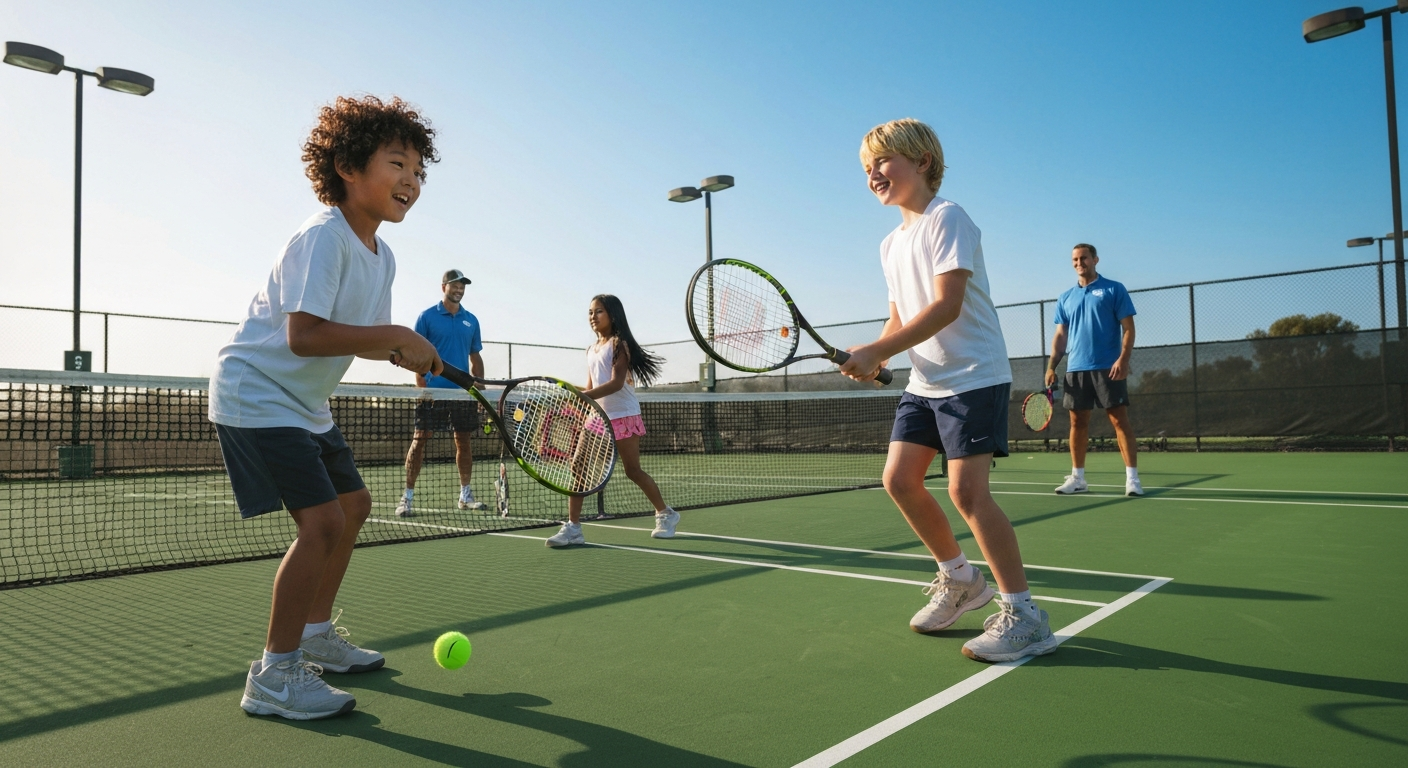
Is your child ready for tennis?
Maybe they've been asking about the sport after watching a match, or you're looking for a year-round activity that builds coordination and confidence. Either way, you're facing a maze of options: rec programs, private lessons, team clinics, competitive academies. And the price range? Anywhere from $15 per class to $300+ per month.
Quick Answer: Most kids can start tennis at age 4-5 with modified equipment. Rec programs ($15-25/class) work well for beginners ages 4-8; group clinics ($150-250/month) suit ages 7-12 who want regular practice; private lessons ($80-120/hour) are typically unnecessary before age 8-9 unless your child shows competitive interest. Try 4-8 classes before committing to a full season—most Bay Area programs offer drop-in or trial options.
Here's how to choose the right tennis program for your child in the Bay Area—without overspending or overcommitting before you know if they'll stick with it.
Why Tennis for Kids?
All Bay Area tennis camps in one place
Find tennis camps tailored to your kid
Filter hundreds of tennis camps by age, location, and week — then save them to a week-by-week calendar.
Find tennis camps →Tennis builds skills that matter beyond the court: hand-eye coordination, strategic thinking, and the ability to compete individually while being part of a team. Unlike team sports where your child might sit on the bench, tennis gives every kid active playing time.
The Bay Area has exceptional tennis infrastructure—public courts, USTA programs, and academies at every level. That's both an advantage (lots of options) and a challenge (how do you choose?).
Age-Based Progression: What Format Fits Your Child
Tennis programs differ by age because the sport adapts equipment and court size for developmental stages. Here's what to expect:
Ages 4-6: Parent-Child or Tiny Tots Programs
At this age, tennis is play-based. Kids use foam balls and shorter racquets on mini courts. The goal isn't competition—it's building comfort with racquet skills, movement, and taking turns.
What to look for:
- 30-45 minute sessions (attention span limit)
- Low student-to-coach ratio (4-6 kids max)
- Parent participation or observation options
- Foam or "red ball" equipment (softer, slower)
Typical cost: $15-25 per class, often in 6-8 week blocks
Many city rec programs start here. YMCA branches in San Jose, Palo Alto, and Oakland offer parent-child tennis as part of youth sports programming.
Ages 7-9: Group Clinics or Recreational Leagues
This is where most kids start if they haven't done the parent-child track. They can hold a junior racquet, understand basic rules, and focus for 60 minutes.
Format options:
- Rec leagues (city parks & rec): Lowest cost, casual, social-first. Typical structure: one lesson per week, 6-10 weeks, sometimes includes a mini tournament at the end.
- Group clinics (tennis clubs/academies): More structured. 1-2 sessions per week, progressive skill development, slightly competitive.
What to look for:
- "Green ball" or "orange ball" progression (modified court sizes)
- Skills before competition (most kids aren't ready for match play until 8-9)
- Positive coaching (avoid programs that emphasize winning over skill-building at this age)
Typical cost:
- Rec leagues: $100-180 for 8-week session (1x/week)
- Group clinics: $150-250/month (2x/week)
The difference? Rec leagues focus on participation and fun. Clinics focus on skill progression and may feed into competitive tracks later.
Ages 10-12: Clinics, Team Tennis, or Competitive Tracks
By age 10, kids who've stuck with tennis are ready for more. They can play full-court with regular balls, understand scoring, and handle match pressure.
Format options:
- Recreational clinics: Still skill-focused, 2-3x/week, some match play
- USTA Junior Team Tennis (JTT): Team-based league play, boys and girls compete together, low-pressure introduction to competition
- Competitive academy tracks: For kids showing interest in tournaments; higher intensity, more court time, selective admissions
What to look for:
- Match play opportunities (not just drills)
- Pathway options (can they move up if interested, or move down if overwhelmed?)
- Tournament exposure (optional, not mandatory)
Typical cost:
- Rec clinics: $200-300/month
- USTA JTT: $150-200 per season (spring, summer, fall)
- Competitive academies: $300-500/month+ depending on hours
The decision point: Does your child want to play tennis for fun and fitness, or are they interested in competing? The answer determines which format makes sense. Most kids ages 10-12 don't need competitive training—they need consistent practice and match experience.
Ages 13+: High School Prep, Competitive, or Recreational
By middle school, tennis often splits into two tracks: kids playing for their school team, and kids playing competitively for rankings/college recruitment.
If your teen is playing for school: Recreational clinics or JTT during off-season are enough to stay sharp. High school tennis provides the competitive structure.
If your teen is competing seriously: Expect 4-6 days per week, private lessons, tournament travel, and significantly higher costs ($500-1,500/month depending on academy and coaching level).
Cost reality check: Private coaching at this level runs $80-150 per hour. Most competitive players do 1-2 private lessons per week plus group training. It adds up fast.
The good news: most teens playing recreationally can thrive with 2-3 group sessions per week and occasional privates for technique refinement.
Tennis Formats Compared: Which One Fits Your Family?
| Format | Best For | Time Commitment | Typical Cost (Bay Area) | Pros | Cons |
|---|---|---|---|---|---|
| City Rec Programs | Ages 4-10, casual interest | 1x/week, 6-10 weeks | $100-180/session | Lowest cost, social, low pressure | Inconsistent coaching quality, limited skill progression |
| Group Clinics (Academy) | Ages 7-12, regular practice | 2-3x/week, year-round option | $150-300/month | Structured progression, quality coaching, pathway to competition | Higher cost, requires consistent attendance |
| USTA Junior Team Tennis | Ages 7-18, team experience | 1x/week matches + practice | $150-200/season | Team environment, match play, low pressure | Limited individual skill focus, seasonal (not year-round) |
| Private Lessons | All ages, technique refinement or competitive prep | 1-2x/week | $80-150/hour | Personalized feedback, rapid improvement | Expensive, can feel isolating without group play |
| Competitive Academy | Ages 9+, serious players | 4-6x/week | $300-1,500/month | Elite coaching, tournament prep, peer competition | Very high cost, intense time commitment, selective admissions |
The most common path: Start with rec programs or group clinics. Add occasional private lessons if your child is motivated and showing progress. Move to competitive tracks only if your child asks for more.
Top Tennis Programs in the Bay Area (2026)
Here are programs parents actually use, organized by region. All serve multiple skill levels unless noted.
Peninsula / South Bay
Silicon Valley Tennis Academy (Santa Clara, Mountain View)
- Ages: 4-18 (beginner through competitive)
- Format: Group clinics, private lessons, competitive training
- Typical cost: $200-300/month for group clinics
- Why parents choose it: Strong junior program, USTA-affiliated, multiple locations
- Website: siliconvalleytennis.com
Kim Grant Tennis Academy (Palo Alto, Menlo Park, Woodside)
- Ages: 4-18
- Format: Seasonal camps, year-round clinics, private coaching
- Typical cost: $250-350/month for regular clinics; summer camps vary
- Why parents choose it: Well-established, strong competitive track record
- Website: kimgranttennis.com
South Bay Area Tennis (Cupertino, Sunnyvale, Mountain View, San Jose)
- Ages: 5-18
- Format: Drop-in clinics, group classes, private lessons, summer camps
- Locations: Valley Church Tennis Courts (Cupertino) + sites throughout South Bay
- Typical cost: $20-30 per drop-in class; monthly packages available
- Why parents choose it: Flexible scheduling, multiple locations, affordable drop-in option
- Website: sbatennis.com
Bay Team Tennis Academy (San Jose)
- Ages: 5-18
- Format: Weekly youth clinics, summer camps
- Typical cost: Contact for current rates
- Why parents choose it: All skill levels welcome, family-friendly environment
- Website: bayteamtennisacademy.org
Stanford Nike Tennis School (Stanford University campus)
- Ages: 7-18
- Format: Summer day camps (week-long sessions)
- Typical cost: $500-750/week depending on age group and session
- Why parents choose it: Prestige, college-level facilities, experienced coaches
- Website: ussportscamps.com
NorCal Tennis Academy (San Jose, Fremont)
- Ages: 7-18
- Format: Competitive player development, clinics, tournament training
- Typical cost: $250-400/month depending on program level
- Why parents choose it: USTA award-winning, strong competitive results
- Website: norcaltennisacademy.com
San Francisco
SF Tennis Kids Club (San Francisco State University, various SF locations)
- Ages: 5-14
- Format: After-school clinics, weekend sessions, summer camps
- Typical cost: $150-250/month for after-school programs
- Why parents choose it: Convenient SF locations, beginner-friendly
- Website: sanfranciscokids.tennis
Tenacious Tennis Academy (San Francisco State University)
- Ages: 5-20
- Format: Kids Camp (5-7), Junior Camp (7-14), High Performance (11-20)
- Typical cost: Summer camps $400-600/week depending on age group
- Why parents choose it: Age-specific progression, university facilities
- Website: tenacioustennis.com
Tennis Coalition SF (citywide)
- Ages: 5-18
- Format: Free and low-cost youth tennis programs
- Typical cost: FREE or sliding scale based on income
- Why parents choose it: No-cost option, community-focused, scholarship opportunities
- Website: tenniscoalitionsf.org
East Bay
Harbor Bay Club (Alameda)
- Ages: 5-18
- Format: Group clinics, private lessons, summer camps
- Facilities: 19 lighted tennis courts
- Typical cost: Membership-based; junior clinics $200-300/month for members
- Why parents choose it: Excellent facilities, professional coaching staff
- Website: harborbayclub.com
Youth Tennis Advantage (Oakland, Berkeley, SF)
- Ages: 5-18
- Format: Free 8-week summer program + academic support
- Typical cost: FREE
- Why parents choose it: No-cost program, combines tennis with academic enrichment
- Note: 14 sites across East Bay and SF
USTA Programs (Region-Wide)
USTA NorCal Junior Team Tennis
- Ages: 7-18
- Format: Recreational team league, boys and girls play together
- Season: Spring, summer, fall seasons available
- Typical cost: $150-200 per season
- Why parents choose it: Team environment, match play without high-pressure competition, USTA-sanctioned
- Website: ustanorcal.com/juniors
What About Private Lessons?
Private lessons ($80-150/hour in the Bay Area) are valuable for:
- Technique refinement when a specific issue is holding your child back
- Competitive players preparing for tournaments
- Kids who learn better one-on-one than in groups
Private lessons are NOT necessary for:
- Beginners under age 8 (group clinics build skills just as well and cost less)
- Kids who aren't motivated to practice between lessons
- Social players who just want recreational exercise
Cost reality check: If your child does private lessons weekly, that's $320-600/month. For most families, that budget goes further with 2-3 group sessions per week plus an occasional private lesson every 4-6 weeks.
When to add privates: Your child is motivated, practicing on their own, and hitting a specific technical plateau (e.g., struggling with serve consistency). A few focused private sessions can unlock progress that group clinics can't address.
Red Flags: What to Avoid
-
Programs that promise college scholarships to 7-year-olds. Elite junior tennis is a long, expensive path with no guarantees. Be skeptical of academies marketing D1 scholarships to elementary schoolers.
-
Coaches who pressure you to commit to year-round privates immediately. Quality programs let kids try group clinics first.
-
No trial class or drop-in option. Reputable programs offer a way to test fit before committing to a full season.
-
Rigid age cutoffs without skill assessment. A skilled 8-year-old might thrive in a 10U group; a beginner 10-year-old needs a beginner class, not an age-based placement.
-
Facilities where you can't watch lessons. You should be able to observe, especially for younger kids.
How Much Does Tennis Really Cost?
Let's break down real scenarios for a Bay Area family:
Beginner (Ages 5-8):
- Rec program: $100-180 for 8-week session (1x/week)
- Equipment: $40-60 for beginner racquet, $20-30 for tennis shoes
- Total first season: $160-270
Intermediate (Ages 9-12, 2x/week group clinic):
- Group clinic: $200-300/month x 9 months (September-May)
- Equipment: $80-120 for junior racquet, $30-50 for shoes, $20-40 for balls/bag
- USTA JTT spring season (optional): $150-200
- Total annual: $2,080-3,150
Competitive (Ages 12+, academy track):
- Academy clinic 3x/week: $350-500/month x 12 months
- Private lessons 2x/month: $160-300/month
- Tournament entry fees: $50-100/tournament x 6-10 tournaments/year
- Travel (gas, hotels, meals): $500-2,000/year depending on tournament locations
- Equipment (higher-end racquets, frequent restringing): $200-400/year
- Total annual: $6,800-12,400+
Most Bay Area families land in the $1,500-3,000/year range for recreational to intermediate play. Competitive tennis jumps significantly.
The Hidden Costs Parents Don't Expect
- Court fees if practicing outside of program time (public courts are free; private clubs charge $10-30/hour)
- Restringing racquets every 2-4 months for active players ($25-50 per restring)
- Replacing shoes every 6-12 months (tennis is hard on footwear)
- Tournament travel if your child competes (hotel, gas, meals add up fast)
- Summer camps to maintain skills during school break ($400-750/week)
Budget for 10-20% more than the listed program cost to cover these extras.
Scholarships and Financial Aid
Many Bay Area programs offer need-based aid:
- Tennis Coalition SF: Free youth tennis programming for San Francisco residents
- Youth Tennis Advantage: Free 8-week summer program in Oakland, Berkeley, SF
- USTA NorCal: Scholarship opportunities for junior programs
- City rec programs: Many offer sliding scale fees based on household income
- Lifetime Activities (Santa Clara): Scholarships for eligible youth ages 4-16
Don't assume tennis is out of reach if cost is a concern. Ask about financial aid—many programs don't advertise it publicly but have funds available.
What to Ask Before You Commit
-
Can my child try a class before enrolling? Most programs offer drop-in or trial options ($20-30 for a single class).
-
What's the student-to-coach ratio? Aim for 4-6 kids per coach for younger ages, up to 8-10 for older/more skilled players.
-
What equipment do we need to bring? Some programs provide racquets for beginners; others require you to buy one.
-
What happens if my child misses a class? Can you make it up? Get a refund? Policies vary widely.
-
What's the pathway if my child wants to continue? Does the rec program feed into a competitive track, or would you need to switch to a different academy?
-
Who are the coaches? Look for USTA or PTR certification, not just "plays tennis well."
How to Know If Tennis Is the Right Fit (Trial Class Evaluation Checklist)
Use this during your child's first 1-2 trial classes to decide if tennis is working:
During the Class:
- [ ] Does my child stay engaged for the full session, or are they distracted/bored halfway through?
- [ ] Is the coach giving individual feedback, or just managing the group?
- [ ] Is the class moving at my child's pace, or is it too fast/too slow?
- [ ] Does my child seem to enjoy hitting the ball, or are they frustrated by misses?
- [ ] Is there a mix of drills and game-like activities, or all repetitive drills?
After the Class:
- [ ] Did my child ask when the next class is, or avoid talking about it?
- [ ] Did they mention anything specific they learned or enjoyed?
- [ ] Are they willing to practice between classes, or resistant?
Questions to Ask the Coach:
- [ ] "What did you notice about my child's skills or interest level?"
- [ ] "What format or program would you recommend for them next?"
- [ ] "Are there any areas we should work on at home?"
The Decision:
- Green light (commit to 6-8 weeks): Your child stayed engaged, asked to come back, and the coach's feedback was constructive and specific.
- Yellow light (try 2-3 more classes): Your child was neutral—not excited but not resistant. Give it a bit more time.
- Red light (try a different activity): Your child was bored, frustrated, or clearly uninterested. That's OK—not every sport clicks.
Tennis takes 4-8 classes before kids "get it." Don't judge after one session. But if your child is still disengaged after a month, it's worth exploring other activities instead of forcing it.
Planning Summer Camps Too?
If your child is already active in tennis and you're planning summer camps, you have two options:
-
Tennis-only camps (all day, skill-intensive): Best for kids who are motivated and want to improve. Examples: Stanford Nike Tennis School, Kim Grant Tennis Academy summer sessions.
-
Multi-sport camps with tennis (half day or 1-2 hours per day): Better for kids who like variety. Many Bay Area summer camps include tennis alongside swimming, arts, and outdoor activities.
Not sure which format fits? Search 3,000+ Bay Area summer camps on KidPlanr → to compare options by activity type, age, and budget.
Track Your Kid's Afterschool Schedule
Tennis is one piece of your child's year-round schedule. If you're juggling multiple activities—tennis in spring, soccer in fall, maybe piano lessons year-round—keeping track of it all gets messy fast.
We're building an activity tracker to help Bay Area parents manage this. Join the waitlist at kidplanr.com/afterschool → for early access when it launches in May 2026.
Final Thoughts: Start Small, Give It Time
Tennis is a lifetime sport. Your 6-year-old doesn't need elite coaching—they need a positive first experience that makes them want to come back.
Start with a rec program or group clinic. Try 4-8 classes before deciding if it's the right fit. If your child loves it, great—there are pathways to progress. If they don't, you've invested $100-200 and a few Saturday mornings, not thousands of dollars in year-long commitments.
The best tennis program for your child is the one they actually enjoy. Everything else—skill development, competition, college scholarships—builds from that foundation.
Frequently Asked Questions
Q: At what age can kids start tennis lessons?
Most programs accept kids as young as 4-5 with modified equipment (foam balls, shorter racquets, mini courts). At this age, it's more about motor skill development than tennis technique. Expect 30-45 minute sessions focused on fun, not competition.
Q: How much do tennis lessons cost for kids in the Bay Area?
City rec programs run $100-180 for 8-week sessions (1x/week). Group clinics at tennis academies cost $150-300/month for 2-3 sessions per week. Private lessons run $80-150/hour. Most families spend $1,500-3,000/year for recreational to intermediate play.
Q: Do I need to buy a tennis racquet, or can my child use what the program provides?
Many beginner programs (ages 4-7) provide racquets. For ages 8+, most programs expect kids to bring their own. A quality beginner junior racquet costs $40-80. Buy at a tennis specialty shop where staff can size the racquet correctly—using an adult racquet or wrong-sized junior racquet hurts technique development.
Q: Should my child do private lessons or group clinics?
Group clinics work better for most kids under age 10. They're more affordable, provide social interaction, and build skills just as effectively as privates at the beginner level. Add occasional private lessons (every 4-6 weeks) if your child hits a specific technical plateau. Save regular privates for ages 10+ who are motivated and competitive.
Q: What's the difference between USTA Junior Team Tennis and academy clinics?
JTT is a recreational league where kids play on teams (boys and girls together) in a low-pressure match format. It's seasonal (spring, summer, fall) and costs $150-200 per season. Academy clinics are year-round skill development programs focused on technique and progression, costing $150-300/month. Many kids do both—clinics for skill-building, JTT for match experience.
Q: Are there free or low-cost tennis programs in the Bay Area?
Yes. Tennis Coalition SF offers free youth programming in San Francisco. Youth Tennis Advantage runs free 8-week summer programs in Oakland, Berkeley, and SF. Many city rec departments offer sliding scale fees based on household income. Public tennis courts are free to use—you just need a racquet and balls.
Q: How do I know if my child is ready for competitive tennis?
Signs of competitive readiness: (1) They ask to play more often than their program schedule allows, (2) they practice on their own without being prompted, (3) they watch tennis on TV or talk about pro players, (4) they're motivated by improvement, not just winning. If they're checking these boxes by age 9-10, competitive tracks might be a good fit. If not, recreational play is perfect—and much less expensive.
Sources:
- Silicon Valley Tennis Academy
- Bay Team Tennis Academy
- SF Tennis Kids Club
- Kim Grant Tennis Academy
- Tennis Coalition SF
- Harbor Bay Club Tennis
- Tenacious Tennis Academy
- Stanford Tennis School
- Euro School of Tennis
- USTA NorCal Juniors
- USTA NorCal Junior Team Tennis
- South Bay Area Tennis
- NorCal Tennis Academy
All Bay Area tennis camps in one place
Find tennis camps tailored to your kid
Filter hundreds of tennis camps by age, location, and week — then save them to a week-by-week calendar.
Find tennis camps