Summer Camp Packing List Bay Area (Day, Overnight & Specialty)
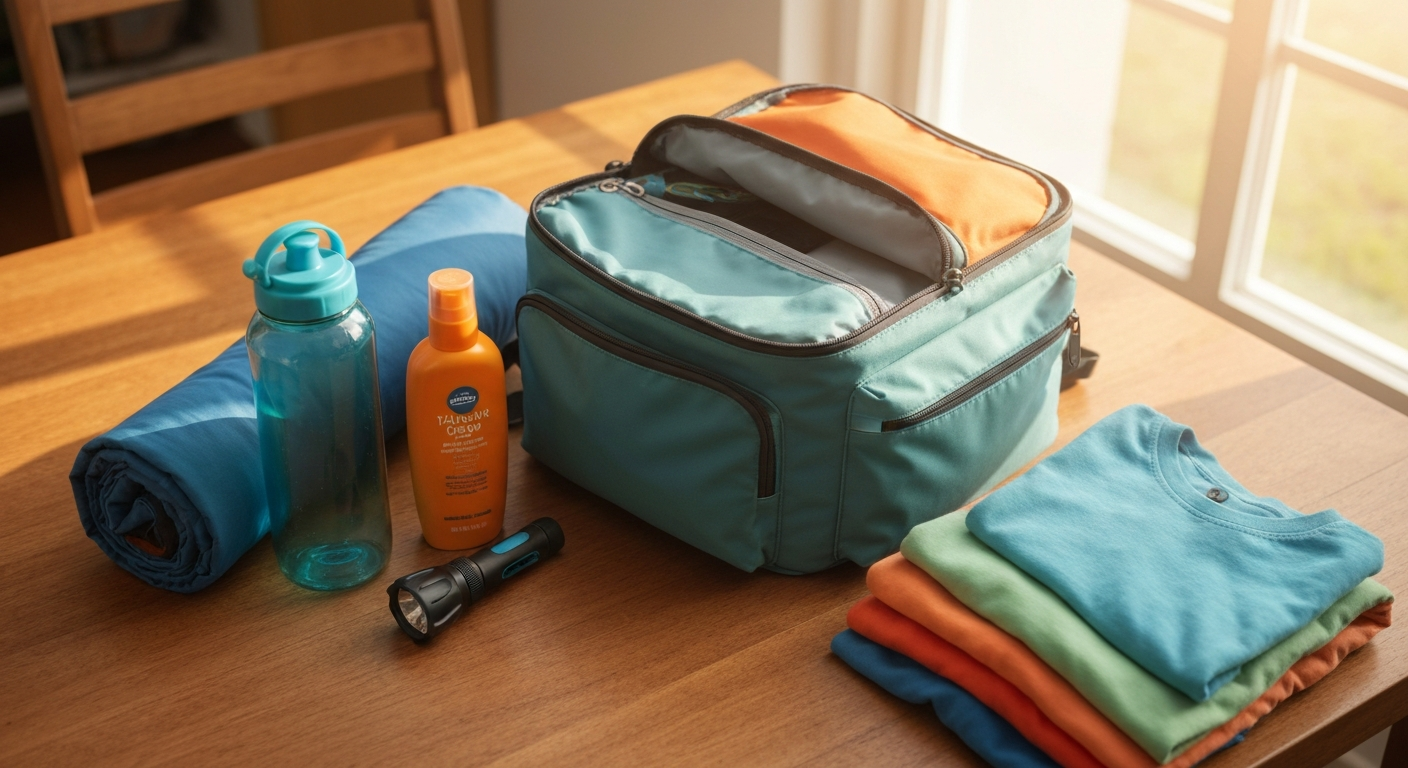
It was 9:45 AM on Monday. Drop-off was at 9:00. My phone buzzed: "Hi, this is Galileo Camp. Your daughter forgot her sunscreen. Can you bring some by lunch?" I'd spent Sunday night packing her backpack—extra clothes, snacks, water bottle, stuffed animal. Somehow missed the one thing she'd actually need outdoors for six hours.
Quick Answer: Day camps need sunscreen, water bottle, lunch, and a change of clothes. Overnight camps add toiletries, sleeping bag, and flashlight. Specialty camps (STEM, sports, arts) require activity-specific gear. Most Bay Area camps provide a packing list 2 weeks before—start with their list, then add the 5 parent-tested essentials camps rarely mention: extra socks, plastic bags for wet/dirty items, labeled band-aids, backup snack, and a small photo from home.
That phone call taught me: camp packing isn't about throwing everything into a bag. It's about knowing what your specific camp type actually requires—and what experienced parents wish they'd packed on Day 1.
Why Camp Packing Feels Overwhelming
Build your summer plan
Map every week of summer in 3 minutes
KidPlanr lays out every week with camps that match each kid's age and interests — and tracks which weeks still have spots.
Build my calendar →Bay Area parents face a unique challenge: our region offers 1,500+ camps spanning every format imaginable. A week at Stanford Splash (outdoor adventure) requires completely different gear than a week at iD Tech (indoor coding) or Galileo (mixed activity day camp).
The packing list you get from camp administration is a starting point. But it's written for the average kid in average weather doing average activities. Your child isn't average—and neither is the Bay Area's micro-climate weather, where Palo Alto hits 85°F while San Francisco stays 62°F on the same June day.
Here's what camp directors won't tell you (because they assume you know): the packing list is the minimum. The real question isn't "what does camp require?" It's "what will make my child comfortable, confident, and ready for the specific activities they'll actually be doing?"
The Three Camp Packing Categories You Need to Know
Before you pack a single item, identify which camp type you're sending your child to. The packing strategy changes dramatically.
Category 1: Day Camps (9 AM - 3 PM, No Overnight)
Examples: Galileo, City of Palo Alto camps, YMCA day programs, most STEM/arts camps
What this means: Your child comes home every day. You can course-correct tomorrow if you forget something today.
How common: 80% of Bay Area camps are day camps.
What you can do now: Start with the camp's list, add our Day Camp Essentials below, and pack light. You'll adjust after Day 1.
Category 2: Overnight Camps (3-7 Days Away)
Examples: Camp Concord, Walden West, Kennolyn, most outdoor/adventure camps
What this means: You won't see your child for multiple days. They need everything for independent daily living.
How common: About 15% of Bay Area summer camps include overnight components.
What you can do now: Pack in categories (clothes, toiletries, bedding, activities) and use our Overnight Camp Checklist. Label everything.
Category 3: Specialty Camps (Activity-Specific Gear)
Examples: Sports camps (soccer, basketball), arts intensives (theater, music), tech camps (robotics, coding)
What this means: Beyond basic camp items, your child needs equipment specific to their activity.
How common: About 30% of camps have specialty gear requirements (some overlap with day/overnight).
What you can do now: Check the camp's specific gear list, then cross-reference with our Specialty Camp Add-Ons.
What NOT to over-interpret: Just because a camp is "specialty" doesn't mean it's overnight, and just because it's overnight doesn't mean it's outdoor. iD Tech runs overnight coding camps—your child needs a sleeping bag and a laptop charger, not hiking boots.
What Bay Area Weather Does to Your Packing List
Every packing guide you find online was written for somewhere else. Here's what's different in the Bay Area:
Microclimates are real. A camp in San Francisco (June average: 63°F) requires layers. A camp in San Jose (June average: 77°F) needs sun protection. Both kids are at "Bay Area summer camp," but they're packing for different seasons.
Mornings are cold, afternoons are hot. Even in warm cities like Palo Alto, drop-off at 9 AM can be 58°F, but pickup at 3 PM is 82°F. Your child needs layers they can remove and carry.
Fog burns off—or it doesn't. Coastal camps (Pacifica, Half Moon Bay, western Marin) stay cool and foggy all day. Inland camps (Walnut Creek, Livermore, San Ramon) can hit 95°F by noon in July.
What this means for you: Always pack one more layer than you think your child needs. A hoodie that stays in the backpack all week is better than a cold kid on Tuesday morning when the weather shifts.
Day Camp Essentials: The Complete Checklist
This is for camps where your child comes home every day (Galileo, city rec programs, most STEM/arts camps, sports day camps).
Must-Have (Never Skip These)
- [ ] Sunscreen (SPF 30+) — Apply before drop-off; send the bottle for reapplication. Even indoor camps go outside for lunch/recess. Most camps require it.
- [ ] Water bottle (labeled, 16+ oz) — Refillable. Camps provide water fountains but kids forget to drink unless they're carrying their own bottle.
- [ ] Lunch + 2 snacks — Unless camp provides meals. Most Bay Area day camps don't include lunch. Pack nut-free (common camp rule).
- [ ] Extra set of clothes (in a plastic bag) — For spills, bathroom accidents, or water activities. Shorts, underwear, socks, t-shirt.
- [ ] Closed-toe shoes — Required for safety during active play. Sandals/flip-flops usually not allowed except for water days.
- [ ] Hat (with name written inside) — Wide-brim or baseball cap. Protects from sun during outdoor activities.
- [ ] Light jacket or hoodie — For morning chill or indoor AC. Even July camps can be cold at 9 AM drop-off.
Nice-to-Have (Makes the Day Easier)
- [ ] Plastic bag for wet/dirty clothes — Ziplock or grocery bag. Keeps the dry clothes dry if there's a water activity.
- [ ] Backup snack (non-perishable) — Granola bar, crackers. For the kid who's still hungry after lunch or the unexpected long day.
- [ ] Small photo from home — Especially for first-time campers. Tuck in their backpack. Comforts anxious kids.
- [ ] Extra socks (1-2 pairs) — Wet shoes from water play = miserable afternoon. Extra socks = instant comfort.
- [ ] Labeled band-aids (3-5) — Camps have first aid, but a character band-aid from home makes a scraped knee less scary.
Skip-It (You Don't Need This)
- ❌ Toys from home — Most camps ban personal toys to prevent loss/conflict. Check camp policy first.
- ❌ Electronics (tablet, Switch, phone) — Prohibited at most camps for kids under 10. Even if allowed, they're a liability.
- ❌ Expensive clothes — Camp is messy. Send the stained t-shirt, not the new one.
Overnight Camp Essentials: The Complete Checklist
This is for camps where your child sleeps away from home for 3-7 days (Camp Concord, Walden West, Kennolyn, YMCA overnight camps).
Clothing (Pack for One Extra Day Than Camp Length)
- [ ] Underwear (1 per day + 2 extra) — Kids forget to change. Extras are essential.
- [ ] Socks (2 pairs per day) — Feet get wet. Double up.
- [ ] Shorts/pants (1 per day) — Quick-dry material ideal. Jeans take forever to dry in Bay Area fog.
- [ ] T-shirts (1 per day + 1 extra) — Camp-provided shirts don't count as extras. Assume one gets ruined.
- [ ] Sweatshirt or fleece — Nights in the Bay Area hills (even in July) drop to 50-55°F.
- [ ] Rain jacket — Lightweight, packable. June gloom can mean drizzle even at "summer" camp.
- [ ] Pajamas (2 sets) — One gets sweaty. Two is the minimum.
- [ ] Swimsuit (if camp has swimming/water activities) — Check camp description. Many outdoor camps have a pool or lake day.
Bedding & Sleep
- [ ] Sleeping bag (rated to 40°F minimum) — Bay Area overnight camps are in the hills. Nights are cold.
- [ ] Pillow (in a pillowcase) — Comfort item. Label the pillowcase with permanent marker.
- [ ] Flashlight or headlamp (with extra batteries) — For nighttime bathroom trips and cabin time after dark.
- [ ] Stuffed animal or comfort item (optional) — For younger kids (ages 6-9). Helps with homesickness.
Toiletries (Assume Camp Provides Nothing)
- [ ] Toothbrush + toothpaste — In a labeled toiletry bag.
- [ ] Soap (bar or travel-size body wash) — Camp showers often have soap, but don't count on it.
- [ ] Shampoo (travel-size) — Same as soap. Bring your own.
- [ ] Deodorant (for kids 9+) — Active camp days = sweaty kids. They'll thank you.
- [ ] Hairbrush or comb — Especially for kids with long hair.
- [ ] Sunscreen (full-size bottle) — Reapply daily. Send enough for the whole week.
- [ ] Bug spray — For camps in wooded areas (Walden West, Kennolyn, Camp Concord). DEET-based works best.
- [ ] Prescription medications (in original containers) — Hand directly to camp nurse at check-in. Do not pack in child's bag.
Activity Gear (Camp-Specific)
- [ ] Day pack or small backpack — For daily activities (hikes, field trips). Separate from main luggage.
- [ ] Reusable water bottle (32 oz) — Larger than day camp. Kids are more active and drink more.
- [ ] Closed-toe hiking shoes or sneakers — Required for trails. Ankle support ideal.
- [ ] Sandals or shower shoes — For communal showers and around cabins.
Must-Have Add-Ons (Experienced Parent Secrets)
- [ ] Gallon Ziplock bags (3-5) — For wet clothes, dirty socks, treasures found on hikes.
- [ ] Laundry bag or pillowcase for dirty clothes — Keeps clean clothes separate.
- [ ] Stamps + pre-addressed envelopes — For writing letters home. Many camps encourage it.
- [ ] Small amount of spending money ($10-20) — If camp has a store or trading post. Check camp policy.
- [ ] Book or journal (optional) — For downtime in the cabin. No screens = reading makes a comeback.
Skip-It (Overnight Camp Edition)
- ❌ Expensive clothes or gear — Camp is rough on belongings. Assume something gets lost or ruined.
- ❌ Jewelry — High risk of loss. Leave at home.
- ❌ More than one stuffed animal — One comfort item is enough. More = clutter and lost items.
- ❌ Aerosol sunscreen — Many camps ban aerosols due to fire risk. Stick to lotion or roll-on.
Specialty Camp Add-Ons (By Activity Type)
These items are in addition to the Day Camp or Overnight Camp checklists above.
Sports Camps (Soccer, Basketball, Baseball, Multi-Sport)
- [ ] Cleats or sport-specific shoes — Check camp requirements. Some provide, most don't.
- [ ] Shin guards (soccer) — Required for safety.
- [ ] Athletic mouthguard (if contact sport) — For basketball, flag football.
- [ ] Athletic tape or pre-wrap — For kids prone to blisters or ankle support.
- [ ] 2-3 extra pairs of athletic socks — Feet sweat. Change socks at lunch for comfort.
- [ ] Sports drink or electrolyte powder — For intense activity days, especially in warm cities (San Jose, Livermore).
STEM & Tech Camps (Coding, Robotics, Engineering)
- [ ] Laptop or tablet (if required by camp) — iD Tech, Juni Learning, Code Ninjas often require kids to bring devices. Check camp tech policy.
- [ ] Charger + charging cable (labeled) — Kids lose chargers. Label with name and phone number.
- [ ] USB drive (optional) — For saving projects. 16 GB is plenty.
- [ ] Notebook + pencils — For brainstorming, sketching ideas. Low-tech still matters.
- [ ] Laptop case or sleeve — Protects device in transit. Soft-sided ideal.
Arts Camps (Theater, Music, Visual Arts)
- [ ] Instrument (if music camp) — Bring your own. Camps rarely provide instruments beyond keyboards/drums.
- [ ] Sheet music or script (if provided in advance) — Check camp email 2 weeks before for materials.
- [ ] Art smock or old t-shirt — For painting/messy art projects. Protects clothes.
- [ ] Dance shoes or ballet slippers (if dance intensive) — Check camp requirements. Some require specific colors.
- [ ] Hair ties and bobby pins (for theater/dance) — Keep hair off face during performance prep.
Outdoor Adventure Camps (Hiking, Nature, Wilderness Skills)
- [ ] Sturdy hiking boots (broken in) — Must be broken in before camp. Blisters ruin the week.
- [ ] Backpack (20-30 liter) — For day hikes carrying water, lunch, layers.
- [ ] Trekking poles (optional) — For kids who need extra stability on trails.
- [ ] Wide-brim sun hat — Better sun protection than baseball cap for all-day outdoor exposure.
- [ ] Bandana or buff — Multi-use: sweat wipe, sun protection, dust mask.
- [ ] Insect repellent (DEET or picaridin) — Essential for camps in wooded areas (Santa Cruz Mountains, Marin Headlands).
How to Label Everything (Without Wasting Money)
The problem: Kids lose stuff. Camps have lost-and-found bins overflowing with unlabeled clothes.
The solution: Label everything that leaves your house. Not just clothes—water bottles, lunch containers, flashlights, sleeping bags. If it can be separated from your child, it will be.
Labeling Methods That Actually Work
| Method | Pros | Cons | Best For |
|---|---|---|---|
| Permanent marker | Free, instant, works on everything | Fades after washing | Short-term items (plastic bags, disposable containers) |
| Iron-on labels | Survives washing, professional look | Requires iron, time investment | Clothes, backpacks, jackets |
| Stick-on labels (Mabel's Labels) | Waterproof, dishwasher-safe | Costs $20-30 per pack | Water bottles, lunch containers, gear |
| Stamp + fabric ink | Fast for multiple items, one-time cost | Requires stamp purchase | Camp season bulk labeling |
Pro tip: For overnight camp, label socks inside the ankle hem with permanent marker. Socks get lost more than any other item. Writing on the sole fades immediately.
The Week-Before Camp Packing Ritual
Don't pack the night before. Start 5-7 days early and follow this timeline:
7 Days Before Camp
- [ ] Re-read the camp packing list (they often email updates 2 weeks out)
- [ ] Check weather forecast for camp location (not your home city)
- [ ] Order any missing gear (sleeping bag, water bottle, etc.)
5 Days Before Camp
- [ ] Lay out all clothes on bed in daily outfits (1 outfit = 1 day)
- [ ] Label everything with permanent marker or iron-on labels
- [ ] Test flashlight batteries, charge electronics
3 Days Before Camp
- [ ] Pack non-clothing items (toiletries, bedding, activity gear)
- [ ] Double-check medications with camp nurse instructions
- [ ] Fill out any final camp forms (health forms, emergency contacts)
1 Day Before Camp
- [ ] Pack clothes in order (Day 1 on top, Day 7 on bottom)
- [ ] Add snacks, lunch (if packing for Day 1)
- [ ] Do a final walkthrough with your child: "Do you have everything you need?"
Morning Of
- [ ] Sunscreen application (before drop-off)
- [ ] Water bottle filled
- [ ] One last bathroom stop
- [ ] Hug, deep breath, drop-off confidence
What to Do If You Forget Something
Day camps: You can drop off forgotten items at the camp office during lunch (usually 11:30 AM - 12:30 PM). Call ahead to confirm. Most Bay Area day camps allow midday drop-offs for essentials.
Overnight camps: Some camps allow care packages mailed to the camp address. Check camp policy—many ban outside food/packages to maintain group cohesion. If you forgot medication, call the camp nurse immediately.
The camp will tell you if it's truly urgent. Camps have seen it all. They keep extra sunscreen, band-aids, and even extra clothes. If they call you, it's important. If they don't call, your kid is fine.
Real Parent Stories: What We Wish We'd Known
Sarah, Palo Alto (son at Galileo, age 7): "We packed five days of clothes for five days of camp. By Day 3, every outfit was dirty from water play and paint. I had to rewash his backpack mid-week. Now I pack 7 outfits for 5 days."
Jason, San Jose (daughter at iD Tech, age 11): "The camp list said 'laptop optional.' I thought she'd be fine without it. She was the only kid without one. She felt left out all week. 'Optional' at a tech camp means 'required.' Lesson learned."
Maria, Oakland (son at Walden West, age 9, overnight): "We sent him with a brand-new sleeping bag rated to 30°F. It was July—we figured warm. Walden West is in the Santa Cruz Mountains. It dropped to 48°F at night. He froze. Now I check the actual camp location elevation and nightly temps, not just the month."
Your Complete Camp Packing Checklist (Printable)
Here's your artifact—the checklist you can actually use. Print this page or screenshot it. Check off items as you pack.
Day Camp Checklist
Essentials (Every Day)
- [ ] Sunscreen (SPF 30+, in backpack)
- [ ] Water bottle (16+ oz, labeled)
- [ ] Lunch + 2 snacks (nut-free)
- [ ] Extra clothes (in plastic bag)
- [ ] Closed-toe shoes
- [ ] Hat (labeled)
- [ ] Light jacket or hoodie
Nice-to-Have
- [ ] Plastic bag for wet clothes
- [ ] Backup snack (granola bar, crackers)
- [ ] Small photo from home
- [ ] Extra socks (1-2 pairs)
- [ ] Labeled band-aids (3-5)
Overnight Camp Checklist
Clothing (Pack for +1 Day)
- [ ] Underwear (1 per day + 2 extra)
- [ ] Socks (2 pairs per day)
- [ ] Shorts/pants (1 per day)
- [ ] T-shirts (1 per day + 1 extra)
- [ ] Sweatshirt or fleece
- [ ] Rain jacket (lightweight)
- [ ] Pajamas (2 sets)
- [ ] Swimsuit (if applicable)
Bedding & Sleep
- [ ] Sleeping bag (rated to 40°F min)
- [ ] Pillow (labeled pillowcase)
- [ ] Flashlight + extra batteries
- [ ] Stuffed animal (optional, younger kids)
Toiletries
- [ ] Toothbrush + toothpaste
- [ ] Soap (bar or travel-size)
- [ ] Shampoo (travel-size)
- [ ] Deodorant (ages 9+)
- [ ] Hairbrush or comb
- [ ] Sunscreen (full-size)
- [ ] Bug spray (DEET-based)
- [ ] Medications (in original containers, hand to nurse)
Activity Gear
- [ ] Day pack or small backpack
- [ ] Reusable water bottle (32 oz)
- [ ] Closed-toe hiking shoes
- [ ] Sandals or shower shoes
Parent Secrets
- [ ] Gallon Ziplock bags (3-5)
- [ ] Laundry bag for dirty clothes
- [ ] Stamps + pre-addressed envelopes
- [ ] Spending money ($10-20, if allowed)
- [ ] Book or journal (optional)
Specialty Camp Add-Ons
Sports Camps
- [ ] Cleats or sport-specific shoes
- [ ] Shin guards (soccer)
- [ ] Mouthguard (contact sports)
- [ ] Athletic tape
- [ ] Extra athletic socks (2-3 pairs)
- [ ] Electrolyte powder or sports drink
STEM & Tech Camps
- [ ] Laptop or tablet (if required)
- [ ] Charger + cable (labeled)
- [ ] USB drive (16 GB)
- [ ] Notebook + pencils
- [ ] Laptop case or sleeve
Arts Camps
- [ ] Instrument (if music camp)
- [ ] Sheet music or script
- [ ] Art smock or old t-shirt
- [ ] Dance shoes (if applicable)
- [ ] Hair ties and bobby pins
Outdoor Adventure
- [ ] Hiking boots (broken in)
- [ ] Backpack (20-30 liter)
- [ ] Trekking poles (optional)
- [ ] Wide-brim sun hat
- [ ] Bandana or buff
- [ ] Insect repellent (DEET)
What to Do the Night Before Drop-Off
Your child is packed. The backpack is by the door. Now what?
Have the "what to expect" conversation. Kids do better when they know the schedule. Walk through a typical camp day: drop-off, morning activity, snack, lunch, afternoon activity, pickup. If it's their first time at this camp, describe what the counselors might look like ("they'll be wearing matching t-shirts with the camp logo").
Set expectations for communication. Day camp: "I'll see you at 3 PM. If you need me during the day, tell a counselor." Overnight camp: "I won't see you for 5 days, but you can write me a letter, and I'll get it when you come home." Be honest but reassuring.
Do a practice run of the morning routine. Wake up time, breakfast, sunscreen application, backpack check, drive/carpool timing. Walking through it the night before eliminates surprises at 7:30 AM when everyone's already stressed.
Don't add new anxiety. Avoid "big kid" speeches or over-emphasizing how much you'll miss them. Keep it matter-of-fact: "Tomorrow's your first day at camp. You've got everything you need. It's going to be fun. Let's get a good night's sleep."
Planning Summer Camps Too?
If you're juggling multiple camps this summer (different weeks, different kids, different camp types), use KidPlanr's camp search to compare 1,500+ Bay Area camps by city, activity type, age, and budget. Filter by week availability, see which camps have spots left, and save your shortlist all in one place.
Track your kid's year-round activities? Our afterschool activity tracker (launching soon) helps Bay Area parents manage gymnastics, swim lessons, soccer, music—all the recurring commitments that don't fit in a regular calendar. Join the waitlist here.
FAQ: Camp Packing Questions Parents Actually Ask
Do I really need to label socks?
Yes—if it's overnight camp. Socks are the #1 lost item at camp. Day camp? Less critical, but still recommended if your child is prone to losing things.
Can my child bring their phone to camp?
Most camps for kids under 12 prohibit phones. Check your camp's specific policy. For kids 12+, some camps allow phones but restrict usage to after-hours only. If allowed, label it and add it to your overnight camp checklist.
What if the camp packing list says "optional sleeping bag"?
"Optional sleeping bag" usually means the camp provides bedding (sheets, blankets, pillow) but sleeping bags are allowed. Sleeping bags are often more comfortable and familiar for kids. If your child has one, bring it.
Should I pack new clothes or old clothes?
Old clothes. Camp is messy—paint, dirt, grass stains, food spills. Send clothes that can get ruined without stress. Save the new outfits for school.
How do I pack medications for overnight camp?
Pack medications in their original prescription containers with the pharmacy label showing your child's name and dosage instructions. Do NOT pack in your child's bag—hand directly to the camp nurse at check-in. Fill out any required medication forms in advance (most camps email these 2-3 weeks before camp starts).
What if my child is a picky eater? Can I send extra snacks?
Yes, but check if the camp is nut-free (most Bay Area camps are due to allergy policies). Pack non-perishable snacks (granola bars, crackers, dried fruit). For overnight camp, send enough for the whole week—kids get hungry between meals.
Do camps provide sunscreen and bug spray?
Some do, most don't. Never assume. Always pack your own labeled bottles. If your child has sensitive skin, send the specific brand they use at home.
My child's camp starts June 10. When should I start packing?
Start shopping/ordering missing gear by June 3 (7 days before). Begin packing clothes and labeling by June 5-6. Final pack by June 9. This gives you time to order anything you forgot without paying overnight shipping fees.
Next steps: Print this checklist. Tape it to your fridge. Check off items as you pack. And if you realize you're missing something at 8:00 PM the night before camp, remember: Amazon Prime exists. Worst case? Camps have seen it all, and your kid will be fine.
Build your summer plan
Map every week of summer in 3 minutes
KidPlanr lays out every week with camps that match each kid's age and interests — and tracks which weeks still have spots.
Build my calendar