Robotics Classes for Kids Bay Area 2026 | Parent Guide
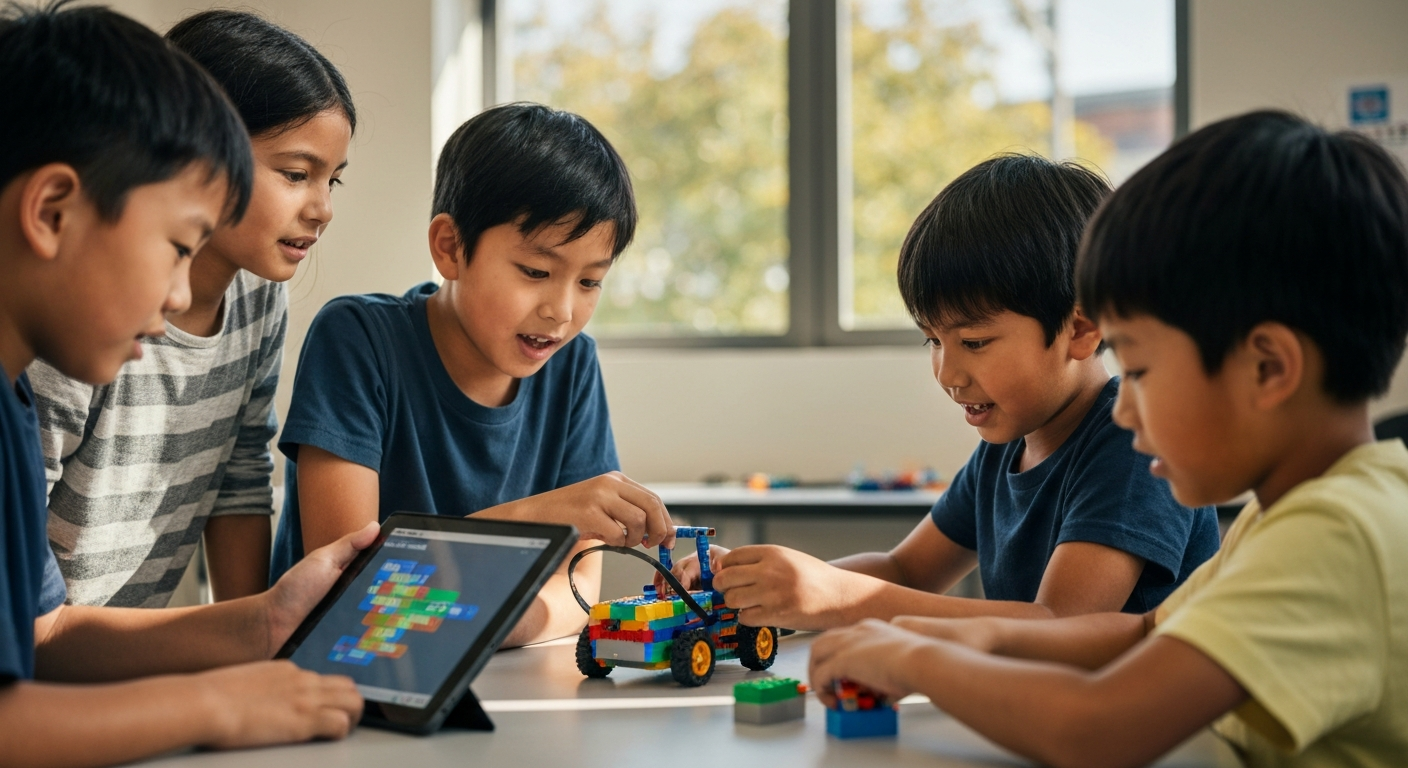
Your 8-year-old built a LEGO robot at a friend's house and hasn't stopped talking about it. Now they want robotics classes — but you're staring at program names like "FIRST LEGO League," "VEX IQ," and "competition robotics" with no idea where to start.
Some programs cost $150/month. Others cost $4,000/year for team participation. Some require prior experience. Others welcome complete beginners.
Here's what you actually need to know: most Bay Area kids start with intro LEGO robotics (no experience required), try 1-2 trial classes to confirm interest, then decide whether to stay recreational or go competitive. This guide shows you which programs match your child's age and experience level — and which ones offer trial classes so you're not locked in.
Quick Answer: Bay Area robotics programs fall into three tiers: intro/recreational LEGO classes ($150-250/month, ages 5-8), competition prep teams (FIRST LEGO League or VEX IQ, $200-350/month + team fees, ages 7-14), and advanced engineering programs ($250-400/month, ages 10+). Most programs offer trial classes. Start with intro programs if your child has never done robotics; trial classes are available at BrainVyne, TechKnowHow, Dr Owl Academy, and Code Ninjas locations across Palo Alto, Mountain View, San Jose, and the broader Bay Area.
Why Robotics Classes Matter (More Than Just Building Cool Stuff)
Build your summer plan
Map every week of summer in 3 minutes
KidPlanr lays out every week with camps that match each kid's age and interests — and tracks which weeks still have spots.
Build my calendar →Robotics combines three skills Bay Area parents care about: engineering (mechanical design), coding (programming the robot to move), and teamwork (most programs are collaborative). Kids learn to debug when their robot doesn't work, iterate on designs, and problem-solve under constraints.
Here's what's different from other STEM activities: robotics is visible. When your child codes a robot to navigate a maze, you can watch it succeed or fail in real time. That immediate feedback loop keeps kids engaged longer than abstract coding exercises.
For Bay Area families, robotics is also a known path: many high schools have competitive robotics teams (FIRST Robotics Competition, VEX Robotics Competition). Starting in elementary or middle school gives kids a foundation if they want to join those teams later.
What this does NOT mean: Your child won't become a robotics engineer just from taking a class. Most kids enjoy it for 1-2 years, build confidence in STEM, and move on to other interests. That's normal and valuable — exposure matters more than mastery at this age.
Three Types of Robotics Programs (And How to Tell Which One You Need)
Type 1: Intro/Recreational LEGO Robotics (Ages 5-8, No Experience Required)
What it is: Kids build robots using LEGO Education kits (WeDo 2.0 for younger kids, SPIKE Prime for older), program them with visual drag-and-drop coding (similar to Scratch), and complete project-based challenges ("make your robot push a ball into a goal").
Cost: $150-250/month for weekly classes (1-2 hours/week)
Time commitment: 4-12 hours/month (class time only; no homework)
Competition: None. This is recreational.
Bay Area programs offering this:
- BrainVyne (Palo Alto, Mountain View, Berkeley, Fremont) — LEGO Animal Robotics, LEGO Technic Adventures, ages 4-14
- TechKnowHow (Palo Alto, San Jose) — LEGO Building & Robotics camps and classes, ages 5-12
- Dr Owl Academy (Los Gatos, serving Cupertino, Saratoga, San Jose) — LEGO Robotics classes, ages 6+
Who this is for: Kids who've never done robotics, kids ages 5-8, families who want to test interest before committing to competition teams.
Type 2: Competition Prep Teams (FIRST LEGO League, VEX IQ) (Ages 7-14)
What it is: Kids join a team (4-10 students), design and build a robot to complete specific challenges, and compete in regional/state tournaments. FIRST LEGO League (FLL) uses LEGO SPIKE Prime robots. VEX IQ uses VEX metal/plastic kits. Teams meet 2-3 times/week during competition season (Sept-Feb for FLL, year-round for VEX).
Cost: $200-350/month for coaching/practice space + team registration fees ($225-275 for FLL, $150-200 for VEX IQ) + tournament fees ($50-100/event) = $2,500-4,000/year total
Time commitment: 6-12 hours/week during season (practice + tournaments)
Competition: Yes. Regional tournaments in November (FLL) or year-round (VEX). Teams that advance go to state championships.
Bay Area programs offering this:
- Robolabs — VEX IQ, FIRST LEGO League (FLL), VEX V5, multiple Bay Area locations
- Wize Academy — FIRST LEGO League Explore (ages 6-10) and Challenge (ages 9-16), VEX IQ (ages 8-14), coaches with state championship wins
- Celsius & Beyond (San Francisco) — FLL teams for 2026-2027 season (registration opens mid-August 2026)
- Dr Owl Academy (Los Gatos) — forming FLL and FIRST Tech Challenge teams for 2026 season
Who this is for: Kids who've completed intro robotics and want more challenge, families comfortable with 6-12 hours/week commitment, kids who thrive in team environments and enjoy competition.
Note on 2026-2027 season: The FIRST LEGO League 2026 theme is UNEARTHED™, focused on how tools and innovations connect us to people and ideas from the past. Registration typically opens in August; tournaments run November-February.
Type 3: Advanced Engineering & Coding Programs (Ages 10-14, Prior Experience Recommended)
What it is: Kids learn advanced robotics concepts: sensor integration, autonomous navigation, computer vision, custom fabrication (3D printing, laser cutting). Programming shifts from visual blocks to text-based languages (Python, C++). Projects are open-ended ("design a robot that can sort recycling").
Cost: $250-400/month for advanced classes
Time commitment: 4-8 hours/week (class + project work)
Competition: Optional. Some programs participate in VEX V5 (high school level) or custom challenges.
Bay Area programs offering this:
- Robolabs — VEX V5 (ages 12+), advanced engineering track
- Code Ninjas (North San Jose, Pleasanton) — advanced robotics modules integrated with coding curriculum, ages 11-14
Who this is for: Kids with 1-2 years of robotics experience, kids who've outgrown LEGO kits and want more complex engineering, families preparing for high school robotics teams.
How Much Do Bay Area Robotics Classes Actually Cost?
Here's the realistic budget breakdown:
| Program Type | Monthly Tuition | Additional Fees | Annual Total |
|---|---|---|---|
| Intro LEGO (recreational) | $150-250 | None | $1,800-3,000 |
| Competition teams (FLL, VEX IQ) | $200-350 | Team registration ($225-275), tournaments ($50-100 each), travel (varies) | $2,500-4,500 |
| Advanced engineering | $250-400 | Materials/fabrication fees ($50-150/year) | $3,000-5,000 |
Hidden costs to watch for:
- Some programs charge separate "material fees" ($25-75/semester)
- Competition teams often fundraise or ask families to contribute $200-500 beyond tuition for tournament travel, team shirts, etc.
- Summer camps are priced separately ($400-900/week)
Where to find affordable options:
- City recreation departments (Palo Alto, Mountain View, San Jose) offer intro robotics at $100-150/month (lower than private studios)
- Libraries sometimes host free robotics workshops (check Santa Clara County Library and San Mateo County Library calendars)
- Some programs offer sibling discounts (10-15% off for second child)
What you're actually paying for: The difference between $150/month and $300/month isn't always quality — it's usually class size (6 kids vs. 12 kids), instructor credentials (college student vs. engineer), and facility (shared community space vs. dedicated robotics lab). For intro classes, a larger class at a recreation center is fine. For competition teams, smaller teams with experienced coaches make a difference.
How to Choose the Right Robotics Program for Your Child
Most parents pick the closest program or the one their friend recommended. Here's a better framework:
Step 1: Confirm Interest with a Trial Class (Don't Skip This)
80% of Bay Area robotics programs offer trial classes — usually $25-50 for a single 1-hour session where your child builds a simple robot and programs it to move.
Why this matters: Kids who love the idea of robots often lose interest when they realize robotics is 50% troubleshooting ("why won't my motor turn?"). Trial classes reveal whether your child has the patience for iterative problem-solving or just likes the cool demo videos.
Where to book trials:
- BrainVyne: book via website for Palo Alto, Mountain View, or Berkeley locations
- TechKnowHow: contact Palo Alto or San Jose locations directly
- Code Ninjas: most Bay Area dojos offer free first-session trials
- Dr Owl Academy: inquire about trial options for LEGO Robotics classes
Step 2: Match Age and Experience to Program Tier
| Your Child's Age | Has Robotics Experience? | Recommended Starting Point |
|---|---|---|
| 5-7 years | No | Intro LEGO (WeDo 2.0, recreational classes) |
| 8-10 years | No | Intro LEGO (SPIKE Prime) or FIRST LEGO League Explore (non-competitive intro to FLL) |
| 8-10 years | Yes (1+ year) | FIRST LEGO League Challenge (competitive team) |
| 11-14 years | No | Intro SPIKE Prime or VEX IQ intro track |
| 11-14 years | Yes (2+ years) | VEX IQ competitive team or advanced engineering classes |
Don't skip intro classes just because your child is older: An 11-year-old with no robotics experience will struggle in a competition team. Most programs let older beginners move through intro content faster (2-3 months instead of 6-12 months).
Step 3: Decide Recreational vs. Competition (And Know You Can Switch)
Recreational robotics:
- Weekly classes, no tournaments, no pressure
- Kids build different projects each session (animal robots, vehicles, game controllers)
- Costs $1,800-3,000/year
- Time commitment: 4-8 hours/month
Competition robotics:
- Team-based, tournament season (Sept-Feb for FLL, year-round for VEX)
- Kids work on one challenge all season, iterate on the same robot design weekly
- Costs $2,500-4,500/year
- Time commitment: 6-12 hours/week during season
Most kids try recreational first, then join a competition team after 1 year. This is the normal path — don't feel pressure to jump straight into competition.
Can my child do both? Some families do recreational classes during off-season (March-August) and join a competition team during season (Sept-Feb). This works if your child genuinely loves robotics and has time. For most kids, pick one.
Step 4: Evaluate the Instructor (More Important Than Facility)
When you visit a program, watch the instructor during the trial class. Good robotics instructors:
- Let kids struggle for 2-3 minutes before helping (this is how they learn to debug)
- Ask "what do you think is wrong?" instead of just fixing the robot
- Celebrate failed attempts ("that's useful data — now we know X doesn't work")
- Keep the group moving (no one kid dominates the session)
Red flags:
- Instructor builds the robot for the kids instead of coaching them
- Kids sit and watch demos for 30+ minutes (robotics should be hands-on)
- No structure — kids just mess around with LEGO without clear challenges
Credentials don't matter as much as you think: A college student with 2 years of FLL coaching experience often teaches better than an engineer with no teaching experience. Watch how they interact with kids during the trial.
Bay Area Robotics Programs by City (2026)
Palo Alto
- BrainVyne (4000 Middlefield Rd D5, Palo Alto, CA 94303) — LEGO robotics, ages 4-14, recreational and camp programs
- TechKnowHow (Palo Alto location) — LEGO Building & Robotics, Minecraft, Scratch coding integration
- Wizbots (Palo Alto) — LEGO robotics, ages 8-14, after-school programs and summer camps
Mountain View
- BrainVyne (Mountain View location) — LEGO Robotics Summer Camps and after-school programs
- Wizbots (Mountain View) — year-round after-school programs, LEGO-based
- Club SciKidz Silicon Valley (operates in Mountain View) — LEGO & VEX Robotics, ages 4-15
San Jose / South Bay
- TechKnowHow (San Jose location) — LEGO, Minecraft, Roblox, Scratch integration
- Code Ninjas (North San Jose) — robotics integrated with coding curriculum, ages 7-14
- Dr Owl Academy (Los Gatos, serves San Jose, Cupertino, Saratoga) — LEGO Robotics, forming FLL and FIRST Tech Challenge teams for 2026 season
- Club SciKidz Silicon Valley (San Jose, Santa Clara, Cupertino, Campbell, Saratoga) — LEGO & VEX Robotics, STEM.org Accredited
East Bay (Berkeley, Fremont, Pleasanton)
- BrainVyne (Berkeley, Fremont) — LEGO robotics, ages 4-14
- Code Ninjas (Pleasanton) — robotics + coding, ages 7-14
San Francisco
- Celsius & Beyond (San Francisco) — FLL teams, 2026-2027 season registration opens mid-August
Peninsula (San Ramon, Burlingame, Menlo Park)
- BrainVyne (San Ramon, Burlingame, Menlo Park) — LEGO robotics classes and camps
Note: This list covers major programs with verified 2026 offerings. Many city recreation departments (Palo Alto, Mountain View, Sunnyvale) also offer intro robotics classes at lower cost ($100-150/month). Check your city's Parks & Recreation website for seasonal schedules.
Common Robotics Class Questions Bay Area Parents Ask
How do I know if my child is ready for robotics?
Green flags your child is ready:
- Enjoys building with LEGO, K'NEX, or similar construction toys for 20+ minutes at a time
- Comfortable with basic iPad/computer use (can navigate apps, click/drag)
- Can follow multi-step instructions ("first do X, then Y, then check if Z worked")
- Doesn't give up immediately when something doesn't work the first time
Age matters less than patience: A curious 6-year-old who loves building often does better than a disinterested 10-year-old who was pushed into robotics by parents.
The trial class is the real test: Book a trial at 2-3 programs and see which one your child asks to go back to.
Should we start with camps or year-round classes?
Summer camps (1-week intensive) are good for:
- Testing interest before committing to semester-long classes
- Kids who want variety (different robot projects each day)
- Families with full summer schedules who can't do weekly classes during school year
Year-round classes (weekly during school year) are better for:
- Building skills progressively (each week builds on the last)
- Joining competition teams (FLL season runs Sept-Feb, requires consistent practice)
- Kids who want to go deeper (camps are fun but surface-level)
Most families try a summer camp first (lower commitment), then switch to year-round if the kid loves it.
What's the difference between FIRST LEGO League and VEX IQ?
Both are competition robotics programs for elementary/middle school kids. Here's how they differ:
| Feature | FIRST LEGO League (FLL) | VEX IQ |
|---|---|---|
| Robot kit | LEGO SPIKE Prime (plastic bricks + motors/sensors) | VEX IQ (metal/plastic parts, snap-together) |
| Ages | 9-16 (Challenge division), 6-10 (Explore division, non-competitive) | 8-14 |
| Season | Sept-Feb (new challenge each year) | Year-round (multiple challenges per year) |
| Team size | 10 students max | 2-6 students |
| Programming | SPIKE App (block-based) or Python | VEXcode IQ (blocks or Python) |
| Cost | Team registration $225-275, tournaments $50-100 each | Team registration $150-200, tournaments $50-100 each |
| Bay Area presence | Very strong (100+ teams) | Growing (50+ teams) |
Which to choose: If your child has LEGO experience, start with FLL Explore (ages 6-10, non-competitive intro) or FLL Challenge (ages 9-16, competitive). If your child wants smaller teams and year-round competition options, try VEX IQ.
You don't have to pick one forever. Many kids do FLL for 2-3 years, then switch to VEX when they want more engineering complexity.
Is robotics useful for college applications?
Yes, if your child participates in competitive robotics at the high school level (FIRST Robotics Competition or VEX Robotics Competition). Top teams that make it to state/national championships can list this as a significant extracurricular achievement.
Elementary/middle school robotics (FLL, VEX IQ) does not typically go on college applications. It's still valuable — kids build STEM confidence, teamwork, and problem-solving skills — but it's not a college admissions strategy at this age.
What this means for your decision: Don't push your 8-year-old into competition robotics because you're worried about college. Let them try it, and if they love it, support continued participation. If they want to quit after a year, that's fine too. The learning happened regardless.
Can my child do robotics and other activities, or is it too much?
Recreational robotics (4-8 hours/month) fits easily alongside other activities. Most kids do recreational robotics + one sport or music lesson without overload.
Competition robotics (6-12 hours/week during season) is harder to stack. Some families drop other activities during robotics season (Sept-Feb), then resume in the off-season (March-Aug). Others let kids choose: robotics OR fall soccer, not both.
Watch for these signs your child is overloaded:
- Complaining about going to activities they used to enjoy
- Homework takes twice as long because they're too tired to focus
- Choosing to skip social time with friends to keep up with activities
- Frequently getting sick (overload weakens immune systems)
The right answer depends on your kid. Some 10-year-olds thrive with 15 hours/week of activities. Others max out at 6 hours. Respect your child's limits — this isn't a contest.
Your Next Steps: From "Interested" to "Enrolled"
Week 1: Book 2-3 Trial Classes
Pick programs based on location and tier (intro vs. competition). Don't pick based on website — trial classes reveal the real experience.
Booking contacts:
- BrainVyne: visit brainvyne.com and select your city location
- TechKnowHow: contact Palo Alto or San Jose locations via techknowhowkids.com
- Code Ninjas: search "Code Ninjas [your city]" and call the local dojo
- Dr Owl Academy: visit drowlacademy.com for Los Gatos location
Ask during trial: "Does this program offer trial classes before committing to semester enrollment?" Most do.
Week 2: Let Your Child Choose (Even If It's Not the "Best" Program)
After trials, ask: "Which one do you want to go back to?" Respect their answer, even if you thought a different program was higher-quality. A kid who loves the instructor and the vibe will learn more than a kid forced into the "best" program.
If your child says "none of them": Robotics might not be their thing right now. Try again in 6-12 months, or explore other STEM activities (coding classes, science camps, maker spaces).
Week 3: Enroll and Set Expectations
Before the first paid session, clarify:
- "We're committing to one semester (Sept-Jan or Feb-June). After that, we'll decide if we continue."
- "If you want to quit mid-semester, we'll finish the semester, but we won't re-enroll."
- "This costs [$X/month]. We're prioritizing this over [other activity] because you said you wanted to try it."
Why this matters: Kids need to know you're invested, but not forever. A defined trial period ("we'll see how the semester goes") prevents fights when they inevitably want to quit mid-month.
Decision Tool: Which Robotics Format Is Right for My Child?
Use this decision tree to narrow your options:
Q1: Has your child done robotics before?
- No → Start with intro/recreational LEGO classes (Type 1). Book trials at BrainVyne, TechKnowHow, or local recreation center.
- Yes, 1 year or more → Go to Q2.
Q2: Does your child want to compete in tournaments?
- No, just wants to build cool robots → Recreational LEGO classes (Type 1) or advanced engineering for older kids (Type 3).
- Yes, or unsure → Go to Q3.
Q3: How old is your child?
- Ages 6-8 → FIRST LEGO League Explore (non-competitive intro to FLL) at Wize Academy, Dr Owl, or Robolabs.
- Ages 9-12 → FIRST LEGO League Challenge (competitive) or VEX IQ at Robolabs, Wize Academy, Celsius & Beyond, or Dr Owl.
- Ages 13-14 → VEX IQ (if new to competition) or VEX V5 (if experienced) at Robolabs.
Q4: Can your family commit to 6-12 hours/week during competition season (Sept-Feb)?
- No → Recreational classes, not competition teams.
- Yes → Enroll in FLL or VEX IQ team programs. Registration for 2026-2027 FLL season opens mid-August 2026.
Q5: Budget check — can you afford $2,500-4,500/year for competition robotics?
- No → Recreational classes ($1,800-3,000/year) or city recreation programs ($1,200-1,800/year).
- Yes → Competition teams are a good fit if your child answered "yes" to Q2 and Q4.
Final step: Book trials at 2 programs that match your answers above. Let your child's reaction after trials guide the final decision.
Planning Summer Camps Too? Find the Right Fit for Your Child
Robotics classes run year-round, but many Bay Area families also book summer camps to fill the June-August gap. If you're juggling both:
STEM summer camps blend robotics with other activities (coding, 3D printing, game design) for variety. Search 3,000+ Bay Area summer camps on KidPlanr — filter by age, interest, and city to find camps that match your child's robotics passion.
Robotics-specific summer camps offer 1-week intensives (5 full days of robot building and coding). Most programs listed in this guide (BrainVyne, TechKnowHow, Dr Owl, Code Ninjas) offer summer camps in addition to year-round classes.
Year-round activity tracking: Once your child is enrolled in robotics, keeping track of class schedules, tournament dates, and team practice times can get overwhelming. Join the waitlist for KidPlanr's activity tracker — we're building a tool to help Bay Area parents manage year-round activities without the spreadsheet chaos.
Sources:
- BrainVyne — LEGO Robotics Programs
- Dr Owl Academy — LEGO Robotics Summer Camp
- California FIRST — FIRST LEGO League
- Wize Academy — Competition Robotics Prep
- Robolabs — K-12 Robotics Classes
- Celsius & Beyond — FLL LEGO Robotics Team
- TechKnowHow — LEGO Summer Camps & Classes
- Code Ninjas — Coding & Robotics for Kids
- Bay Area Kid Fun — Science & Technology Summer Camps
Build your summer plan
Map every week of summer in 3 minutes
KidPlanr lays out every week with camps that match each kid's age and interests — and tracks which weeks still have spots.
Build my calendar