Moving to Bay Area? Complete Summer Camp Guide
Last updated: April 2026
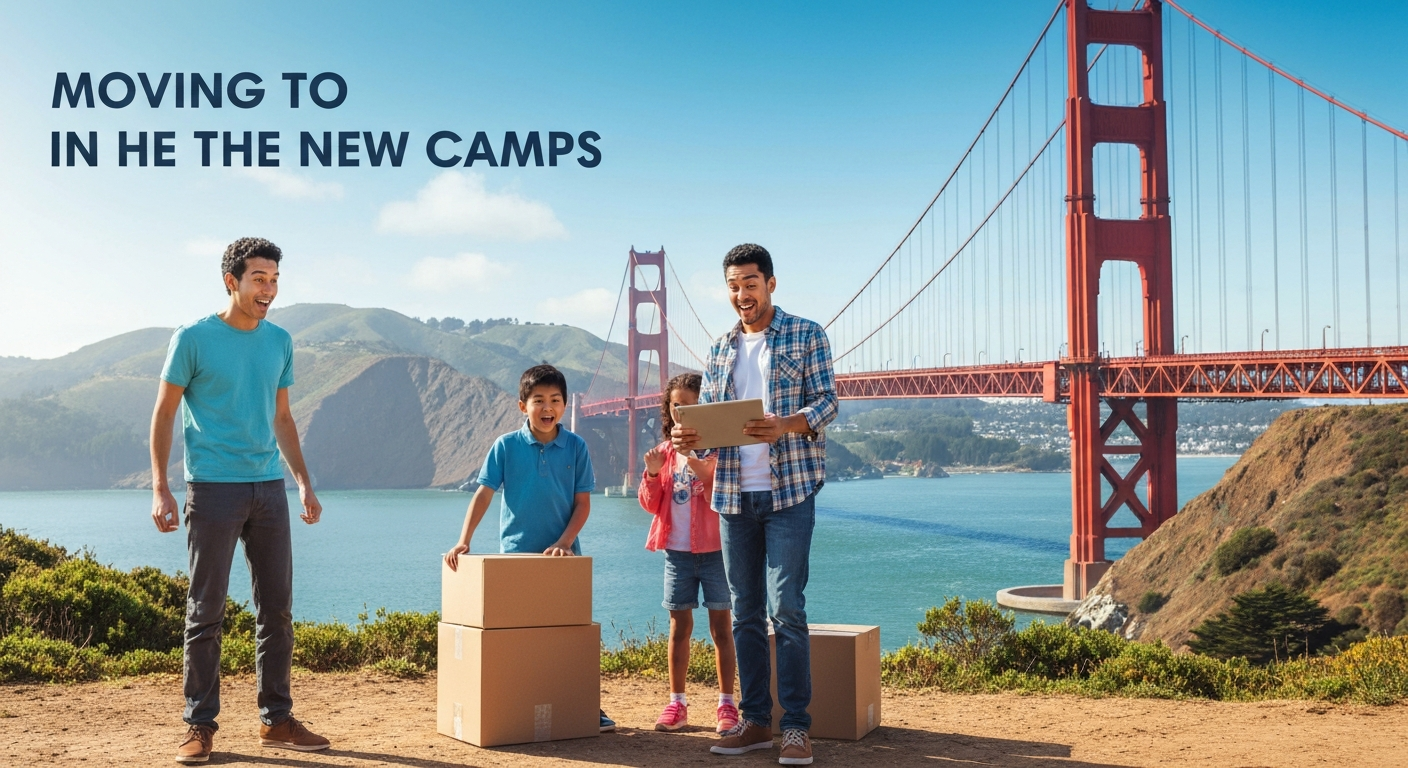
Moving to the Bay Area with kids means navigating a new summer camp landscape — one where registration deadlines hit in February, prices vary 5x across neighborhoods, and the "best" camps aren't always the ones with the biggest reputations.
Quick Answer: Bay Area summer camps range from $200 to $1,400 per week depending on city and program type. Most camps fill by early April — register by March for best selection. Top newcomer-friendly options include Camp Galileo ($529-699/week, ages 5-10), YMCA camps ($385-453/week, all ages), and city Parks & Recreation programs (often under $300). Expect STEM-heavy options near tech hubs, more affordable choices in East Bay.
If you're relocating to the Bay Area and trying to figure out summer plans before you've even unpacked, this guide breaks down what you need to know — from geography and timing to budget and which camps actually welcome new families.
Welcome to the Bay Area — A Parent's Orientation
Build your summer plan
Map every week of summer in 3 minutes
KidPlanr lays out every week with camps that match each kid's age and interests — and tracks which weeks still have spots.
Build my calendar →The San Francisco Bay Area isn't one market — it's three distinct regions with different camp ecosystems:
Peninsula (Palo Alto, Mountain View, Redwood City, San Mateo): Tech-heavy, STEM-focused camps dominate. Expect $500-$1,000/week price points. Stanford and university-affiliated camps cluster here. High demand means early registration (February-March).
South Bay (San Jose, Cupertino, Fremont, Santa Clara): More affordable than Peninsula, diverse camp options from coding to cultural programs. City Parks & Rec camps offer good value ($200-400/week). Commute times between cities can be 30-60 minutes — location matters.
East Bay (Oakland, Berkeley, Fremont): Most affordable region overall, strong public library and city-run programs. University influence (UC Berkeley) means academic camps are plentiful. More outdoor/nature options than Peninsula.
San Francisco: Urban camps with limited outdoor space, higher prices ($600-1,200/week). Proximity to museums and cultural institutions means unique specialty camps (de Young Museum art camps, Exploratorium science camps). Transportation is public transit-friendly.
What surprises most newcomers: Camp registration opens in January and popular camps fill by March. If you're moving in April-June, you're already late — but don't panic. City parks programs and specialty camps often have rolling enrollment.
Summer Camps in the Bay Area: What You Need to Know
The Local Landscape
How many camps? The Bay Area has 1,600+ summer camps ranging from half-day toddler programs to overnight wilderness experiences. Pinecone data shows 200+ camps in San Jose alone, 150+ in Palo Alto/Mountain View, 180+ in Oakland/Berkeley.
Price range: $0 (free city parks camps) to $2,000/week (premium overnight camps). Most families pay $400-800/week for quality day camps.
What types dominate: STEM/coding camps are everywhere (this is Silicon Valley). Sports camps are abundant. Arts/theater camps cluster in SF and Berkeley. Outdoor/nature camps are more common in East Bay and North Bay.
Registration Timeline (Critical for Newcomers)
This is the #1 thing Bay Area transplants get wrong:
- January: Registration opens for most camps
- February: Early-bird discounts ($25-$200 off) end by late Feb
- March 31: Most popular camps are 70-90% full
- April-May: Limited spots, waitlists common, late fees apply
- June: Scramble mode — only unpopular camps or expensive last-minute options remain
If you're moving in March-April: Register immediately. Don't wait to see your house or neighborhood. You can change camps later (most have refund policies through May), but you can't get into a full camp.
If you're moving in May-June: Target city Parks & Recreation camps (they hold spots for residents), specialty camps with flexible enrollment, or smaller private camps. Avoid the big names — they're already full.
Top Picks for New Families
Here are camps that explicitly welcome newcomers, have flexible enrollment, or are large enough to usually have spots:
Camp Galileo (Multiple Locations)
- Ages: 4-10 (day camps), 8-17 (Innovation Labs)
- Price: $529-699/week
- Locations: Palo Alto, Mountain View, San Jose, SF, Oakland (15+ Bay Area sites)
- Why newcomers love it: Name recognition if you're relocating from out of state, consistent quality across locations, flexible week-by-week registration (not all-summer commitment)
YMCA Bay Area Camps
- Ages: 4-16
- Price: $385-453/week
- Locations: Every Bay Area city
- Why newcomers love it: Affordable, community-focused, transportation options, financial aid available, rolling enrollment at some sites
City Parks & Recreation Camps
- Ages: 5-14 (varies by city)
- Price: $150-350/week (some free)
- Locations: San Jose, Oakland, Berkeley, Fremont, Palo Alto, Redwood City, etc.
- Why newcomers love it: Resident priority (you qualify once you move), low cost, neighborhood-based (kids make local friends), easy to register late
iD Tech Camps
- Ages: 7-18
- Price: $799-1,299/week
- Locations: Stanford, UC Berkeley, and 10+ Bay Area universities
- Why newcomers love it: STEM focus appeals to tech families, college campus experience, week-by-week flexibility, nationwide brand (relocators recognize it)
Adventure Day Camps
- Ages: 4-12
- Price: $400-550/week
- Locations: East Bay (multiple sites)
- Why newcomers love it: Outdoor focus, affordable compared to Peninsula, welcoming community feel
What Surprises New Families
Surprise #1: Camps fill in February, not June. Most East Coast and Midwest families are used to registering in May. Here, May is too late for popular camps.
Surprise #2: Prices are higher than anywhere else. If you're relocating from Texas, the Midwest, or even LA, expect sticker shock. $700/week is normal here, not premium.
Surprise #3: Half-day camps are common. Many camps run 9am-3pm, not 9am-5pm. Working parents need extended care (usually $100-150 extra per week) to cover a full workday.
Surprise #4: Bay Area parents are obsessive about camps. Camp selection is a competitive sport here. Don't feel pressured to send your kid to Stanford Cardinal Camp just because your coworker does.
Surprise #5: City parks camps are actually good. Unlike some regions where "city camps" are synonymous with "cheap babysitting," Bay Area city programs are well-funded and quality. Oakland and Berkeley have particularly strong city-run options.
Surprise #6: Camps are STEM-heavy. If your kid wants traditional arts, sports, or outdoor camps, they exist but you'll have fewer options than in other metros. Coding and robotics dominate.
Camp Selection by Neighborhood
If you're moving to Palo Alto / Los Altos / Menlo Park
Camp density: Very high. 150+ options within 10-mile radius.
Price range: $500-1,200/week (premium market)
Top local picks: Palo Alto Recreation camps, Los Altos Community Center, Stanford summer programs, Stratford School summer camps
Commute note: Traffic during drop-off (8-9am) and pickup (3-5pm) is brutal on El Camino Real and 101. Choose camps within 15 minutes of home or work.
What to know: This is the most competitive camp market in the Bay Area. Register early (January-February) or accept you'll be on waitlists.
If you're moving to Mountain View / Sunnyvale / Santa Clara
Camp density: High. Mix of large commercial camps and smaller specialty programs.
Price range: $400-900/week (mid-to-premium)
Top local picks: Mountain View Community Services camps, Galileo, iD Tech at Stanford, Techventure camps
Commute note: Central location means you can access Peninsula and South Bay camps. Light rail (VTA) serves some areas but most camps require car drop-off.
What to know: Strong STEM/tech focus. If your kid wants traditional sports or arts, look at city camps or East Bay options.
If you're moving to San Jose / South Bay
Camp density: Highest in Bay Area (200+ camps). Options range from budget to premium.
Price range: $200-700/week (most affordable major city)
Top local picks: San Jose Parks & Rec (20+ sites), Galileo Willow Glen, YMCA South Valley, South Bay sports leagues
Commute note: San Jose is huge geographically. A camp 15 miles away can be 45 minutes in traffic. Choose neighborhood-based camps.
What to know: San Jose has the best value in the Bay Area — quality camps at $300-500/week are common. Large immigrant population means multicultural camps (Chinese immersion, Spanish, etc.) are plentiful.
If you're moving to Oakland / Berkeley / East Bay
Camp density: High. Strong city-run programs.
Price range: $150-600/week (most affordable region)
Top local picks: Oakland Parks & Rec, Berkeley city camps, UC Berkeley sports camps, East Bay Regional Parks nature camps
Commute note: BART access makes some camps accessible via transit. East Bay to Peninsula commute is brutal (30-60 min) — avoid cross-bay camps unless you're already commuting for work.
What to know: East Bay camps are the best value in the entire Bay Area. $250-400/week gets you quality city-run camps with small group sizes and experienced counselors. Don't overlook Oakland and Berkeley just because they're "less fancy" than Peninsula.
If you're moving to San Francisco
Camp density: Moderate. Limited by urban geography (no space for big outdoor camps).
Price range: $600-1,200/week (expensive)
Top local picks: YMCA Embarcadero, City of SF Rec & Parks camps, Exploratorium camps, de Young Museum art camps
Commute note: SF is small but traffic/parking is hard. Choose walking-distance camps or camps with Muni access. Driving across SF at rush hour is worse than driving to Peninsula.
What to know: SF camps are more expensive but shorter commute. Specialty camps (museum, theater, culinary) are unique to SF. If budget is a concern, consider East Bay camps via BART.
Beyond Camps: Year-Round Activities for Newcomers
Summer camps are just 8-10 weeks. What about the rest of the year?
Bay Area families layer afterschool activities year-round — gymnastics, swimming, coding, music, sports. These help kids make friends before school starts and give relocating families a social network.
Where to start: Look for trial classes (most studios offer $10-20 drop-ins). Popular activities for newcomers: swimming lessons (year-round warm pools), gymnastics (builds confidence + motor skills), soccer/basketball leagues (social + exercise).
Your First-Month Checklist
Moving to the Bay Area with kids? Here's your action plan:
Before You Move (1-2 months out)
- [ ] Register for summer camps immediately. Don't wait to see your house or neighborhood. Most camps allow refunds/transfers through May.
- [ ] Join local parent groups on Facebook (search "[city name] parents" or "Bay Area moms"). Ask for camp recommendations specific to your neighborhood.
- [ ] Research school enrollment deadlines. Many Bay Area school districts have open enrollment periods that close in March-April.
- [ ] Book temporary housing near good camps. If you're in corporate housing for 1-2 months before buying, pick a location near quality city camps (easier to register as a resident).
Week 1 After Moving
- [ ] Confirm your camp registrations. Email camp directors, verify addresses, check transportation/extended care policies.
- [ ] Register for afterschool activities. Gymnastics, swimming, music — anything that starts in fall. Many programs fill up by June.
- [ ] Explore your local Parks & Rec catalog. Most cities publish summer catalogs online. Look for drop-in programs, free family events, neighborhood camps.
- [ ] Connect with school. If your kid is starting school in fall, reach out to the principal or front office. Some schools host summer orientations or playdates for new families.
Month 1-2 After Moving
- [ ] Try 2-3 different camps. Don't commit to one camp for the whole summer. Test a city camp, a specialty camp, and a large commercial camp. See what your kid likes.
- [ ] Join a local sports league or rec program. AYSO soccer, Little League, swim teams — these build community fast.
- [ ] Attend community events. Farmers markets, library story time, neighborhood block parties. Meet other families with kids.
- [ ] Set up carpool/babysitting swaps. Bay Area families rely on each other for camp drop-offs and pickups. Build your network early.
How to Choose the Right Camp When You're New
When you don't know the area yet, choosing camps feels like guessing. Here's a decision framework for relocating families:
Question 1: How important is your kid making local friends?
If very important: Choose neighborhood-based camps (city Parks & Rec, small local camps). Your kid will meet future classmates and neighbors.
If less important (e.g., you're only here 1-2 years): Choose large commercial camps (Galileo, iD Tech). Quality is consistent, and you don't need deep local knowledge.
Question 2: How certain are you about your neighborhood?
If you're still house-hunting: Choose central-location camps (Mountain View, Redwood City, San Mateo). Easy to commute from anywhere.
If you know your exact neighborhood: Choose hyper-local camps (within 15 min drive). Your kid builds neighborhood friendships.
Question 3: What's your budget reality?
If budget is tight: City Parks & Rec camps ($150-350/week), YMCA financial aid, free library programs. Quality is good and cost is 50-70% lower than commercial camps.
If budget is flexible: Mix premium weeks (Stanford, iD Tech) with affordable weeks (city camps). Most families don't do 8 weeks of $800/week camps — they layer.
Question 4: Do you need extended care?
If both parents work full-time: Look for camps with 7am-6pm extended care included or available. Add $100-150/week to your budget.
If one parent has flexibility: Half-day camps (9am-3pm) are cheaper and often higher quality per hour. You save $200-300/week.
Question 5: Is this temporary or permanent?
If you're relocating permanently: Prioritize local community camps. Your kid needs to meet future classmates and you need to build a parent network.
If this is a 1-2 year assignment: National brands (Galileo, iD Tech, YMCA) are fine. You don't need to optimize for deep local integration.
Budget Reality: What Bay Area Camps Actually Cost
Let's be honest: summer camps in the Bay Area are expensive. Here's what you're actually looking at:
Free: City parks programs (limited spots, resident priority, often half-day)
$100-250/week: City Parks & Rec camps, subsidized nonprofits, library programs
$300-500/week: Mid-tier city camps, YMCA, smaller specialty camps, church/community programs
$500-800/week: Galileo, Adventure Day, most private school summer camps, university-run programs
$800-1,200/week: iD Tech, Stanford camps, specialized STEM camps, overnight camps (per-week cost)
$1,200-2,000/week: Premium overnight camps, elite sports academies, intensive specialty programs
Most families pay: $400-700/week for a mix of camps. Budget $3,000-5,000 total for an 8-week summer if you're doing full-time camps.
Hidden costs to add: Extended care ($100-150/week), activity fees ($25-75/week), lunch/snacks ($50/week), camp swag/t-shirts ($20-40/week). Budget 20% extra beyond the base camp fee.
How to save: Layer 2-3 weeks of city camps ($250/week) with 2-3 weeks of grandparent visits or stay-cations. Not every week needs to be camp. Many Bay Area families do 4-6 weeks of camps, not 10.
Common Mistakes Relocating Families Make
Mistake #1: Waiting to register until after the move. By May-June, camps are full. Register in January-February even if you don't know your exact address yet.
Mistake #2: Over-committing to one camp. Don't book 8 weeks at the same camp before you've tried it. Register for 2-3 weeks, see how it goes, then add more.
Mistake #3: Choosing camps based on brand name alone. Stanford camps aren't automatically better than Oakland Parks & Rec camps. Quality varies within every organization.
Mistake #4: Ignoring commute time. A "great" camp 45 minutes away becomes a nightmare when you're doing drop-off in traffic every morning. Choose camps within 20 minutes of home or work.
Mistake #5: Assuming "cheap = bad." Bay Area city camps are heavily subsidized by local taxes and often excellent. Don't default to expensive camps without trying city options first.
Mistake #6: Not asking about refunds/transfers. Plans change when you're relocating. Make sure your camp allows refunds or week-swaps through at least mid-May.
Ready to Explore Bay Area Camps?
Moving to the Bay Area is overwhelming. Summer camp planning doesn't have to be.
Search 1,600+ Bay Area summer camps on KidPlanr → Filter by city, age, activity type, and price range. Add camps to your calendar as you decide. No account required to browse.
Already moved and figuring out year-round activities? See our guide to afterschool activities in the Bay Area for gymnastics, swimming, coding, and more.
Frequently Asked Questions
When should I register for summer camps if I'm moving to the Bay Area in March?
Register immediately. Most camps open registration in January and fill by March-April. Don't wait to see your house or neighborhood — you can always transfer camps later, but you can't get into a camp that's already full. Many camps allow refunds through mid-May.
How much do summer camps cost in the Bay Area?
Expect $400-800/week for quality day camps, with some as low as $150/week (city programs) and as high as $1,500/week (premium overnight camps). Budget $3,000-5,000 total for an 8-week summer. Hidden costs (extended care, activity fees, lunches) add 15-20% to the base price.
What's the difference between Peninsula camps and East Bay camps?
Peninsula (Palo Alto, Mountain View) camps are more expensive ($500-1,000/week), STEM-heavy, and fill up faster. East Bay (Oakland, Berkeley) camps are more affordable ($250-600/week), have stronger outdoor/nature options, and better city-run programs. Quality is comparable — East Bay is better value.
Can I find affordable summer camps in the Bay Area?
Yes. City Parks & Recreation camps run $150-350/week and are high quality. YMCA offers financial aid. Free library programs exist. Oakland, Berkeley, San Jose, and Fremont have particularly strong affordable options. You don't need to spend $700/week to give your kid a good summer.
Do Bay Area camps fill up quickly?
Yes. Popular commercial camps (Galileo, iD Tech, Stanford) fill by March. City camps with limited spots fill in February-March for residents. Late registrants (May-June) face waitlists or limited options. If you're moving in spring/summer, register as soon as you know your move date.
What are the best camps for kids new to the Bay Area?
Camps that welcome newcomers and have flexible enrollment: Camp Galileo (15+ locations), YMCA camps (affordable, community-focused), city Parks & Rec programs (neighborhood-based, kids meet future classmates), and Adventure Day (East Bay, outdoor focus). Avoid hyper-competitive camps your first summer — choose community-building over prestige.
Should I choose a camp near my house or near my office?
If your commute is <30 min, choose near home (your kid makes neighborhood friends). If your commute is 30-60 min, choose near your office (you save 2 hours/day of driving). If both parents work, coordinate — one drop-off, one pickup. Test different models week-by-week to see what works.
Build your summer plan
Map every week of summer in 3 minutes
KidPlanr lays out every week with camps that match each kid's age and interests — and tracks which weeks still have spots.
Build my calendar