Gymnastics Classes for Kids Bay Area 2026 | Ages 2-12 Guide
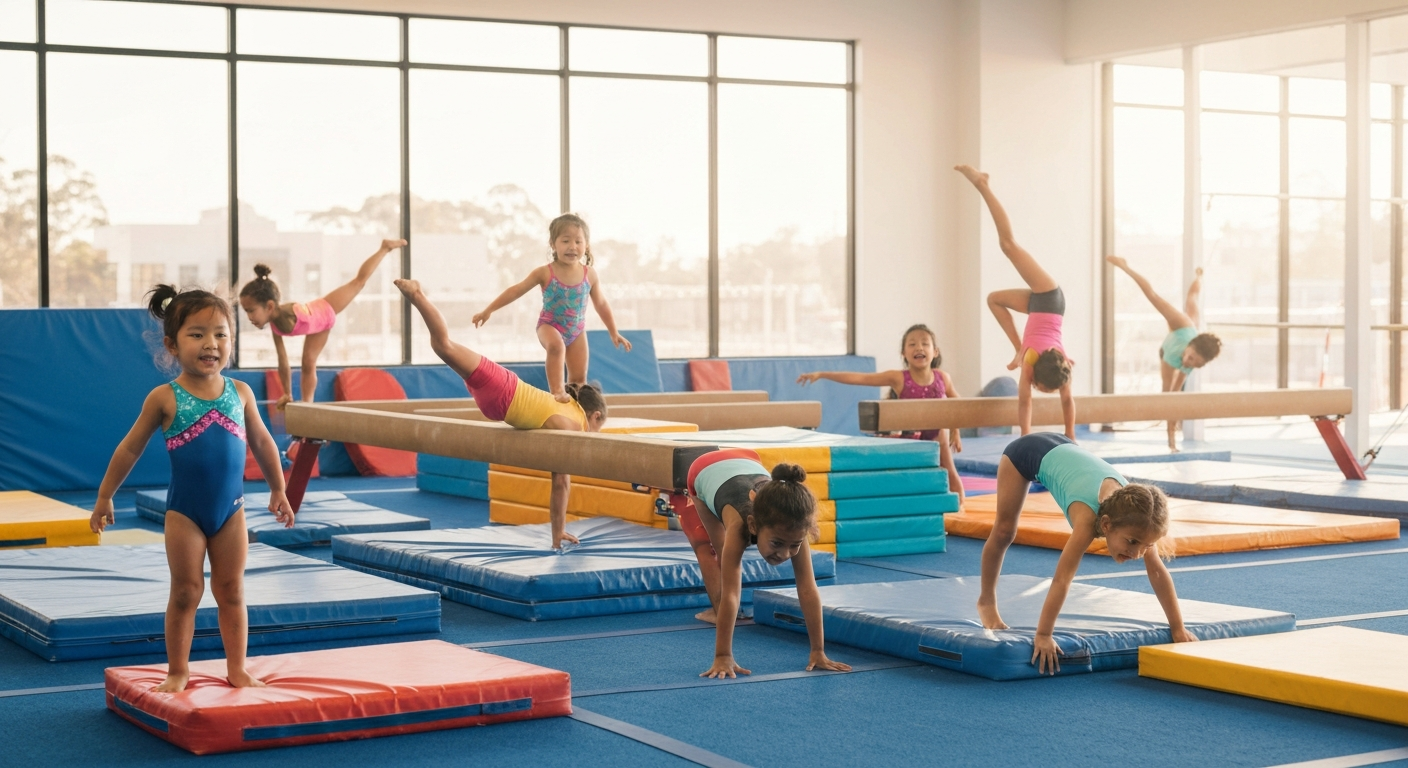
You've decided your child is ready for gymnastics. Now comes the hard part: choosing the right studio out of dozens of options spread across the Bay Area, each with different teaching styles, safety standards, and price points that range from $70 to $800 per month.
Quick Answer: Bay Area gymnastics programs serve ages 2-12 with recreational classes starting at $70-155/month (once weekly) and competitive programs ranging $400-800/month at upper levels. Look for USA Gymnastics-certified instructors, proper equipment padding, and flexible trial periods. Most kids ages 3-5 start in preschool programs; recreational tracks provide most of the same developmental benefits without competitive commitment. Use the trial class checklist at the end to evaluate safety and teaching quality.
This guide covers 17+ verified Bay Area gymnastics studios, breaks down what you're actually paying for at each price tier, and gives you a concrete evaluation framework so you're not guessing during trial classes.
Is My Child Ready for Gymnastics? Age-by-Age Guide
Build your summer plan
Map every week of summer in 3 minutes
KidPlanr lays out every week with camps that match each kid's age and interests — and tracks which weeks still have spots.
Build my calendar →Ages 0-2: Parent-Tot Classes
Programs like The Little Gym start as early as 4 months with parent-child classes. At this age, "gymnastics" means motor skill exploration — crawling over soft obstacles, rolling, reaching. This does NOT mean your infant will do cartwheels. The value is supervised movement in a padded space, not gymnastics skills.
What to expect: 30-45 minute classes, parent stays on the floor, lots of movement variety to hold short attention spans.
Ages 2-3: Toddler/Kindergym Programs
Studios like Diablo Gymnastics School (San Ramon) offer Kindergym starting at age 2. Kids work on basic body awareness — forward rolls, walking on low balance beams, hanging from bars with assistance.
Realistic readiness check: Can your child follow one-step directions most of the time? Can they handle 30-45 minutes of structured activity without a parent right next to them? If not yet, that's normal — developmental windows vary. Waiting 6 months won't hurt; pushing too early can lead to frustration or resistance.
Cost range: $70-140/month for once-weekly 45-minute classes. Example: Maximum Gymnastix charges $70/month for this age group.
Ages 3-5: Preschool Gymnastics
This is the most common starting point. Studios like Peninsula Gymnastics (San Mateo & San Carlos) and Gold Star Gymnastics (Sunnyvale) run dedicated preschool programs where kids learn foundational skills: cartwheel progressions, backward rolls, basic beam walks, bar swings.
What changes here: Classes move faster, instructors expect kids to listen without constant redirection, skills build week-to-week instead of being repeated endlessly.
Cost range: $77-155/month for 45-60 minute weekly classes. Indigo Gymnastics charges $140/month for 45-minute classes with a 10% sibling discount.
Ages 5-12: Recreational Gymnastics
Once kids hit kindergarten age, they can join recreational programs at facilities like Airborne Gymnastics (Santa Clara, 25,000 sq ft facility) or Bay Island Gymnastics (Oakland). Skills get more complex: back handsprings, vault progressions, bar routines, beam sequences.
Recreational vs. competitive track: Recreational gymnastics is once or twice weekly, no team commitment, focused on skill-building and fun. Competitive track (Xcel, JO levels) requires 8-15+ hours per week, team fees, competition travel. Most kids never need the competitive track to get the benefits — strength, flexibility, confidence, body awareness.
Cost range:
- Recreational (once weekly): $140-200/month
- Recreational (twice weekly): $200-300/month
- Competitive teams (varies by level): $400-800/month at upper levels (compulsory through elite)
Ages 10-12+: Tweens Starting Gymnastics
Many studios accept beginners at this age, though they'll be in classes with younger kids if they're brand new. San Francisco Gymnastics runs recreational classes for ages 7-15, which works well for late starters.
What's different: Older beginners often progress faster once they grasp a skill (better body control), but they may feel self-conscious starting "behind" younger kids. Look for studios that group by skill level, not just age.
Bay Area Gymnastics Studios by Region
South Bay (San Jose, Sunnyvale, Santa Clara, Mountain View)
| Studio | Location | Ages | Programs | Phone |
|---|---|---|---|---|
| Gold Star Gymnastics | Sunnyvale (727 Sunnyvale Saratoga Rd) | 2+ | Preschool, Artistic, Ninja, Cheer. No registration fees, month-to-month. | (650) 694-7827 |
| Airborne Gymnastics | Santa Clara | 0-12 months+ | Preschool, Recreational (Girls, Boys, Dynamos), Competitive (Compulsory, Optionals, Xcel), Parkour, Adult. Operating since 1994, 25,000 sq ft. | (408) 986-8226 |
| The Little Gym of Stevens Creek | San Jose | 4 months+ | Parent-child, Preschool, Grade school | — |
| Twisters Gymnastics | San Jose area | Varies | Recreational, Competitive | — |
| Apex Gymnastics | San Jose | Varies | Recreational, Competitive | — |
| ATA Gymnastics | San Jose | Varies | Recreational | — |
| The Little Gym of Mountain View | Mountain View | 4 months+ | Parent-child, Preschool, Grade school | — |
Mid-Peninsula (Palo Alto, Redwood City, San Mateo, Belmont)
| Studio | Location | Ages | Programs | Phone |
|---|---|---|---|---|
| Peninsula Gymnastics | San Mateo (1740 Leslie St) & San Carlos | 2+ | Preschool, Recreational, Developmental, Competitive. 2 locations. Auto payment plan available. | (650) 571-7555 |
| Bayshore Elite Gymnastics | Redwood City (2694 Middlefield Rd) | Preschool+ | Preschool, Recreational, Competitive teams | — |
| San Mateo Gymnastics | Belmont | 2+ | Classes, Camps, Teams | — |
| My Gym Palo Alto | Palo Alto | 4 months+ | Fitness classes with gymnastics components | — |
| Bay Aerials Gymnastics | Palo Alto | Preschool+ | Preschool, School age, Boys, Competitive. 20,000 sq ft facility. Camps, parties. | — |
East Bay (Oakland, Berkeley, San Ramon, Concord)
| Studio | Location | Ages | Programs | Phone |
|---|---|---|---|---|
| Park Gymnastics | Oakland | 6 months-8 years | Baby, Toddler, Preschool, Grade-school. Drop-in open gym. Xcel competitive team. | — |
| Bay Island Gymnastics | Oakland | Varies | Recreational, Competitive. USA Gymnastics certified, SafeSport credentialed. | — |
| San Francisco Gymnastics | San Francisco | 1-15 | Tumblebugs (ages 1-7), Recreational (7-15), Competitive team | — |
| Diablo Gymnastics School | San Ramon | 2+ | Kindergym (ages 2+), Recreational (first grade+), Competitive team, Annual showcase, Camps | — |
| Liberty Gymnastics Training Center | Concord | 0+ | Full age range, family-oriented | — |
Note: This list includes studios verified as operating in 2026 via current websites or May 2026 Yelp updates. Additional studios exist — these are representative options across regions.
What You're Actually Paying For: Cost Breakdown
Monthly gymnastics costs in the Bay Area range from $70 to over $800 depending on class frequency, program type, and competitive level. Here's what drives the price:
Budget Tier: $70-$140/Month
- Class frequency: Once weekly, 45-60 minutes
- Program type: Parent-tot (ages 0-2), Toddler/preschool (ages 2-5), or beginner recreational
- What's included: Basic instruction, use of equipment during class
- What's NOT included: Often charged separately: annual membership ($45-100), competition fees (if applicable), uniforms/team gear
- Example: Maximum Gymnastix charges $70/month for 45-minute toddler classes.
Mid-Range: $140-$200/Month
- Class frequency: Once weekly, 55-60 minutes
- Program type: Preschool, Recreational elementary (ages 5-12)
- Example: Indigo Gymnastics charges $140/month for 45-minute classes, $155/month for 55-minute classes. 10% sibling discount available.
Higher Recreational: $200-$350/Month
- Class frequency: Twice weekly or intensive single sessions
- Program type: Advanced recreational, pre-team
- What changes: More skill repetition, structured progressions toward specific goals
Competitive Team: $400-$800/Month (Upper Levels)
- Class frequency: 8-15+ hours per week spread across multiple days
- Program type: Xcel, JO Compulsory, JO Optionals, TOPs/Elite programs
- Additional costs: Competition entry fees ($50-150 per meet), travel for out-of-area competitions, team leotards ($80-200), mandatory fundraisers at some gyms
- This does NOT mean every kid needs this: The competitive track is for families who want gymnastics as the primary sport commitment. Recreational programs deliver confidence, strength, and skill without the time and financial investment.
What About "Free" or Low-Cost Options?
City recreation departments sometimes offer introductory gymnastics through Parks & Rec programs at $50-100 for 6-8 week sessions. Quality varies — these are great for exploring interest but typically don't provide skill progression like dedicated gymnastics studios.
Planning summer camps too? Many gymnastics studios offer week-long summer camps. Search 3,000+ Bay Area summer camps by activity and location on KidPlanr →
How to Evaluate Safety and Quality During Trial Classes
Most Bay Area gymnastics studios offer a free or discounted trial class before enrollment. Here's your concrete evaluation checklist — bring this to each trial:
Trial Class Evaluation Checklist (Artifact: Take This With You)
Print this or save to your phone. Score each item Yes/No/Unsure during your visit.
Facility Safety (Walk around before/after class)
- [ ] Equipment is well-maintained — No rips in mats, bars are stable, beams are secured
- [ ] Adequate padding — Thick mats under all apparatus, especially bars and vault
- [ ] Clean, well-lit space — Floor is swept, no clutter near equipment, good lighting
- [ ] Proper equipment spacing — Kids aren't waiting in line right under active apparatus
- [ ] Emergency exits marked — You can see at least two clear exits
Instructor Quality (Observe during class)
- [ ] Instructor-to-student ratio — Ideally 1:8 or better for beginners, 1:10 max for older kids
- [ ] Positive coaching style — Encouragement > criticism. Do kids look excited or anxious?
- [ ] Age-appropriate teaching — Younger kids get demos + hands-on help, not just verbal instructions
- [ ] Clear progression — Instructor explains what skill they're building toward, not just random activities
- [ ] Safety spotting — Instructor physically spots new/risky skills (back bends, back handsprings, etc.)
Credentials & Policies (Ask front desk or check website before enrolling)
- [ ] USA Gymnastics certified instructors — Look for "USA Gymnastics Safety Certified" or equivalent. Bay Island Gymnastics lists instructor credentials publicly: USA Gymnastics certified, Safety/Risk Management Certified, SafeSport credentialed. This is the standard to look for.
- [ ] Parent observation policy — Can you watch classes? Some studios require parents to wait in lobby for older kids (normal), but you should be able to observe at least once.
- [ ] Trial class offered — No long-term contract before you've seen a class
- [ ] Flexible scheduling — Can you switch class times if your schedule changes? Are makeups allowed for missed classes?
- [ ] Clear tuition structure — Price includes what? Are there hidden fees (annual membership, recital fees, etc.)?
Red Flags (Any of these = walk away)
- [ ] Instructors yelling or using shame-based coaching ("You're doing it wrong again!")
- [ ] Kids performing risky skills without spotting (back handsprings, aerials, giants on bars)
- [ ] No clear instructor certifications available
- [ ] Pressure to sign long-term contract during trial class
- [ ] Equipment that looks unsafe (unstable bars, thin mats under high apparatus)
What USA Gymnastics Certification Means
Legitimate gymnastics instructors complete:
- U100: Fundamentals of Gymnastics Instruction — 4-5 hours online course, no prior experience required
- U101: Safety & Risk Management — Required for developmental teacher certification
- First aid course — CPR and injury response
- SafeSport credential — Child safety and abuse prevention training
- Recertification every 4 years
When a studio says "USA Gymnastics certified instructors," this is what they mean. It's not optional — it's the professional standard. If a studio can't tell you whether their instructors are certified, that's a red flag.
Recreational vs. Competitive: Which Track Is Right?
One of the biggest parent questions: "Does my child need to be on the competitive team to get good at gymnastics?"
Short answer: No.
Here's the actual difference:
Recreational Gymnastics
- Time commitment: 1-2 hours per week (one or two classes)
- Cost: $140-300/month depending on frequency
- Skills learned: Cartwheels, round-offs, back handsprings, front/back walkovers, beam routines, bar progressions
- End goal: Confidence, strength, flexibility, body awareness. Kids have fun, learn impressive skills, and can do gymnastics in their backyard.
- Best for: Kids who enjoy gymnastics but also want time for other activities, families who want the benefits without the competitive commitment
Competitive Track (Xcel, JO Levels)
- Time commitment: 8-15+ hours per week (3-5 days), year-round
- Cost: $400-800/month at upper levels + competition fees + travel
- Skills learned: Advanced progressions (back tucks, aerials, release moves on bars, full twisting layouts)
- End goal: Competition success, potential college scholarships for elite athletes
- Best for: Kids who are passionate about gymnastics as their primary sport, families ready for significant time and financial commitment
- Selection: Most gyms require evaluation or invitation to join competitive teams. You can't just sign up — coaches assess readiness.
What this does NOT mean: "My child will miss out if we don't go competitive." The skills learned in recreational programs — strength, flexibility, discipline, spatial awareness — transfer to every other sport and activity. Most kids ages 3-10 do not need competitive gymnastics. They need movement, challenge, and positive coaching. Recreational delivers most of the same developmental benefits without the time and financial commitment.
Pivot points: If your child starts in recreational and later shows serious interest and ability, competitive programs typically allow progression from rec track. You don't have to decide now.
When to Switch Studios (and When to Stick It Out)
You enrolled your child. After a few weeks, something feels off. How do you know if it's normal adjustment vs. a sign you picked the wrong studio?
Normal Adjustment (Give It 4-6 Weeks)
- First few classes feel chaotic or overwhelming
- Your child seems hesitant or clingy during drop-off (especially ages 3-5)
- Skills aren't "clicking" yet — this is normal; motor learning takes repetition
- Other kids in the class seem more advanced (skill grouping takes a few weeks to sort out)
Red Flags (Switch Studios Now)
- Your child consistently reports that the coach yells or criticizes
- You observe unsafe spotting or kids attempting risky skills without supervision
- The studio pressures you to move to competitive track or sign long-term contracts when you're not ready
- Your child dreads class every week beyond the first month (vs. normal pre-class jitters)
- Instructor turnover is constant — new coaches every few weeks
How to switch: Most Bay Area studios operate on month-to-month enrollment (check your contract). Give 30 days' notice, request a trial class at the new studio, and move. Gold Star Gymnastics explicitly advertises month-to-month commitments with no registration fees — this flexibility is common at recreational programs.
What About Kids Who Are "Too Old" to Start?
Many parents worry: "My child is 8 and has never done gymnastics. Is it too late?"
It's not too late. Studios like San Francisco Gymnastics run recreational classes for ages 7-15, which include late starters. Here's what changes:
- Faster progression: Older beginners often pick up skills faster once they grasp the mechanics (better body control than 4-year-olds)
- Self-consciousness: Some 8-10 year olds feel awkward starting in classes with younger kids. Look for studios that group by skill level, not strict age cutoffs.
- Competitive timeline: If your 10-year-old dreams of competitive gymnastics, the path is harder (not impossible) because younger kids have more training years. But if the goal is recreational fun and skill-building, age doesn't matter.
What NOT to over-interpret: "All the good gymnasts started at age 3." Elite competitive gymnasts often start young, but recreational gymnastics is not a race. Your 9-year-old can learn a back handspring and have a blast doing it.
Track Your Child's Year-Round Activities
Gymnastics is one piece of your child's afterschool schedule. Between classes, homework, and family time, tracking everything gets overwhelming fast.
KidPlanr's Activity Tracker (launching soon) helps Bay Area parents manage year-round schedules in one place — no more juggling studio apps, email confirmations, and paper calendars.
Join the waitlist for early access →
FAQ: Gymnastics Classes for Bay Area Kids
How much do gymnastics classes cost in the Bay Area?
Recreational gymnastics classes in the Bay Area range from $70-200/month for once-weekly sessions (45-60 minutes). Competitive team programs cost $400-800/month at upper levels, plus competition fees and travel. Additional costs include annual membership fees ($45-100 at most studios) and optional camps or special events.
What age should my child start gymnastics?
Most studios offer parent-tot classes starting at 4 months, though structured skill-building typically begins at ages 2-3 with toddler programs. The most common starting age is 3-5 years for preschool gymnastics. It's never "too late" — many studios accept beginners through age 12+ in skill-based (not age-based) recreational classes.
What should I look for in a gymnastics studio?
Prioritize safety: USA Gymnastics-certified instructors, proper equipment padding, low instructor-to-student ratios (1:8 or better for beginners), and positive coaching. Verify that the studio offers trial classes before enrollment, operates on flexible month-to-month contracts, and has transparent pricing. Use the trial class checklist in this guide to evaluate these factors.
Do I need to enroll my child in competitive gymnastics to get benefits?
No. Recreational gymnastics (1-2 hours per week) delivers 90% of the developmental benefits — strength, flexibility, confidence, body awareness — without the time commitment (8-15+ hours weekly) or cost ($400-800/month) of competitive programs. Most kids never need competitive gymnastics; they thrive in recreational classes.
How do I know if my child is ready for gymnastics?
For ages 2-3, readiness signs include ability to follow one-step directions most of the time and handle 30-45 minutes of structured activity. For ages 4+, most kids are developmentally ready if they can separate from parents and follow group instruction. Trial classes help you assess fit — if your child resists after 4-6 weeks, consider waiting a few months and trying again.
What's the difference between recreational and competitive gymnastics?
Recreational gymnastics is 1-2 hours per week, costs $140-300/month, focuses on skill-building and fun, and allows time for other activities. Competitive gymnastics requires 8-15+ hours per week (year-round), costs $400-800/month plus competition fees, and is invitation-only at most studios. Kids can start recreational and move to competitive later if they show interest and ability.
Are there low-cost gymnastics options in the Bay Area?
Some city recreation departments offer introductory gymnastics through Parks & Rec programs at $50-100 for 6-8 week sessions. Quality varies — these are good for exploring interest but typically don't provide skill progression like dedicated studios. Studios like Gold Star Gymnastics offer month-to-month enrollment with no registration fees, which reduces upfront costs.
Can my child switch studios if the first one isn't a good fit?
Yes. Most Bay Area gymnastics studios operate on month-to-month enrollment (verify your specific contract). Give 30 days' notice, request a trial class at a new studio, and make the switch. Normal adjustment takes 4-6 weeks; if your child consistently dreads class or you observe unsafe practices, switch immediately.
Sources:
- Bay Area Parent Magazine - Best Gymnastics Classes in the Bay Area
- Airborne Gymnastics (Santa Clara)
- Peninsula Gymnastics (San Mateo & San Carlos)
- Gold Star Gymnastics (Sunnyvale) - Yelp
- 510 Families - Gymnastics Classes for East Bay Kids
- Bay Island Gymnastics (Oakland)
- USA Gymnastics University FAQ
- Lessons.com - How Much Do Gymnastics Classes Cost (2026)
- Maximum Gymnastix Programs & Pricing
- Indigo Gymnastics Prices
All studios verified as operating in 2026 via current websites or May 2026 Yelp updates.
Build your summer plan
Map every week of summer in 3 minutes
KidPlanr lays out every week with camps that match each kid's age and interests — and tracks which weeks still have spots.
Build my calendar