Best Art Classes for Kids in Bay Area 2026 | Complete Guide
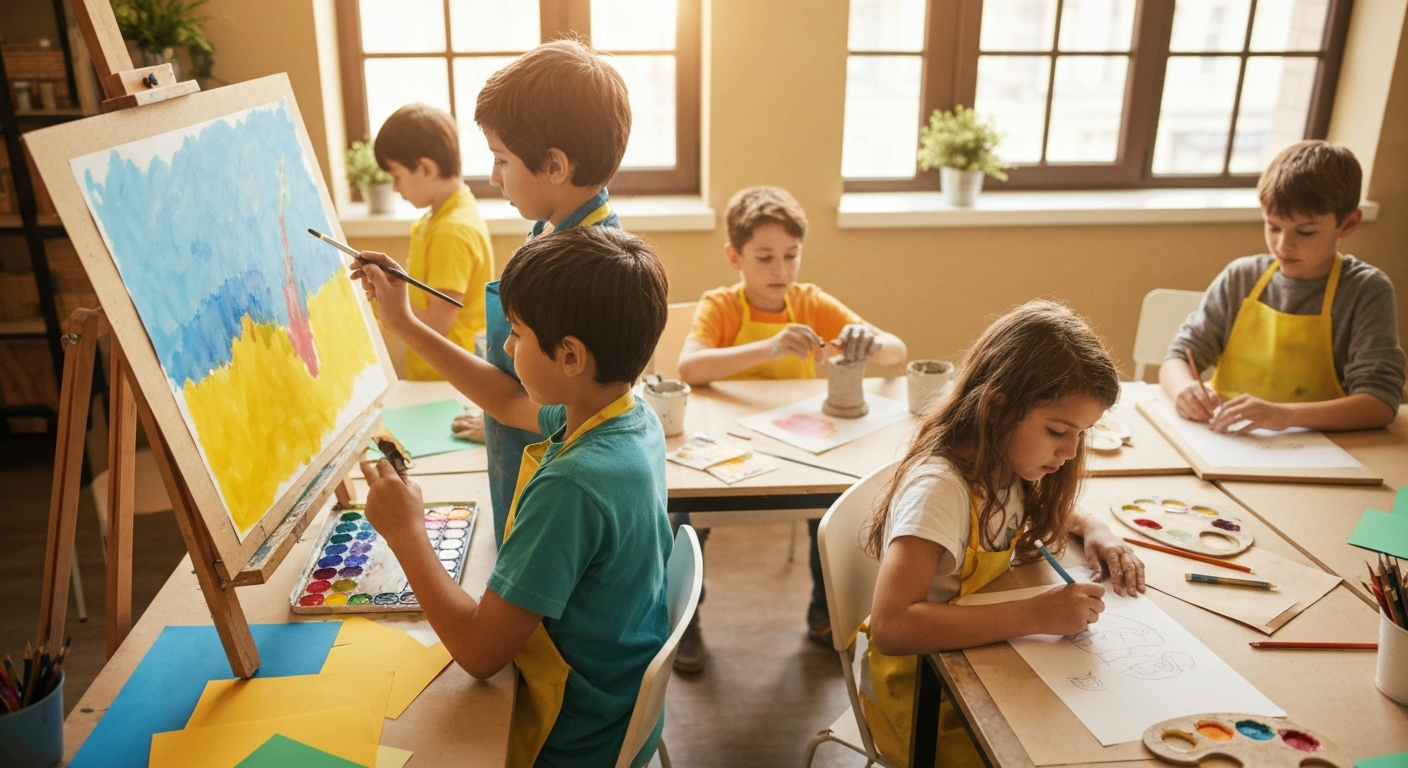
Which art class is right for your kid — the $80/month community center class or the $220/month portfolio-building studio?
Quick Answer: Bay Area has 200+ kids art programs ranging from $60-$250/month. For ages 2-8, choose exploration-based community studios ($80-$120/mo). For ages 9-13 building skills, mid-range independent studios work ($110-$160/mo). For ages 14-16 with college in mind, portfolio-prep programs run $180-$250/mo. Most kids do fine in the affordable community tier — expensive programs are for serious high schoolers.
If your child draws constantly, brings home art projects, or asks for art supplies, you're probably wondering: should I invest in formal art classes? And if yes — which one?
Why Art Class Type Matters More Than Price
Build your summer plan
Map every week of summer in 3 minutes
KidPlanr lays out every week with camps that match each kid's age and interests — and tracks which weeks still have spots.
Build my calendar →Not all art classes serve the same purpose. A 5-year-old exploring creativity needs a different environment than a 15-year-old building a college portfolio.
Many Bay Area parents report spending $200+/month on portfolio programs for elementary-age kids, only to realize their child wasn't ready for intensive skill-building. The class felt like homework instead of fun.
On the flip end, some families keep high schoolers in beginner community classes when the student is ready for advanced techniques and college-prep work.
The price difference is real — but it maps to different goals, not different quality for young kids.
Bay Area Kids Art Programs: Three Tiers
Tier 1: Community & Exploration Programs ($60-$120/month)
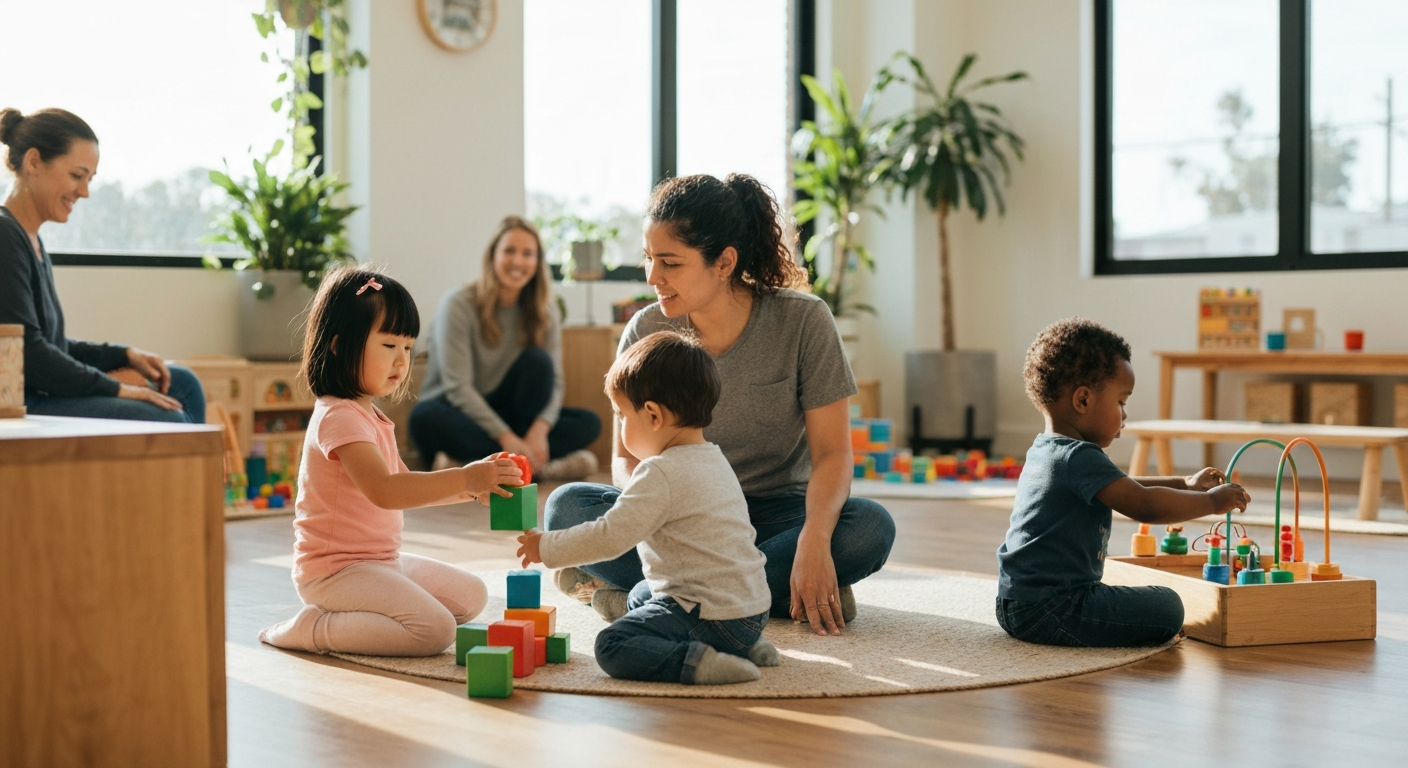
Best for: Ages 2-8, kids exploring art for fun, families on a budget
What you get:
- Open-ended creative projects (paint, clay, collage, mixed media)
- Small class sizes (8-12 kids typical)
- Weekly 60-75 minute sessions
- Emphasis on process over product
- Age-appropriate techniques
Bay Area options in this tier:
- Palo Alto Art Center — City-run classes for ages 3-18, drawing/painting/ceramics, quarterly curriculum rotation. Classes run $75-$110 per 6-week session (about $12-$18/class).
- Junior Center of Art and Science (JCAS) — Ages 6-13, hands-on maker classes, sliding payment scale available.
- Local Parks & Recreation — Most Bay Area cities (San Jose, Fremont, Mountain View, Berkeley) offer seasonal art classes through parks departments, typically $60-$90 for 6-8 week sessions.
What this tier does NOT provide: Advanced technique training, college portfolio prep, intensive skill progression.
Tier 2: Independent Studio Programs ($110-$180/month)
Best for: Ages 7-14, kids showing sustained interest, families wanting consistent skill development
What you get:
- Structured curriculum building foundational skills
- Smaller classes (6-10 kids)
- Weekly 90-120 minute sessions
- Multiple mediums: watercolor, acrylic, drawing, sculpture, mixed media
- Some studios offer portfolio development for older kids
Bay Area options in this tier:
- Bay Area Art School (Pacifica) — $150/month for one 90-minute weekly class, $300/month for two classes per week. After-school classes for elementary-aged kids, young masters studio program.
- Art School of SF Bay — $125/month for weekly online classes (ages 4-7), locations in San Francisco, Mountain View, San Carlos, San Jose. Covers art fundamentals, Manga, design, illustration. Kids can join anytime.
- Green Forest Art Studio — Three East Bay locations (Fremont, Union City, Dublin). Fine art classes covering drawing, painting (watercolor/acrylic/oil), sketch, mixed media, pastels, sculpture, Chinese painting. Summer camps available.
- Calcolor Academy — Multiple Bay Area locations including San Jose. Focus on safe, inclusive learning environment for all skill levels.
- Victoria Art Studio (Palo Alto) — Classes designed to enhance creativity and imagination, collaborative peer environment. Located at 370 California Ave.
What this tier does NOT provide: Pre-professional training, guaranteed college portfolio outcomes.
Tier 3: Portfolio-Prep & Advanced Programs ($180-$250/month)
Best for: Ages 13-16 planning to apply to art programs/colleges, students with serious long-term art goals
What you get:
- Portfolio development with college admissions in mind
- Advanced techniques: figure drawing, perspective, color theory, composition
- Longer sessions (2-3 hours)
- Instructor feedback on work
- Exhibition opportunities
Bay Area options in this tier:
- Kala Art Institute (Berkeley) — Teen Studio Art Program for grades 6-12. Drawing for Teens: Tuesdays 4-6pm. Spring 2026 classes open. 10% multi-session/sibling discount, tuition assistance available. After School Studio for grades 1-5 also available.
- Pacific Art League (Palo Alto) — Classes and workshops for all ages and skill levels. Summer camp registration coming soon for 2026.
- San José Museum of Art — Kids summer art camp for ages 6-14. Scholarships available (must reside in San Jose city limits, attend Title I school, demonstrate financial need). Free community days with hands-on activities.
Parent guidance from art educators: Most students don't need portfolio-level programs until age 14-15 at earliest. Before that, sustained practice and exploration build the foundation.
The Anti-Anxiety Real Talk
Scary fact: $220/month for portfolio-prep programs means $2,640/year for one activity. For a high schooler doing this for 3-4 years, that's $8,000-$10,000.
Context that helps:
1. Most elementary kids do fine in $80-$120/month community programs. The expensive portfolio track is specifically for high schoolers with college art goals. You're not "behind" if your 8-year-old is in a community center class.
-
80% of Bay Area kids art programs cost under $150/month. The $200+ tier is specialized, not standard.
-
You can start affordable and level up later. Many families report starting at community centers and transitioning to independent studios around age 10-12 when kids show serious interest. This progression is normal and healthy.
-
Free trials are available at most studios. Test the fit before committing to a full session. Many programs offer drop-in classes ($20-$45 per class) or first-week trials.
What this does NOT mean: Don't avoid art classes because of cost. The affordable tier is not "worse" for young kids — it's age-appropriate. Exploration-based programs for ages 2-8 are exactly what child development experts recommend.
How to Choose: Age + Goal Decision Framework
Use this decision tree:
If your child is ages 2-6:
→ Choose: Exploration-based community programs ($60-$110/mo)
→ Why: At this age, kids benefit most from open-ended creative play, multiple mediums, and process-focused learning. Structured skill-building isn't developmentally appropriate yet.
→ Try: Local parks & rec classes, Palo Alto Art Center (ages 3+), JCAS (ages 6+)
If your child is ages 7-12 and curious/exploring:
→ Choose: Mid-tier independent studios ($110-$160/mo)
→ Why: Kids this age can handle more structure and benefit from foundational skill-building (drawing basics, color mixing, composition). They're ready for progression but don't need portfolio pressure.
→ Try: Bay Area Art School, Art School of SF Bay, Green Forest Art Studio, Calcolor, Victoria Art Studio
If your child is ages 7-12 and showing serious sustained interest:
→ Choose: Either mid-tier independent studios OR entry-level portfolio prep ($130-$180/mo)
→ Why: Strong interest at this age can handle more challenge, but college portfolio work is still premature. Look for programs that offer skill progression without portfolio pressure.
→ Try: Kala's After School Studio (grades 1-5), upper-level classes at Bay Area Art School
If your child is ages 13-16 with college art goals:
→ Choose: Portfolio-prep programs ($180-$250/mo)
→ Why: High school is when portfolio work matters for college admissions. Structured feedback on technique and composition become critical.
→ Try: Kala Teen Studio (grades 6-12), Pacific Art League, San José Museum of Art programs
If your child is ages 13-16 doing art for fun (no college plans):
→ Choose: Mid-tier independent studios ($110-$160/mo)
→ Why: Teens can still benefit from skill-building classes without the college pressure. Many independent studios offer teen-focused classes that build technique without portfolio intensity.
What to Look For (And Red Flags to Avoid)
Green flags (good programs):
- Age-appropriate class sizes. For ages 2-6: max 8-10 kids. For ages 7-12: max 10-12 kids. For teens: 8-15 OK.
- Trial class or first-week refund option. Legitimate programs let you test the fit.
- Curriculum description that matches your child's age. Toddler classes should say "exploration" and "creative play." Teen classes should say "technique" and "skill-building."
- Instructor background visible. Programs should list instructor credentials (art degree, teaching experience, exhibition history for advanced classes).
- Clear pricing with no hidden fees. Upfront about materials costs, registration fees, supply lists.
Red flags (programs to avoid or question):
- Pressure to sign multi-month contracts without trial period. Especially for young kids — if a program won't let you try one class or one month, walk away.
- "Your child has talent, they need intensive training now" sales pitch. Pushy upselling to expensive programs for kids under age 10 is a warning sign. Talent development at young ages doesn't require premium pricing.
- Classes mixing ages 3-12 in one group. Age-appropriate programming matters. A 3-year-old and a 12-year-old don't benefit from the same curriculum.
- Vague descriptions like "fun art activities." Good programs specify what mediums, techniques, and goals they're teaching.
How Much Art Class Does My Kid Actually Need?
Common question from parents: should my child do art class every week, or is occasional fine?
Art educator guidance: For ages 2-8 exploring, once per week (or even every other week) is plenty. Kids this age benefit from variety — one week art, one week music, one week outdoor play. Over-scheduling creative activities can backfire.
For ages 9-16 building skills: Once per week minimum if they're serious. Twice per week accelerates progress but isn't required unless they have specific college portfolio goals.
Many Bay Area families report the "sweet spot" is one art class per week during the school year, plus a one-week summer art camp. This keeps skills growing without burnout.
Conversation Starters: Ask Your Kid Before Signing Up
Try these questions to gauge readiness:
For younger kids (ages 3-8):
- "What do you like most about making art? Drawing? Painting? Clay?" (Helps you pick the right medium)
- "Do you like making art by yourself or with friends?" (Social vs independent preference)
- "When you finish an art project, do you want to show it to people or just make it for fun?" (Product vs process orientation)
For older kids (ages 9-16):
- "If you could learn one thing in art class, what would it be?" (Technique goals)
- "Do you want to get better at drawing/painting, or just have fun making stuff?" (Skill-building vs exploration)
- "Are you thinking about art for college, or is this just something you enjoy?" (Portfolio vs hobby track)
If your child can't articulate what they want, start with an exploration-based community program. You can always level up later.
Cross-Track Resource: Planning Summer Camps Too?
Many Bay Area families balance year-round activities like art classes with summer camps. If you're mapping out your child's summer while choosing afterschool activities, search 3,000+ Bay Area summer camps on KidPlanr to find programs that match your schedule and interests.
The Artifact: Which Art Program Type For My Child?
Use this decision tool to narrow your options:
Step 1: What is your child's age?
- Ages 2-6 → Go to Step 2A
- Ages 7-12 → Go to Step 2B
- Ages 13-16 → Go to Step 2C
Step 2A (Ages 2-6):
- Budget: Under $100/month → Try: Parks & Rec, Palo Alto Art Center, community centers
- Budget: $100-$150/month → Try: Art School of SF Bay, independent studios with toddler programs
- Goal: Creative exploration and fun → Any exploration-based program works
- Goal: Early skill-building → Wait until age 7-8; exploration is more appropriate now
Step 2B (Ages 7-12):
- Budget: Under $120/month → Try: Parks & Rec, Palo Alto Art Center, community centers
- Budget: $120-$180/month → Try: Bay Area Art School, Green Forest, Art School of SF Bay, Calcolor, Victoria Art Studio, Kala After School Studio
- Goal: Just for fun / trying it out → Community or mid-tier programs
- Goal: Building skills seriously → Mid-tier independent studios or Kala After School Studio
- Goal: College portfolio already (rare at this age) → Too early; focus on foundation-building at mid-tier programs
Step 2C (Ages 13-16):
- Budget: Under $120/month → Parks & Rec or community programs
- Budget: $120-$180/month → Independent studios with teen classes
- Budget: $180-$250/month + planning for art college → Kala Teen Studio, Pacific Art League, portfolio-prep programs
- Goal: Fun hobby → Mid-tier independent studios
- Goal: College portfolio → Portfolio-prep programs
- Goal: Considering art college seriously → Invest in portfolio-prep AND visit college art department open houses
General rule: Match the program tier to your child's age and goals, not to what other families are doing. A 7-year-old in a $90/month community class who loves art is exactly where they should be.
FAQ: Bay Area Kids Art Classes
Q: Should I choose art classes near home or drive to a better program?
Logistics matter more than you think. A class 5 minutes away that your child attends consistently beats a "perfect" class 30 minutes away that you skip half the time due to traffic or schedule conflicts. Start with options within 15 minutes of home or on your commute route.
Q: My child loves art but hates structured activities. What should I do?
Try drop-in open studio formats first (Bay School Community Arts Center offers free community programming). Some kids thrive with access to materials and space but resist formal classes. If your child genuinely resists structure, unstructured creative time at home with quality supplies may serve them better than classes.
Q: Do art classes actually help kids get into art colleges later?
The portfolio matters more than where it was built. A student with a strong self-directed portfolio from a mid-tier studio ($130/mo) can compete with students from expensive programs ($220/mo). What matters: consistent practice, variety of mediums, strong foundational skills, and a few advanced pieces. Portfolio-prep programs help with feedback and structure, but they're not the only path.
Q: When should I worry that my child isn't progressing in art class?
If your child has been in the same class for 12+ months and you see zero visible improvement in their confidence or skill (not perfection, just growth), check in with the instructor. Good programs show progression — a 6-year-old after a year of art class should be more comfortable with colors, shapes, and materials than when they started. If there's no change, the program might not be age-appropriate or well-taught.
Q: How do I know if a program is worth the price?
Ask yourself: (1) Is my child excited to go? (2) Do they talk about what they learned or made? (3) Am I seeing growth in their confidence or skills over 2-3 months? If yes to all three, it's working regardless of price. If no to all three, even a $60/month class isn't worth it.
Q: Should my child stick with art class if they're losing interest?
Depends on why. Temporary dips in interest (bored with current project, having a hard week) are normal — encourage them to finish the session. But if your child actively resists going for 4+ weeks straight, or says they don't like it anymore, it's OK to pivot. Kids' interests shift, and forcing art class can kill the love of art entirely. Pause for a session and revisit in 3-6 months, or try a different medium (switch from painting to sculpture, for example).
Track Your Child's Art Journey
Finding the right art class is just the first step. Keeping track of your child's weekly schedule — art class, swimming, music, playdates — gets complicated fast.
Join the waitlist for KidPlanr's afterschool activity tracker: kidplanr.com/afterschool
We're building a tool that helps Bay Area parents manage year-round activities without the spreadsheet chaos. Launching May 2026.
Last updated: April 2026
Next review: Programs are verified quarterly. If you find outdated information, email us at hello@kidplanr.com.
Build your summer plan
Map every week of summer in 3 minutes
KidPlanr lays out every week with camps that match each kid's age and interests — and tracks which weeks still have spots.
Build my calendar